Heritage Analysis: "Carmencita" — Symbolic Power, Adornment, and the 2026 Luxury Horizon
Introduction: A Portrait as a Strategic Asset
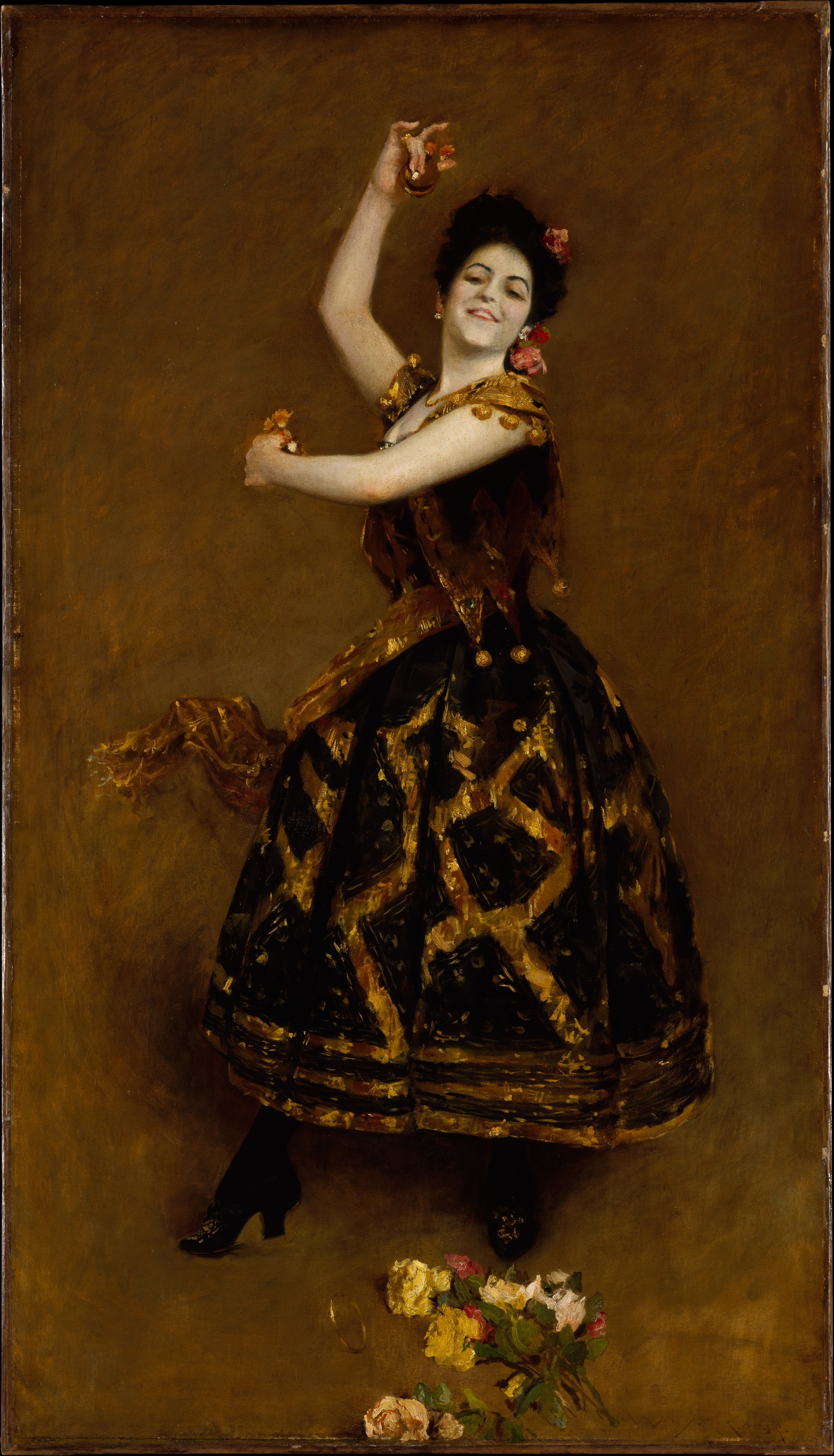
Within the Katherine Fashion Lab archive, few works carry the strategic density of "Carmencita" (1890), the celebrated oil on canvas by American expatriate artist John Singer Sargent. Painted during the Gilded Age and exhibited at the Paris Salon, the portrait depicts the Spanish dancer Carmencita Dauset Moreno, a performer who electrified European and American audiences at the height of the Belle Époque. For a luxury house positioning itself for 2026, "Carmencita" is not merely a historical artifact; it is a case study in the codification of symbolic power, the architecture of historical adornment, and the translation of spiritual meaning into commercial desirability. This analysis treats the painting as a strategic standalone research object, decoding its visual grammar for application within Katherine Fashion Lab's heritage-to-innovation pipeline.
Symbolic Power: The Gaze, the Body, and the Sovereign Self
Sargent's composition grants Carmencita a rare form of pictorial sovereignty. She stands frontally, weight shifted, chin lifted, her gaze directed slightly past the viewer rather than soliciting it. This is a critical distinction in the semiotics of portraiture: the sitter is not presented for consumption but as a subject who consumes the room. For luxury strategy, this maps directly onto the contemporary consumer's demand for self-possession over display. The 2026 luxury client, particularly within the affluent American and global diaspora markets, rejects passive ornamentation. She seeks garments and objects that project agency, cultural fluency, and unapologetic presence.
Carmencita's symbolic power also resides in her liminality. She was a Spanish performer operating within American and French cultural economies, a figure who converted ethnic specificity into international currency. This is the precise mechanism Katherine Fashion Lab must master: the ability to render heritage legible without diluting its authority. The painting demonstrates that symbolic power is not derived from universality but from rooted distinctiveness — the very quality that commands premium positioning in a saturated global market.
Historical Adornment: The Grammar of the Garment
The material culture embedded in "Carmencita" offers a masterclass in adornment as narrative infrastructure. Sargent renders a black costume with precise attention to its construction: a fitted bodice, voluminous sleeves, and a skirt that suggests movement arrested mid-gesture. The palette is restrained — black, cream, and the warm ochre of her skin — yet the effect is opulent rather than austere. This is adornment through silhouette and texture rather than through surface embellishment.
For 2026 luxury strategy, this signals a departure from logo-driven maximalism toward material intelligence. The garment's power lies in its cut, its relationship to the body, and its capacity to imply motion. Katherine Fashion Lab should read this as a directive: invest in construction as heritage. The bodice's architecture, the sleeve's volume, the skirt's drape — these are not decorative choices but structural arguments about femininity, mobility, and class. The historical adornment in "Carmencita" is performative armor, and its modern translation belongs in pieces that function as both garment and gesture.
Furthermore, the painting captures the economics of spectacle. Carmencita's costume was designed for the stage, where visibility and impact are non-negotiable. Luxury in 2026 must similarly reconcile the demands of the digital stage — where garments are consumed through screens, angles, and motion — with the intimacy of physical wear. The portrait's composition, with its strong diagonal and dramatic lighting, anticipates the visual logic of the fashion campaign. It is, in effect, a pre-photographic editorial.
Spiritual Meaning: The Dancer as Ritual Figure
Beneath the surface of portraiture, "Carmencita" carries a spiritual charge rooted in the ritual function of dance. In Spanish and Latin American traditions, the dancer is not an entertainer alone but a conduit — a figure who mediates between the everyday and the sacred. The stamping of the feet, the articulation of the wrists, the arch of the spine: these are embodied prayers as much as performance techniques. Sargent, whether consciously or intuitively, captures this. Carmencita's posture is not casual; it is ceremonial.
For Katherine Fashion Lab, the spiritual dimension of heritage is a strategic differentiator. In a market where sustainability and provenance are increasingly conflated with ethical and metaphysical value, the ability to articulate a garment's spiritual lineage is a form of luxury. The 2026 consumer, particularly within the wellness-informed affluent segment, seeks objects that carry intention. "Carmencita" demonstrates that adornment can be a devotional practice — a way of honoring ancestors, marking thresholds, and asserting presence within a lineage. Luxury brands that can authentically claim this territory will command both loyalty and premium pricing.
2026 Luxury Strategy: From Heritage to Horizon
The strategic application of "Carmencita" within Katherine Fashion Lab's 2026 roadmap should proceed along three vectors:
1. Narrative Architecture: Position the house as a custodian of American performative heritage — not the heritage of stillness and restraint, but of movement, hybridity, and stagecraft. This differentiates from European luxury's emphasis on aristocratic lineage and aligns with the dynamism of the American cultural imaginary.
2. Product Strategy: Develop a capsule collection that translates the painting's silhouette logic — fitted bodices, sculptural sleeves, fluid skirts — into modern ready-to-wear and accessories. Emphasize construction as storytelling, with each piece accompanied by provenance documentation linking it to the Carmencita archive.
3. Experiential Retail: Design flagship environments that evoke the theatrical intimacy of the portrait — dramatic lighting, curated sightlines, and spaces that frame the client as subject rather than shopper. The goal is not to sell garments but to confer presence.
Conclusion: The Portrait as Proposition
"Carmencita" endures because it refuses to resolve its tensions. She is Spanish and American, performer and priestess, adorned and essential. For Katherine Fashion Lab, the painting is a proposition: that luxury in 2026 will belong to those who can hold complexity without collapsing it into trend. The strategic mandate is clear. Honor the symbolic power of the sovereign self. Master the grammar of historical adornment. Recognize the spiritual meaning embedded in the body's movement. And translate all three into a luxury language that is as rooted as it is forward-facing. Carmencita does not ask for permission. Neither should the house that claims her.