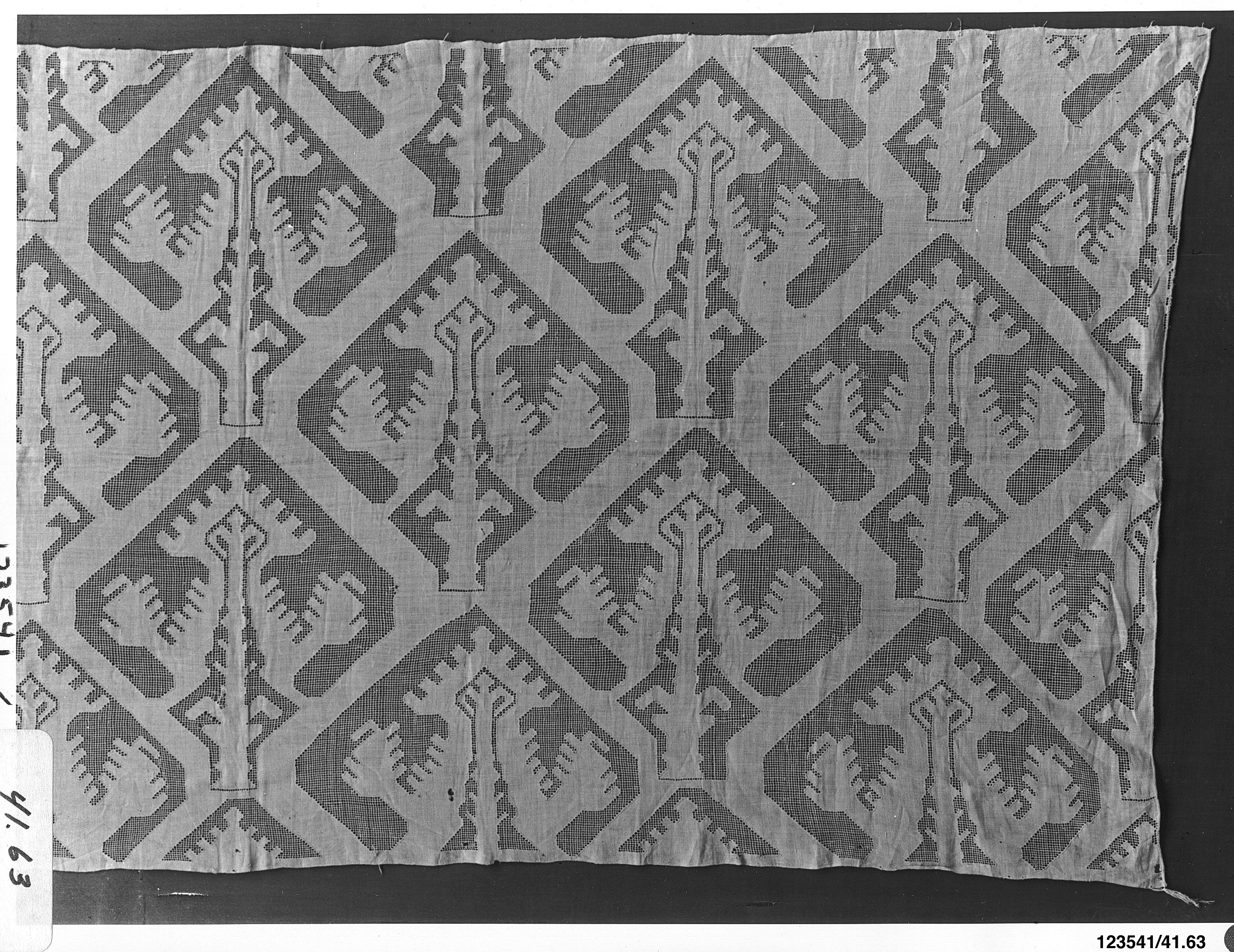
Altar Frontal: A Study in Linen and Drawnwork
The altar frontal, or antependium, occupies a singular position within the global heritage of textile art. Neither purely decorative nor strictly liturgical, it functions as a threshold object—a cloth that mediates between the sacred and the profane, the visible and the invisible. Within the collections and connoisseurship frameworks of Katherine Fashion Lab, the altar frontal is examined not as an ecclesiastical relic but as a complex artifact of material intelligence, technical virtuosity, and cultural translation. This standalone study focuses on a specific lineage: frontals worked in linen and drawnwork, a combination that reveals how restraint, negative space, and structural integrity can produce an aesthetic of profound spiritual and formal power.
Material Logic: Why Linen Matters
Linen is the foundational material of the Western altar frontal tradition, and its selection was never arbitrary. Flax, harvested and retted across Europe, the Near East, and parts of Asia, yields a fiber that is simultaneously strong, lustrous, and highly absorbent. For a textile destined to drape over a stone or wooden altar, these properties are not incidental—they are functional imperatives. Linen resists the microbial degradation that plagues protein fibers such as wool and silk in damp ecclesiastical environments. Its natural stiffness allows it to hold architectural folds, creating a sculptural presence that transforms the altar into a unified visual mass.
From a design history perspective, linen also carries symbolic weight. Its association with purity, humility, and the shroud traditions of multiple faiths made it the preferred ground for liturgical textiles. Unlike the opulent brocades and velvets reserved for high feast days, linen frontals were often employed for penitential seasons, daily masses, and funerary rites. This hierarchy of materials reveals a sophisticated semiotics: the church understood that fabric choice communicates theological mood. Linen signals sobriety, authenticity, and a return to the elemental.
Drawnwork: The Architecture of Absence
Drawnwork—also known as punto tirato, renascence lace, or drawn-thread work—is the defining technique of the frontals under examination. Unlike embroidery, which adds material to a surface, drawnwork subtracts. Selected warp or weft threads are carefully withdrawn from the linen ground, and the remaining threads are then bound, grouped, or woven into geometric patterns. The result is a fabric that is simultaneously solid and porous, opaque and transparent.
This technique demands extraordinary precision. A single misjudged pull can distort the entire grid, rendering the linen unusable. The maker must possess a cartographer's understanding of the weave structure, counting threads with the same rigor a composer counts beats. In the context of altar frontals, drawnwork creates a visual rhythm that interacts with liturgical light. When candlelight passes through the openwork, the frontal becomes a screen of flickering geometries—a kinetic experience that no painted or printed textile can replicate.
From an MBA-level operations perspective, drawnwork also represents a significant investment of human capital. A single large frontal could occupy a workshop of nuns or laywomen for months. The technique was frequently taught in convents and guilds, creating knowledge networks that spanned from Sicily to Flanders to colonial Mexico. The global heritage of the altar frontal is therefore not a story of isolated genius but of distributed craft intelligence—a pre-industrial supply chain of flax growers, spinners, weavers, pattern drafters, and finishers.
Global Heritage: From Byzantium to the Andes
The altar frontal as a form migrated across continents and confessions. Byzantine churches employed poderia and katasarkia—elaborate cloths that covered the altar on all sides. Medieval Western Europe developed the pallium altaris, which evolved into the removable frontal. By the Baroque period, frontals became canvases for embroidered narratives, often abandoning linen for silk and metallic threads. Yet the linen-and-drawnwork tradition persisted in peripheral and reformist communities: Anabaptist congregations in Pennsylvania, Moravian settlements in Saxony, and indigenous cooperatives in the Andes who adapted Spanish deshilado techniques to local flax and cotton.
This global circulation complicates any singular origin story. A drawnwork frontal from 18th-century New Spain may share structural DNA with a 15th-century German example, yet its material palette might include locally dyed cotton or agave fiber. Katherine Fashion Lab treats these hybrid objects as case studies in creolized luxury—textiles that negotiate between imperial liturgy and local resource constraints. The altar frontal becomes a ledger of colonial exchange, recording what was imported, what was substituted, and what was invented anew.
Standalone Study: Methodology and Interpretation
This study treats the linen drawnwork altar frontal as a standalone object, divorced from its original liturgical setting. This deliberate decontextualization allows for a closer reading of its formal properties. Under raking light, the drawnwork reveals a grid that is neither purely geometric nor organic—it pulses with the irregularity of hand-pulled threads. The linen ground, often undyed or lightly bleached, carries the subtle sheen of cellulose. Edges may be hemmed with hemstitching or finished with needle lace inserts, creating a border that frames the central field like a proscenium.
From a fashion theory perspective, the altar frontal anticipates contemporary concerns with transparency, modularity, and slow production. Its drawnwork apertures function as negative space, a precursor to the laser-cut and devoré textiles of the 21st century. Its linen substrate speaks to the current prioritization of natural, traceable fibers. And its devotional function—however distant from the secular runway—reminds us that garments and textiles have always carried meaning beyond utility.
Conclusion: The Frontal as Critical Object
The linen drawnwork altar frontal is not a minor decorative art. It is a rigorous technical achievement, a global heritage artifact, and a philosophical proposition about presence and absence. For Katherine Fashion Lab, it serves as a reminder that couture analysis need not confine itself to the body. The altar frontal dresses an altar; it shapes space, modulates light, and encodes belief. Its study enriches our understanding of how linen, thread, and human attention can transform a plain weave into a vessel for the sacred—and, in the process, into a masterwork of design.