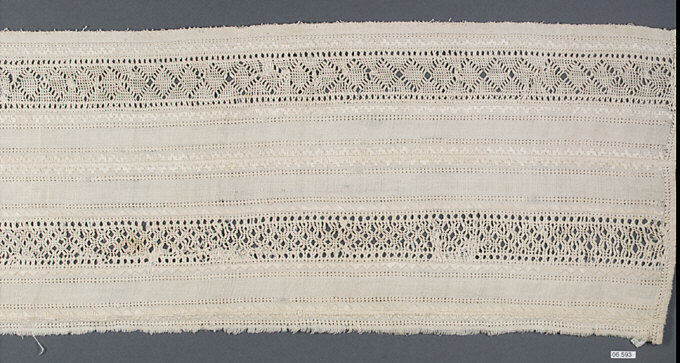
Border: A Standalone Study in Drawnwork and Linen
In the lexicon of haute couture, the term border rarely commands the spotlight it deserves. It is the quiet architecture of a garment—the edge that frames, contains, and ultimately defines the visual field. Yet when examined through the lens of global heritage and executed in the exacting medium of drawnwork on linen, the border ceases to be a marginal detail. It becomes a self-sufficient thesis, a standalone study in restraint, geometry, and cultural memory.
Katherine Fashion Lab's latest investigation treats the border not as an appendage to a larger composition but as the composition itself. This is a deliberate curatorial decision: to isolate the liminal and ask what it means when the periphery becomes the center. The result is a body of work that interrogates the very nature of framing—how a boundary can be both exclusionary and generative, both protective and expressive.
The Material Argument: Linen as Substrate and Statement
Linen is the oldest textile in the human record, and its selection here is neither nostalgic nor incidental. As a substrate for drawnwork, linen offers a unique structural paradox: it is simultaneously rigid and yielding, a fabric that holds a crease with conviction yet softens with every wash and wear. Its flax-derived fibers are naturally irregular, producing a slubby, organic surface that resists the homogenizing logic of industrial textiles.
For the border study, this irregularity is not a flaw but a collaborator. Drawnwork—the technique of removing select threads from a woven fabric and then binding the remaining threads into geometric patterns—demands a ground that can be counted, trusted, and manipulated. Linen's consistent warp and weft provide that grid, but its natural variation ensures that no two borders are identical. Each piece carries the fingerprint of its fiber, a quiet assertion of the handmade within a discipline often obsessed with perfection.
The weight of the linen matters as well. A heavier linen creates borders with architectural presence, capable of standing away from the body or the surface they adorn. A lighter linen produces borders that flutter, that suggest rather than declare. In this standalone study, the lab has explored the full spectrum, treating weight as a compositional variable rather than a fixed given.
Drawnwork as Cultural Cartography
Drawnwork is not the property of any single culture, and that is precisely its power. From the Italian reticella of the sixteenth century to the Ukrainian merezhka, from Turkish hesap işi to the Philippine calado, the technique appears across geographies with striking formal similarities and equally striking local inflections. The border, in each tradition, serves a dual function: it reinforces the edge of a garment or household textile while simultaneously announcing cultural identity.
This global heritage is the intellectual spine of the study. By decontextualizing the border from any single national narrative, Katherine Fashion Lab allows the viewer to see the through-lines: the shared human impulse to mark boundaries with beauty, to transform the utilitarian edge into a site of meaning. The drawnwork border becomes a kind of textile Esperanto—a visual language that predates and transcends the nation-state.
Yet the study does not flatten these traditions into a single aesthetic. Instead, it highlights the specific decisions that distinguish one heritage from another: the density of the remaining threads, the geometry of the openwork, the choice of hemstitching versus pulled-thread techniques. These are not mere technical variations. They are philosophical positions about how much to reveal, how much to remove, and how to honor the void.
The Border as Conceptual Frame
What does it mean to isolate the border? In semiotic terms, the border is the site where meaning is negotiated. It is the line between inside and outside, self and other, garment and world. By treating the border as a standalone object, the study forces a confrontation with liminality itself. The viewer is asked to consider what happens when the frame is removed from the picture—when the boundary is no longer a supporting player but the protagonist.
The results are unexpectedly emotional. A drawnwork border, divorced from its host textile, reads as both fragile and resolute. The openwork creates a lattice of absence, a geometry of what is no longer there. In an era of maximalist excess, this is a radical proposition: that beauty can reside in subtraction, that strength can be expressed through openness.
The linen ground, meanwhile, provides a counterargument to the void. Its earthy, unbleached tones anchor the airy drawnwork in material reality. The contrast is not tension but dialogue—a conversation between what is present and what has been deliberately removed.
Standalone Significance and Future Iterations
As a standalone study, this body of work resists the pressure to become a collection. It is not a precursor to a garment line, nor a component of a larger narrative. It is an end in itself—a meditation on the border as a form, a technique, and a cultural artifact. This autonomy is itself a statement: that fashion research need not always serve the market, that the atelier can function as a laboratory for pure inquiry.
For Katherine Fashion Lab, the border study establishes a methodology that can be applied to other marginal elements: the seam, the hem, the buttonhole. Each of these overlooked details contains its own history, its own material logic, its own capacity for beauty. The border is simply the first, and perhaps the most eloquent, case study.
Ultimately, the drawnwork border on linen is a reminder that couture is not only about the center of the garment—the bodice, the silhouette, the dramatic gesture. It is also about the edges, where the garment meets the world. In those liminal spaces, global heritage meets contemporary practice, and the quietest details speak the loudest truths.