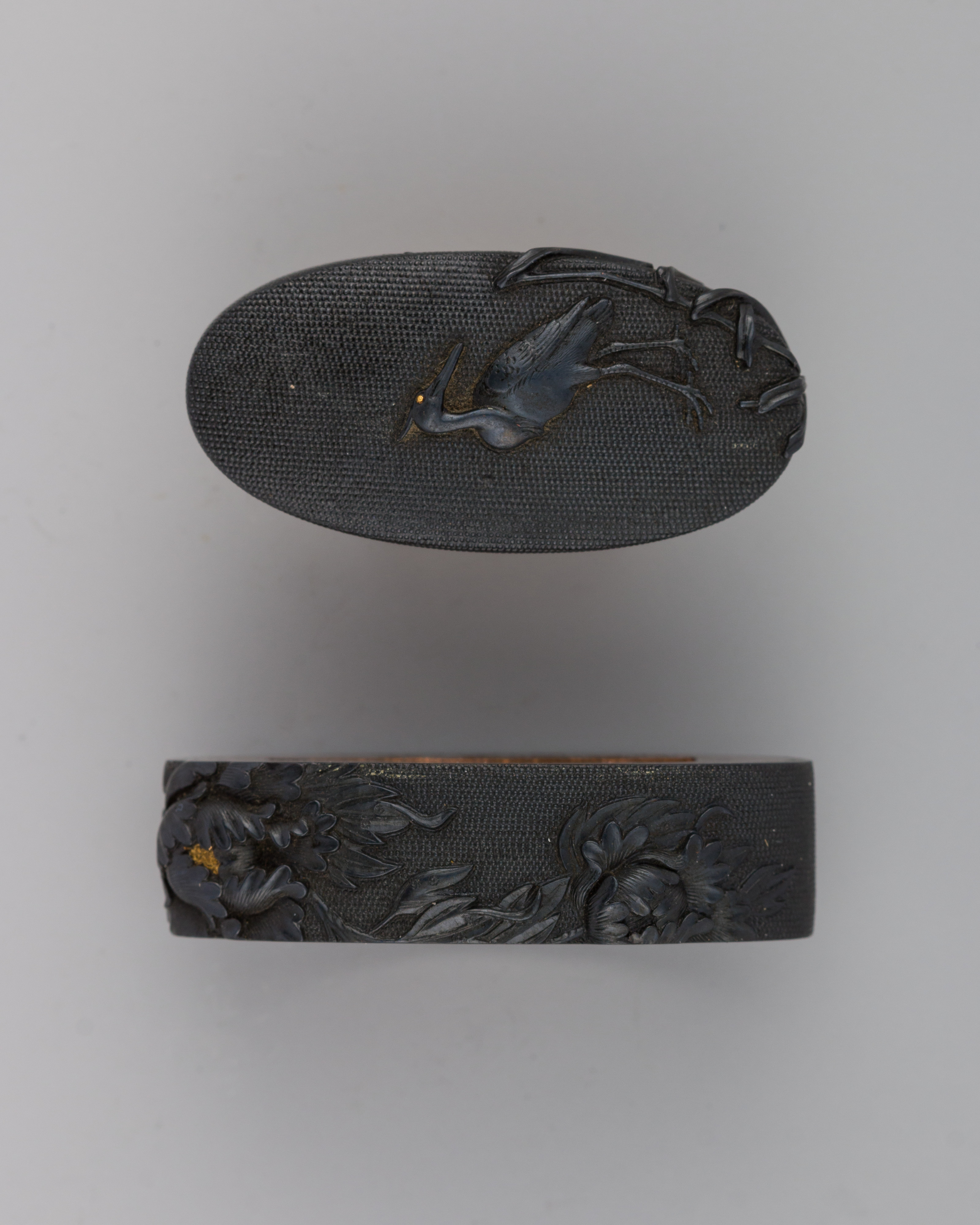
Heritage Analysis: Sword-Hilt Collar and Pommel (Fuchigashira) — Japanese Shakudō Adornment as a Strategic Luxury Asset
Introduction: The Object as a Strategic Lens
The fuchigashira, the paired sword-hilt collar (fuchi) and pommel (kashira) of the Japanese katana, represents one of the most concentrated expressions of premodern Japanese material culture. Forged from shakudō, a copper-gold alloy typically composed of approximately 95–97% copper and 3–5% gold, and finished with the nanako (fish-roe) or ishime (stone surface) textures, these fittings served a dual mandate: mechanical reinforcement of the sword grip and the encoded transmission of status, lineage, and spiritual allegiance. For Katherine Fashion Lab, the fuchigashira is not merely a historical artifact but a strategic case study in how micro-scale craftsmanship can carry macro-scale brand equity — a critical competency for the 2026 luxury landscape.
Symbolic Power: The Micro-Politics of the Samurai Grip
In Edo-period Japan (1603–1868), the sword was not a weapon alone; it was the legal and metaphysical extension of the samurai class. The fuchigashira functioned as the visible interface between the warrior's hand and the blade, and its iconography was subject to sumptuary regulation. Clan mon (crests), seasonal flora, and martial motifs were commissioned from specialist kinkō (metalworkers) whose ateliers — such as the Goto, Ishiguro, and Nara schools — operated as hereditary guilds with protected clientele. A fuchigashira depicting a dragon among clouds or a shishi (lion-dog) was not decorative; it was a declarative statement of rank, patronage, and allegiance. The alloy itself carried semiotic weight: shakudō's deep, near-black patina — achieved through nikomi-chakushoku (boiled coloring) using copper sulfate and verdigris — signified disciplined restraint, while the gold content, often applied in nunome-zōgan (cloth-overlay inlay) or hira-zōgan (flat inlay), indexed wealth without ostentation. This is the original luxury grammar of quiet signaling: value legible only to those with the literacy to read it.
Historical Adornment: Craft, Scarcity, and the Guild Economy
The production of fuchigashira was a closed-loop economy. A single matched pair required the collaboration of a shirogane-shi (alloy specialist), a chōkin-shi (chisel engraver), and a kanagushi-shi (finisher), with the finest examples taking weeks to complete. The nanako texture alone — thousands of raised hemispherical granules, each approximately 0.3–0.5 mm, applied with a nanako-tagane punch under magnification and breath control — demanded a level of dexterity that effectively capped output. Scarcity was therefore structural, not manufactured: supply was constrained by human physiology and guild gatekeeping. By the late Edo period, the market bifurcated into daimyō-grade commissions (signed, documented, often with gold hitsu boxes) and merchant-grade adaptations that emulated samurai aesthetics for the rising chōnin class. This stratification — heritage at the top, aspiration beneath — is a dynamic Katherine Fashion Lab must recognize as a precursor to modern tiered luxury.
Spiritual Meaning: The Sword as Vessel, the Fitting as Seal
Shinto and Zen Buddhist frameworks invested the katana with tama (spirit) and ki (vital energy). The fuchigashira, positioned at the physical point of contact between warrior and weapon, was understood as a ritual seal — a boundary object that mediated between the mundane hand and the sacred blade. Motifs were rarely arbitrary: kiku (chrysanthemum) invoked imperial resonance; take (bamboo) signaled resilience; komainu (guardian lions) warded against malevolent forces. The shakudō patina itself was read as a spiritual surface — its darkness absorbing light and ego alike, consistent with Zen aesthetics of wabi and sabi. In the Tokugawa ideological order, the fuchigashira thus performed a triple function: functional reinforcement, social legibility, and metaphysical protection. No comparable Western accessory of the period carried this density of meaning at this scale.
2026 Luxury Strategy: Translating Fuchigashira Logic into Brand Architecture
For Katherine Fashion Lab, the fuchigashira offers four actionable strategic principles for the 2026 high-end market:
1. Micro-Scale as Macro-Statement. The fittings demonstrate that authority can be encoded in the smallest visible surface. In an era of logo fatigue, luxury clients increasingly reward insider legibility — details that signal connoisseurship to peers while remaining opaque to the mass market. Katherine Fashion Lab should develop "fuchigashira-class" hardware: signature clasps, hinges, or closures executed in shakudō-toned alloys with proprietary patination, where the value is in the metallurgy, not the monogram.
2. Alloy as Brand Asset. Shakudō's copper-gold composition is a materials story with inherent scarcity and technical specificity. The lab should invest in a proprietary alloy registry — documented, trademarked, and traceable — positioning material science as heritage continuity rather than novelty. This aligns with the 2026 consumer's demand for provenance and verifiable craft.
3. Guild Logic for Modern Ateliers. The kinkō guild model — closed, hereditary, quality-gated — is the ancestor of the modern métiers d'art strategy. Katherine Fashion Lab should formalize an internal atelier with named artisans, limited annual output, and signed documentation, converting production constraints into equity.
4. Ritual Functionality. The fuchigashira was not ornamental; it was used. In 2026, luxury objects that do something — that close, protect, or transform — outperform purely decorative SKUs. Katherine Fashion Lab should design fittings and closures that are both functional and spiritually resonant, embedding narrative into the mechanism itself.
Conclusion: The Strategic Inheritance
The fuchigashira is a masterclass in compressed luxury: a few grams of shakudō carrying centuries of hierarchy, belief, and craft discipline. For Katherine Fashion Lab, its relevance in 2026 is not nostalgic but operational. The brands that will lead the next luxury cycle are those that can read historical adornment as strategy rather than decoration — and translate the fuchigashira's logic of scarcity, symbolism, and ritual function into contemporary objects that reward the literate few while enchanting the many.