Heritage Analysis: The Double Ring in American Adornment
Introduction: A Form Twice Told
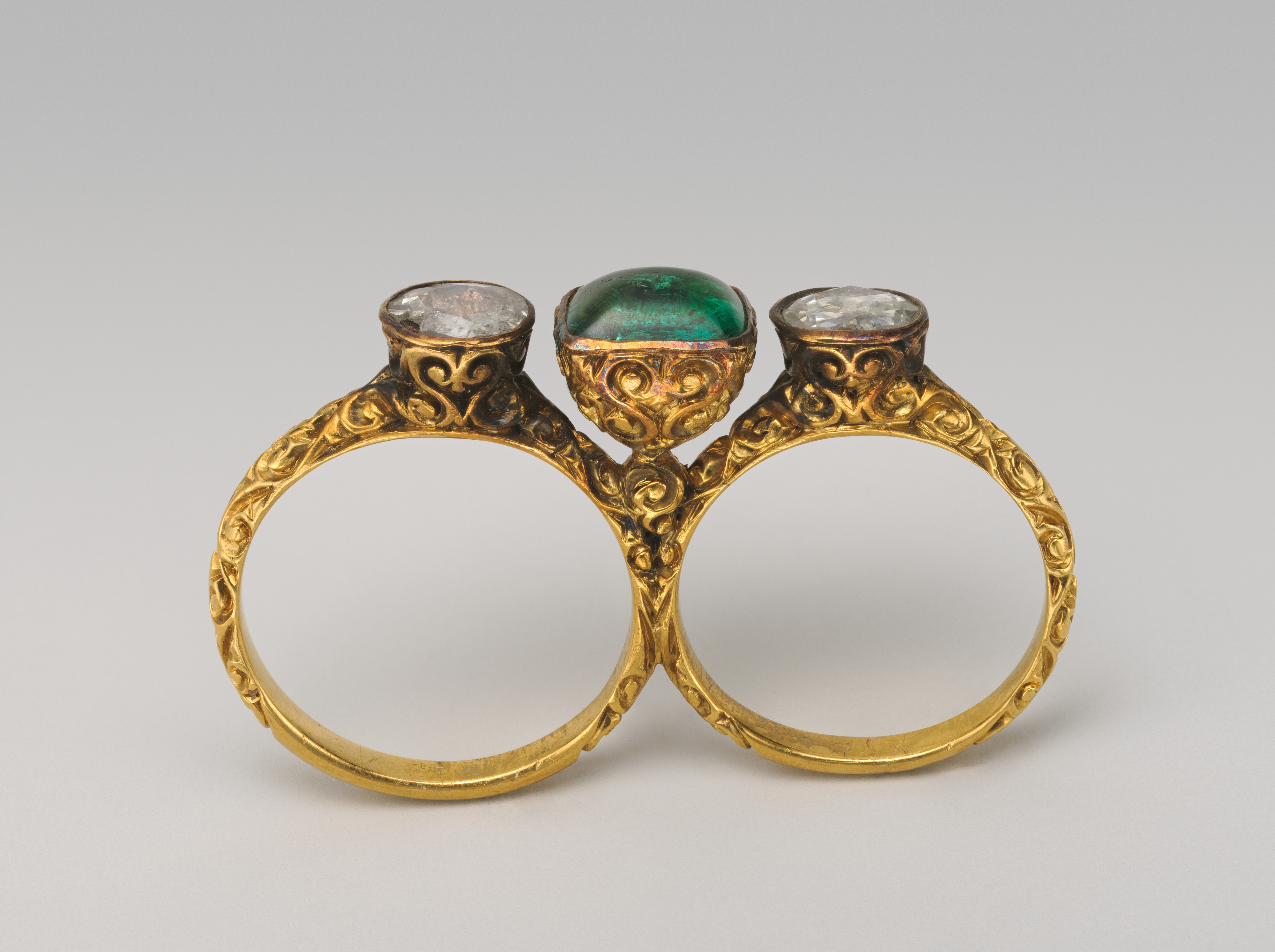
The double ring—two interlocked or parallel bands unified in a single ornament—represents one of the most quietly persistent forms in American jewelry heritage. While European courts codified the toi et moi and the gimmel ring, the American double ring evolved along a distinct trajectory: democratic in access, sentimental in function, and structurally ambitious in execution. In gold, diamonds, and emerald, the form reaches its fullest expression—a dual-band architecture that carries symbolic power far beyond mere decoration. For Katherine Fashion Lab, understanding this object is not antiquarian exercise; it is strategic intelligence for the 2026 luxury landscape.
Symbolic Power: The Grammar of Two
The double ring's authority rests on a universal grammar: union without erasure. Two circles remain distinct yet inseparable—a visual argument for partnership, covenant, and continuity. In American cultural history, this symbolism migrated from religious ceremony to civic life. Nineteenth-century friendship rings, Victorian keeper rings, and later engagement-and-wedding stacks all deployed the double form to mark thresholds of commitment. The two bands do not merge; they converse. This is the form's essential power: it honors individuality within bond, a proposition increasingly resonant in an era of negotiated identities.
When executed in gold with diamonds and emerald, the symbolism compounds. Gold signals permanence and purity of intention. Diamonds—historically adamantine, from the Greek adamas, "unconquerable"—represent inviolable promise. Emerald introduces a third register: renewal, vision, and in many traditions, the heart's clarity. The American double ring thus becomes a layered statement: endurance, vow, and rebirth, worn as a single gesture.
Historical Adornment: From Colonial Hand to Gilded Age Case
American double rings appear in colonial probate inventories as early as the 1720s, often described as "two hoops joined." These were rarely aristocratic commissions; they were artisan-made tokens exchanged among merchants, clergy, and landed families. By the antebellum period, the form had entered sentimental culture through lover's knots and split rings, where one band was given and its twin retained—a physical pledge of return.
The Gilded Age transformed the double ring into a statement of conspicuous craftsmanship. American houses, particularly in New York and Philadelphia, began setting twin bands with old-mine and rose-cut diamonds, occasionally flanking a central emerald. The emerald's inclusion was deliberate: it referenced classical and biblical prestige while distinguishing the wearer from the diamond-only conventions of European nobility. By the mid-twentieth century, the double ring had bifurcated: a mass-market symbol of engagement (the matching wedding set) and a connoisseur's object in platinum and fine stones. This duality—democratic and elite—is the form's American signature.
Spiritual Meaning: Covenant, Continuity, and the Emerald Eye
Spiritually, the double ring operates on multiple planes. In Christian marriage liturgy, two rings signify the two lives made one flesh, though the bands remain separate—a theological nuance often lost in modern retail. In Jewish tradition, the double ring echoes the two tablets of the covenant, while emerald, associated with the tribe of Levi and the high priest's breastplate, carries sacerdotal authority.
Beyond Abrahamic frameworks, the double ring resonates with Celtic and Indigenous American concepts of reciprocity: the give and the take, the speaker and the listener, the seasons in turn. Emerald deepens this metaphysical register. Across cultures, green stone is the eye of insight—the capacity to see what is hidden. A double ring set with emerald thus becomes an instrument of spiritual discernment: two paths, one vision.
2026 Luxury Strategy: Positioning the Double Ring for the Next Decade
As Katherine Fashion Lab prepares its 2026 strategic standalone research, the double ring offers four actionable vectors.
First, narrative scarcity. The form is under-exploited in contemporary high jewelry, which favors solitaires and tennis bracelets. A curated double-ring collection—limited, provenance-documented, and hand-finished—creates narrative scarcity without artificial supply constraints.
Second, the emerald differentiator. While diamonds anchor value, emerald provides chromatic and cultural distinction. Sourcing Colombian or Zambian emeralds with traceable provenance aligns with 2026 consumer demand for radical transparency and story-rich gemstones.
Third, gender-fluidity and stacking. The double ring is inherently non-binary in form—two bands, no prescribed center. It performs equally as a wedding set, a commitment ring, or a self-purchase. Marketing should resist heteronormative framing and instead position it as an architecture of intention.
Fourth, heritage authentication. Katherine Fashion Lab should commission archival research into American double-ring provenance—colonial inventories, Gilded Age auction records, mid-century design patents. This scholarly apparatus transforms a beautiful object into a collectible asset class, appealing to the family-office and museum-patron segments that will define 2026's top luxury tier.
Conclusion: The Strategic Case for Two
The double ring is not a trend; it is a structural archetype with American roots, spiritual depth, and untapped commercial velocity. In gold, diamonds, and emerald, it unites permanence, vow, and vision—a triad that speaks to a luxury consumer increasingly seeking meaning over mere mark-up. For Katherine Fashion Lab, the mandate is clear: claim the double ring as a signature heritage form, document its American journey, and position it at the intersection of symbolic power and 2026 market strategy. Two bands. One argument. Endless resonance.