Heritage Analysis: The German Powder Flask as a Luxury Archetype
Introduction: From Utility to Symbolic Capital
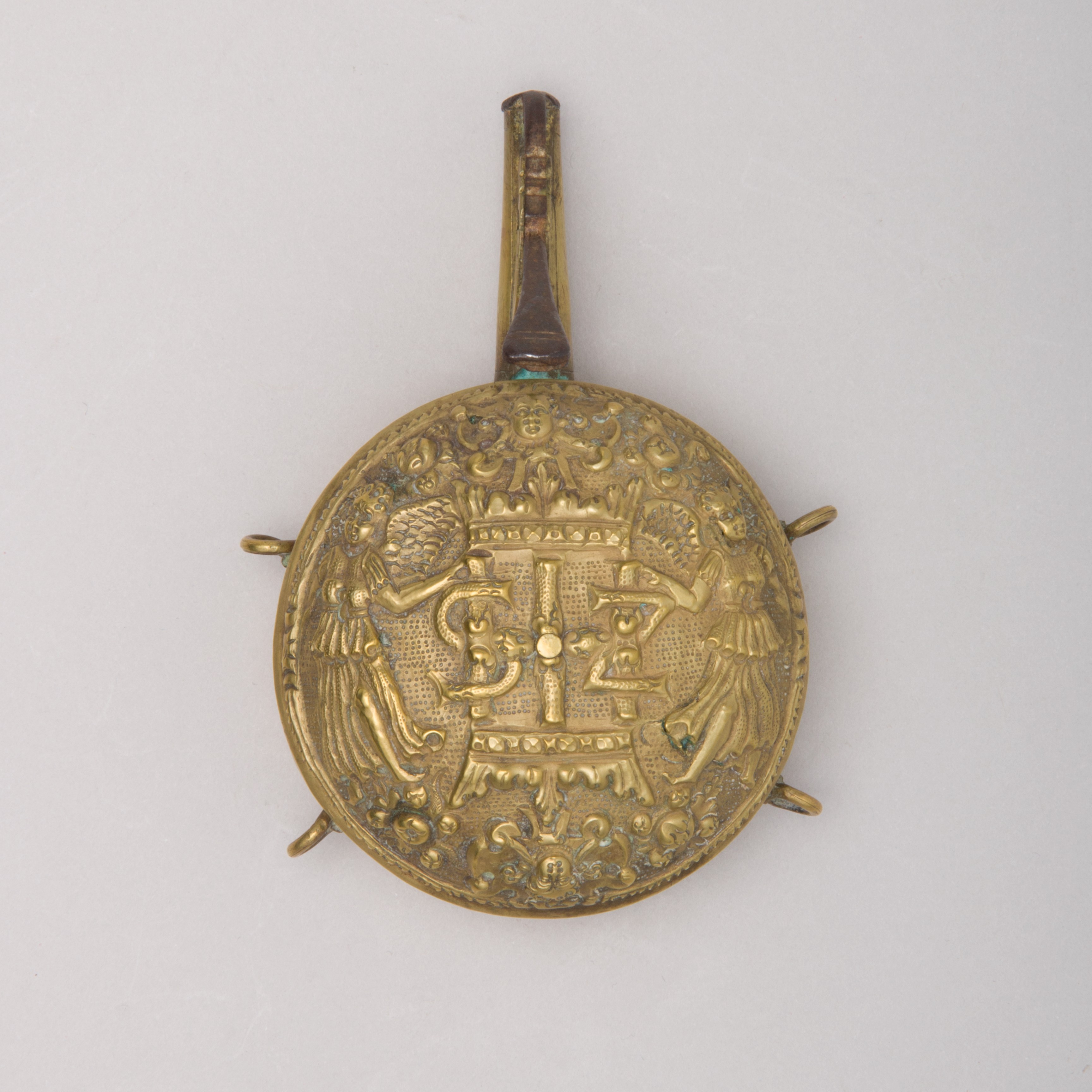
The German powder flask, forged in copper and iron alloys between the sixteenth and eighteenth centuries, occupies a paradoxical position within the material culture of early modern Europe. Ostensibly a utilitarian vessel for carrying black powder, it was, in practice, a highly ornamented object of personal display—a wearable declaration of status, craftsmanship, and martial identity. For Katherine Fashion Lab, the powder flask represents a strategic heritage asset: a historical artifact whose symbolic density can be translated into a coherent 2026 luxury narrative. This analysis examines the flask through four lenses—symbolic power, historical adornment, spiritual meaning, and contemporary luxury strategy—to establish a framework for its integration into high-end product development.
Symbolic Power: The Flask as an Instrument of Authority
In the Germanic territories of the Holy Roman Empire, the powder flask was never merely a container. It was a concentrated site of power. The possession of gunpowder implied access to firearms, and access to firearms implied membership within the hunting nobility or the emerging mercenary officer class. The flask, therefore, functioned as a portable insignia of rank. Its presence at the hip of a huntsman or soldier communicated a specific social truth: this individual commands lethal force, and does so with the legitimacy conferred by wealth and lineage.
The copper alloy body—typically brass or bronze—was chosen not only for durability but for its visual resemblance to gold. In an era before industrial standardization, the gilded or burnished flask caught light in a manner that signaled affluence. Iron alloy components, including the spring-loaded dispensing mechanism, introduced a contrasting aesthetic of mechanical precision. The object thus embodied a duality that remains commercially potent: the warmth of precious metal married to the cold authority of engineering. For Katherine Fashion Lab, this duality offers a design principle for 2026—luxury that is simultaneously sensuous and technically rigorous.
Historical Adornment: The Flask as Wearable Art
The decorative programs of German powder flasks reveal a sophisticated visual language. Engraved hunting scenes, heraldic crests, and mythological motifs were not incidental embellishments; they were narrative devices that situated the owner within a lineage of virtue and conquest. The Nuremberg and Augsburg workshops, renowned for their metalwork, produced flasks with repoussé reliefs that transformed a functional cylinder into a sculptural object. The chain or leather strap by which the flask was suspended became, in effect, a jewelry cord—anticipating the modern crossbody bag as a statement of curated identity.
This historical adornment strategy carries direct implications for contemporary luxury. The powder flask demonstrates that utility and ornamentation need not be oppositional. In fact, the most enduring luxury objects—the wristwatch, the cigarette case, the compact—have consistently blurred this boundary. A 2026 Katherine Fashion Lab collection inspired by the flask would prioritize tactile surfaces: hand-engraved copper-toned hardware, weighted iron-alloy clasps, and modular chains that allow the wearer to reconfigure the object’s placement on the body. The flask becomes a template for the “functional jewel”—an accessory that performs a task while announcing its own artistry.
Spiritual Meaning: Protection, Transformation, and the Alchemical Vessel
Beyond its martial and decorative functions, the powder flask carried spiritual connotations rooted in alchemy and folk belief. Gunpowder itself was understood as a substance of transformation—a material that converted potential into kinetic energy, silence into thunder. The flask, as its vessel, was therefore analogous to the alchemist’s retort: a container of volatile power that required careful handling and ritual respect. In German hunting culture, flasks were sometimes blessed before the hunt, and their contents were measured with a precision that bordered on the ceremonial.
This spiritual dimension offers Katherine Fashion Lab a narrative of intentionality. In an age of disposable consumption, the powder flask stands as an object that demands care, maintenance, and mindfulness. Its spiritual meaning is not doctrinal but operational: it teaches that power is contained, not displayed; that restraint is a form of respect. A 2026 luxury strategy can leverage this by positioning products as “vessels of purpose”—items that accompany the wearer through significant transitions, carrying symbolic weight rather than mere utility. The flask’s alchemical associations also align with the contemporary interest in transformation and self-actualization, allowing the brand to speak to consumers who view luxury as a tool for identity construction.
2026 High-End Luxury Strategy: From Artifact to Archetype
Translating the German powder flask into a 2026 luxury proposition requires more than historical citation. It requires the extraction of archetypal codes. Three strategic pillars emerge:
1. Material Honesty and Alloy Innovation. The original flask’s copper and iron alloys were chosen for performance and beauty. A contemporary interpretation should champion recycled copper alloys and advanced iron-based composites, positioning sustainability as a continuation of historical material intelligence rather than a departure from it.
2. Modular Adornment Systems. The flask’s suspension chain and interchangeable components anticipate today’s demand for customizable luxury. Katherine Fashion Lab can develop a line of modular accessories—pouches, cases, and wearable vessels—that reference the flask’s silhouette while allowing for personal configuration.
3. Narrative Scarcity and Provenance. The powder flask was often a bespoke commission, unique to its owner. In 2026, luxury consumers increasingly seek limited-edition objects with documented provenance. By creating numbered editions inspired by specific German workshops or historical motifs, the brand can merge heritage authenticity with contemporary exclusivity.
Conclusion: The Flask as Strategic Heritage Asset
The German powder flask is not a relic. It is a compressed system of meaning—power, adornment, spirituality, and craft—that can be decompressed to inform a luxury brand’s identity. For Katherine Fashion Lab, its value lies in its capacity to bridge the utilitarian and the ceremonial, the martial and the beautiful. In a market saturated with ephemeral trends, the flask offers a lesson in durable symbolism. The 2026 collection that draws from this source will not merely reference history; it will reactivate it, allowing contemporary consumers to carry a fragment of authority, artistry, and intention on their own bodies. That is the essence of strategic standalone research: to identify the past that still has work to do in the future.