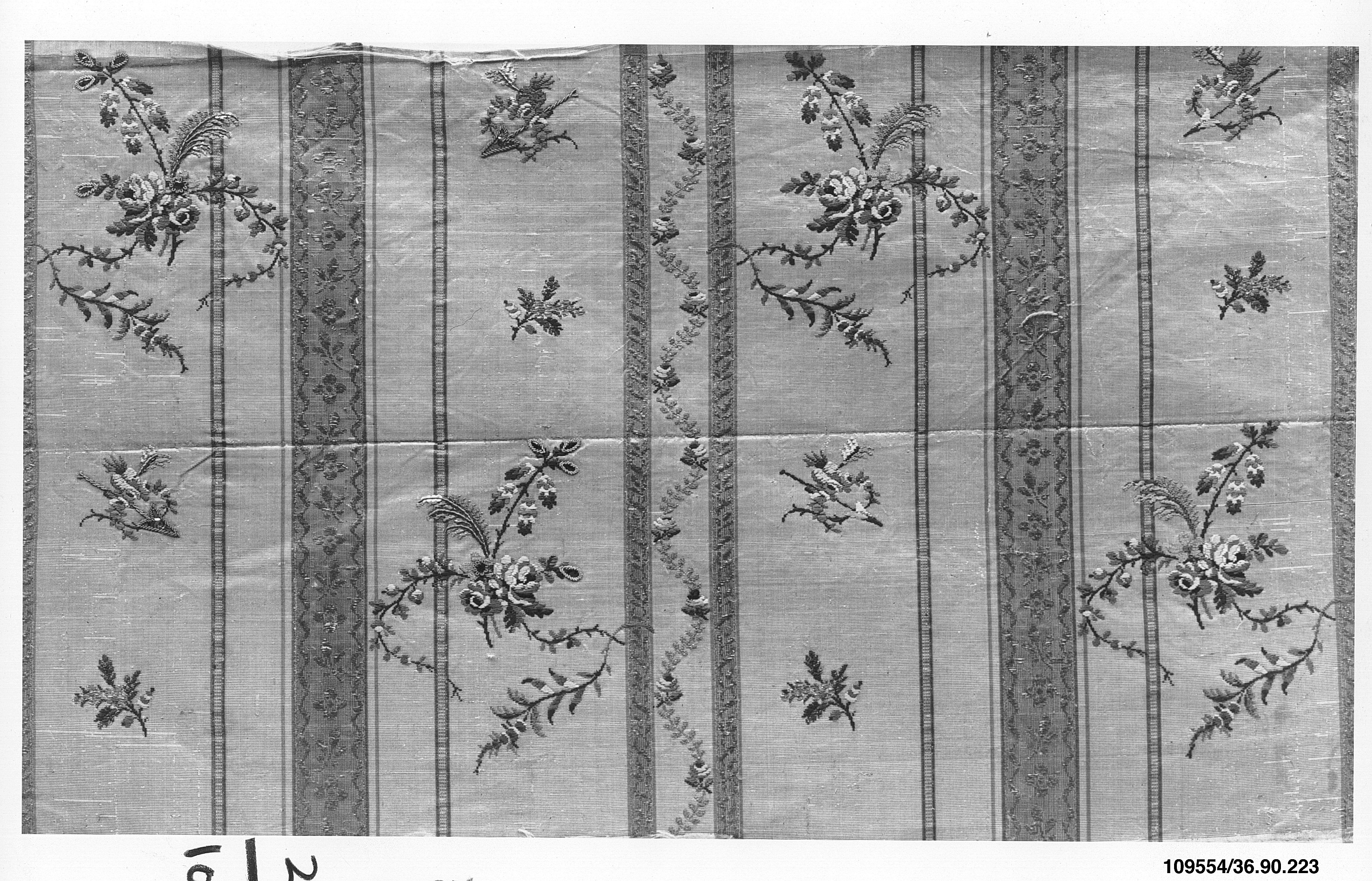
Piece as Paradigm: The Structural Logic of Silk and Metal Thread in Global Couture
The standalone study of a single garment—what the atelier tradition terms a piece—offers a uniquely rigorous lens through which to examine the intersection of material science, cultural transmission, and artisanal labor. When that piece is executed in silk and metal thread, the analytical stakes rise considerably. These are not merely two materials placed in proximity; they are two distinct technological systems, each with its own tensile logic, historical lineage, and symbolic economy. Their convergence within a single object constitutes what Katherine Fashion Lab identifies as a material dialectic: a tension between organic pliability and inorganic rigidity that resolves only through the hand of the maker.
This analysis examines a standalone piece drawn from global heritage traditions—not as a survey of any single culture, but as a cross-cultural interrogation of how silk and metal thread have been deployed to construct meaning, status, and structural integrity across geographies.
The Material Argument: Silk as Substrate, Metal as Skeleton
Silk, the protein filament produced by Bombyx mori and its wild counterparts, remains the most structurally sophisticated natural fiber available to the couturier. Its triangular cross-section refracts light in a manner that produces the characteristic luster associated with high-status textiles, while its tensile strength—approximately 0.5 GPa—exceeds that of steel by weight. In the context of a standalone piece, silk functions as the substrate: the continuous ground against which all other material decisions are measured.
Metal thread, by contrast, operates as a skeleton. Whether drawn from flattened silver, gold-wrapped silk core, or the metallic films historically produced in Cyprus, Japan, and the Indian subcontinent, metal thread introduces a fundamentally different mechanical behavior. It does not drape; it resists. It does not absorb dye; it reflects. Where silk negotiates with the body, metal thread negotiates with gravity. The couturier who combines them is therefore not simply embellishing a surface but engineering a composite structure—one in which flexibility and rigidity must be calibrated to the millimeter.
This calibration is the piece's central intellectual problem. Too much metal thread and the garment becomes armor, losing the body's movement. Too little and the metal loses its structural voice, becoming mere decoration. The standalone study reveals that the most successful historical examples—from Byzantine samite to the zari work of Banaras—resolve this tension through differential tensioning: metal thread is laid at a different angle to the silk warp, creating a fabric that behaves anisotropically, stiff in one direction and fluid in another.
Global Heritage as Method, Not Motif
The phrase "global heritage" in couture discourse is frequently reduced to a marketing category—a way of signaling exoticism without engaging the technical specificity of non-Western traditions. This piece resists that reduction. Its heritage is not a pattern to be quoted but a method to be inherited.
Consider three distinct lineages. In Chinese kesi (silk tapestry), metal thread is often omitted entirely, with silk alone achieving the pictorial density that European workshops would later associate with metallic embroidery. In Persian termeh, metal thread is woven into the warp itself, creating a fabric that is structurally metallic rather than surface-decorated. In West African kente, metallic strip-weaving introduces a rhythmic discontinuity that is fundamentally different from the continuous metallic fields of Eurasian traditions. Each lineage encodes a different answer to the same question: how should metal and silk speak to one another?
The standalone piece under study does not synthesize these traditions into a single hybrid. Instead, it holds them in productive suspension. A metal thread laid in a Persian-derived warp structure may be finished with a Chinese-style binding, while the overall silhouette references the draped logic of West African strip cloth. This is not pastiche; it is structural multilingualism—the ability of a single object to speak several technical languages without collapsing into incoherence.
Labor, Time, and the Economics of the Piece
Any serious analysis of silk and metal thread must confront the labor economics that make such pieces possible. Metal thread is among the most difficult materials to work with in the couture repertoire. It abrades the hands, snags on itself, and resists the smooth tension that silk requires. A single artisan may spend forty to sixty hours on a panel no larger than a forearm. This is not inefficiency; it is the necessary time-cost of a material that cannot be rushed.
In the global heritage context, this labor is often invisible in the final object. The piece appears effortless precisely because the effort has been absorbed into the structure. Katherine Fashion Lab's position is that this absorption is not a problem to be solved but a value to be named. The standalone study exists to make visible what the market typically obscures: that silk and metal thread are not luxury ingredients but collaborators in a structural argument that only the human hand can resolve.
Conclusion: The Piece as Proposition
A standalone piece in silk and metal thread is not a finished statement. It is a proposition—an argument about how two incompatible materials can be made to coexist, and about how global heritage can function as a living technical resource rather than a decorative archive. The piece does not resolve the tension between silk and metal; it inhabits that tension. And in doing so, it demonstrates that couture's most durable innovations are not visual but structural, residing in the quiet engineering of how a thread meets a thread.