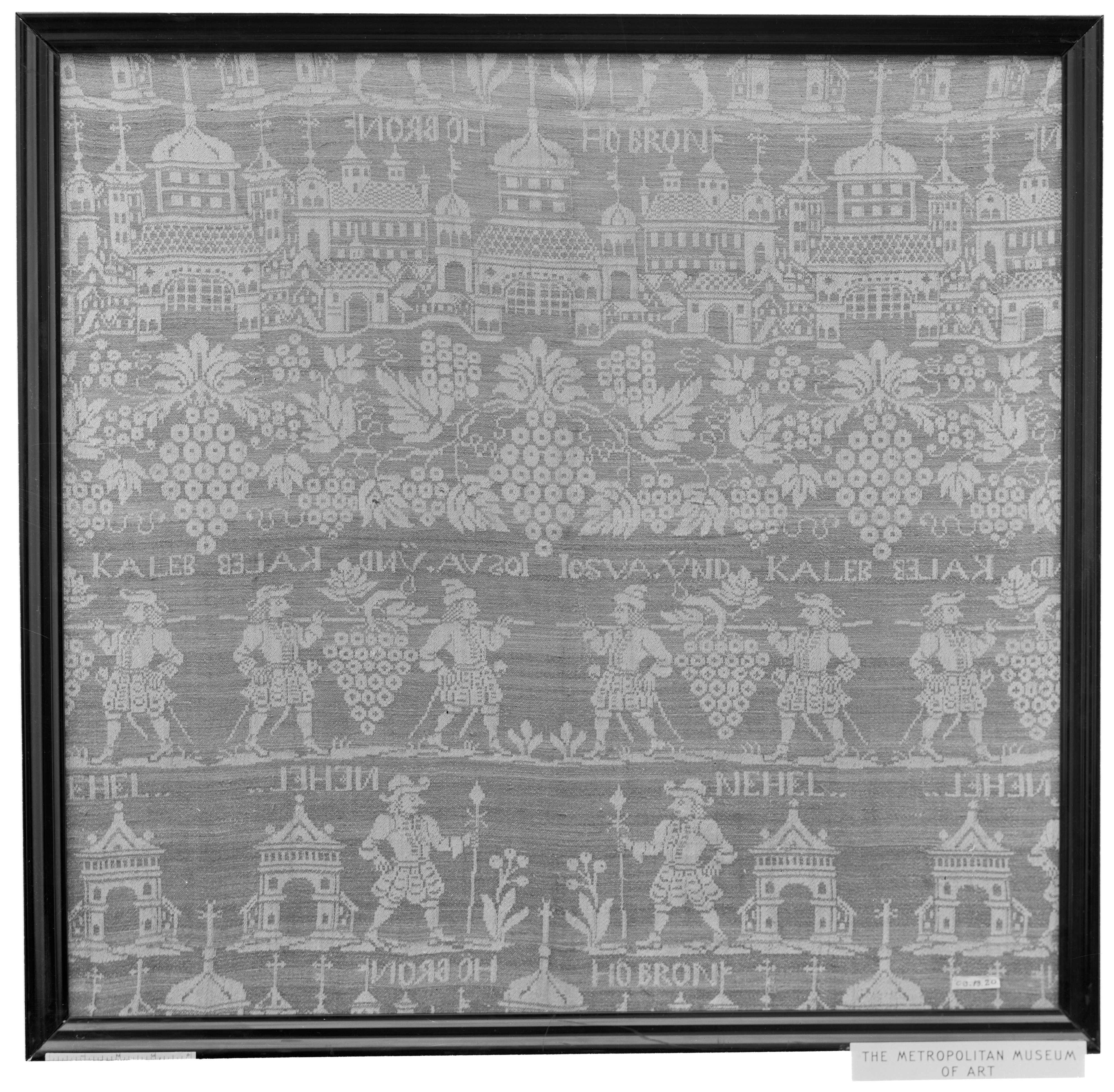
Piece as Proposition: The Linen Garment Between Artisanal Memory and Modernist Reduction
Within the vocabulary of contemporary couture, the term piece carries a deliberate ambiguity. It denotes neither a full collection nor a seasonal narrative, but a singular object of study — a garment conceived as a self-sufficient statement. In this standalone analysis, Katherine Fashion Lab examines a linen piece whose provenance is global heritage and whose formal logic is one of radical restraint. The question before us is not whether linen can be luxurious; that debate was settled long ago. The question is how a single garment, cut from one of humanity's oldest cultivated fibers, can function simultaneously as archaeological artifact and modernist proposition.
Material Integrity: Linen as Civilizational Record
Linen occupies a unique position in the hierarchy of noble fibers. Unlike silk, whose mythology is bound to a single imperial court, or cashmere, whose romance is tied to highland pastoralism, linen belongs to no single culture and to every culture. Fragments recovered from Neolithic lake settlements, dynastic Egyptian tombs, and Phoenician trading vessels confirm what the material itself communicates: linen is a fiber of continuity. It predates the nation-state, the fashion system, and the atelier as we know it.
This civilizational depth is not merely academic. It has direct consequences for how we evaluate a piece. When Katherine Fashion Lab approaches linen, we treat its irregularities — the slubs, the occasional thicker weft — not as defects to be engineered away but as evidence of the plant's organic record. Flax grown in different soils, retted in different waters, and spun under different humidities yields measurably different hand-feel. A linen garment is therefore a geological and climatic document as much as a design object. To standardize it into uniformity is to erase its testimony.
The piece under study honors this logic. Its weave is medium-weight, with a visible warp-and-weft grid that reads almost architectural under raking light. There is no chemical softener applied, no synthetic blend introduced to mask the fiber's natural crispness. The garment accepts linen's paradox: it is at once rough and refined, humble and aristocratic, a fabric that improves through use rather than degrading.
Cut and Construction: Reduction as Discipline
If the material speaks of accumulation across millennia, the cut speaks of subtraction. The piece employs a construction strategy best described as structural minimalism — a term we use deliberately to distinguish it from mere simplicity. Minimalism in couture is not the absence of effort; it is the concentration of effort into fewer, more consequential decisions.
Here, the garment's architecture rests on three principal seams and a single closure. There is no lining, no interfacing, no decorative topstitching. The shoulder is resolved through a subtle bias adjustment rather than a pad or a dart, allowing the linen's natural weight to drape the body rather than sculpt it. This is a high-risk approach: without the corrective machinery of traditional tailoring, every millimeter of the pattern is exposed. There is nowhere for imprecision to hide.
What emerges is a silhouette that shifts with the wearer's movement — closer to the logic of Japanese kimono construction or West African wrapper garments than to the fitted Western bodice. This convergence is not accidental. The piece's global heritage is not a decorative gesture toward "world textiles" but a genuine synthesis of construction philosophies that developed independently across continents. The result is a garment that resists the seasonal obsolescence built into the fashion calendar. It is not designed to be replaced; it is designed to be inherited.
Global Heritage Without Appropriation
The phrase global heritage demands scrutiny. In an industry that has repeatedly commodified marginalized craft traditions into trend cycles, any claim to heritage must be interrogated. Katherine Fashion Lab's position is that heritage is legitimate only when it is structural rather than ornamental — when it shapes how a garment is made, not merely how it looks.
This piece passes that test. Its heritage is embedded in the fiber's cultivation, the loom's rhythm, and the pattern's deference to the body's natural geometry. It does not borrow Motif A from Culture B and stitch it onto a Western template. Instead, it operates within a lineage of garment-making that treats cloth as a primary intelligence rather than a passive surface. That lineage is genuinely global: it runs through Flemish weaving towns, Indian handloom cooperatives, and Andean textile traditions alike.
The commercial implication is significant. A piece of this nature cannot be scaled through the conventional fast-fashion supply chain, because its value depends on variables — fiber provenance, weave integrity, construction restraint — that resist compression. It belongs instead to a slower economy of limited production, where the atelier functions as a custodian rather than a manufacturer.
Conclusion: The Piece as Standalone Argument
To evaluate a single piece without the scaffolding of a collection is to strip away the marketing apparatus and confront the object on its own terms. What remains, in this case, is a linen garment that argues for patience over novelty, structure over surface, and continuity over disruption. It is not a statement about a season. It is a statement about a century — perhaps several.
Katherine Fashion Lab regards this piece as a benchmark within our ongoing study of heritage materials and reductionist construction. It demonstrates that couture need not announce itself through embellishment. Sometimes the most rigorous luxury is a single length of linen, cut once, and cut correctly.