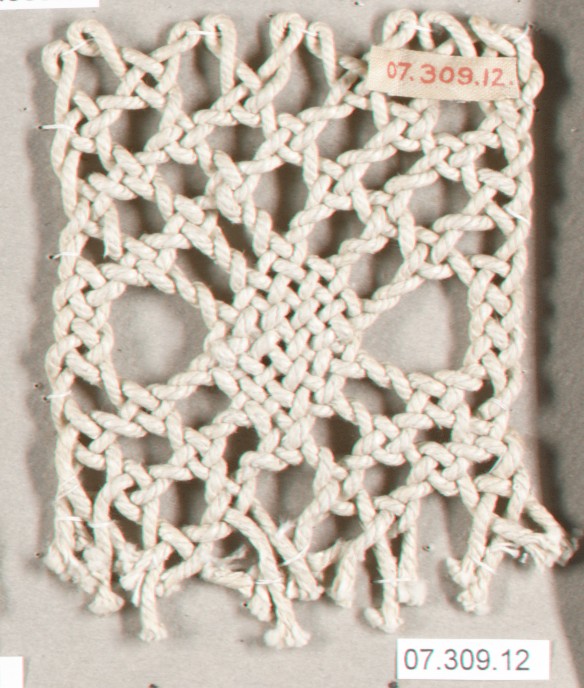
The Lace Stitch: A Global Tapestry of Technique and Narrative
Within the rarefied ateliers of haute couture, few elements possess the transformative power and profound heritage of the lace stitch. It is not merely a technique but a complete lexicon—a silent language of loops, knots, and voids that has articulated cultural identity, social status, and artistic ambition for centuries. At Katherine Fashion Lab, we approach lace not as a simple ornament but as a standalone study in micro-engineering, historical anthropology, and narrative craft. This analysis deconstructs the lace stitch from a global perspective, examining its origins, its material soul, and its enduring relevance as a cornerstone of artisanal intelligence in contemporary couture.
Deconstructing the Stitch: A Taxonomy of Emptiness and Substance
To understand lace is to first understand its paradoxical nature: it is a fabric constructed from its own absence. The foundation is not a woven ground but the deliberate, strategic space between threads. This study begins by categorizing the two principal families of lace technique, each representing a distinct philosophical approach to creation.
Needle Lace, originating from the refined courts of 16th-century Italy, is an additive and painterly process. Using a single needle and thread, the artisan builds the design from a void, creating a network of buttonhole stitches (the famed *punto in aria* or "stitch in air") that form motifs which are then connected by brides (bars) or netted grounds. It is a meditative, architectural process, where every stitch is a deliberate act of construction. The result is lace of unparalleled density, sculptural relief, and narrative clarity, seen in the epic historiated scenes of Venetian *gros point de Venise*.
In contrast, Bobbin Lace is a subtractive, rhythmic, and almost musical discipline. Dozens of threads, each wound on a weighted bobbin, are twisted, crossed, and plaited over a pinned pattern on a pillow. From the intricate geometric precision of Belgian *Binche* to the floral delicacy of French *Chantilly*, bobbin lace is a symphony of coordinated movement. It generates lace characterized by a sublime, rhythmic repetition and a fluid, continuous flow of thread. The distinction is critical: needle lace builds form from nothing; bobbin lace reveals form from a pre-ordained web of possibilities.
A Material Cartography: Threads as Cultural Artifacts
The global heritage of lace is inextricably linked to the artisanal materials that gave it form, each telling a story of local resource, climate, and aesthetic values. The material is not a passive substrate but an active participant in the stitch's final statement.
In Europe, the evolution was one of increasing refinement and luxury. Early laces utilized sturdy linen threads, prized for their strength and crisp handle, allowing for the complex structural feats of *point de France*. The 19th century saw a revolution with the advent of silk, particularly in the black *Chantilly* lace shawls that became a symbol of bourgeois elegance, and the ethereal *blonde* lace made from unblewn silk. The ultimate expression was the introduction of precious metal threads—silver and gold—often couched onto net grounds, transforming lace from accessory to a veritable document of wealth.
Beyond the European canon, a world of material ingenuity unfolds. In Paraguay, the delicate *ñandutí* lace is spun from the local spider-silk-like threads of the *aguapé* plant, creating sunburst motifs that speak to Guarani cosmology. In Nepal, the *dhaka* lace tradition employs fine, colorful cotton threads woven on small handlooms, creating geometric patterns distinct from the Western needle or bobbin traditions. Each material—from Chinese silk floss to Egyptian cotton—imparts a specific drape, sheen, and cultural resonance, making the lace stitch a tangible index of its geographical and cultural origin.
The Couture Dialectic: Heritage as a Platform for Innovation
For the modern couturier, and for the analytical framework of the Lab, historical lace techniques present not a museum artifact but a dynamic platform for innovation. The contemporary dialogue involves a sophisticated dialectic between reverence and deconstruction.
The first approach is technical homage through hyper-specialization. Houses like Lesage or Sophie Hallette maintain archives of antique lace, servicing couture ateliers by reproducing and adapting historical patterns with flawless, traditional technique. Here, the value lies in the uncompromising preservation of artisanal knowledge, applying it to modern silhouettes. A gown adorned with a perfectly executed *point d’Alençon* stitch becomes a walking archive.
The more disruptive, and perhaps more intellectually compelling, approach is conceptual and material recombination. Designers engage in a process of forensic analysis—dissecting the lace stitch to its core principles—and then re-engineer it. This manifests in scaling microscopic stitches to monumental proportions using unconventional materials: a bobbin lace technique executed in leather cord or aerospace wire; a needle lace motif rendered in laser-cut neoprene or fused acrylic. The iconic "stitch in air" is reimagined through 3D printing, building form from digital voids in a direct conceptual lineage from the Venetian masters. This is not destruction of heritage, but its evolution—using the foundational grammar of the lace stitch to write new sentences.
Ultimately, the lace stitch endures in couture because it embodies the very essence of the discipline: the transcendent value of time, the intelligence of the hand, and the power of material narrative. At Katherine Fashion Lab, we posit that each loop of a bobbin or twist of a needle is a data point in a centuries-long conversation across continents. To study the lace stitch in isolation is to understand that in couture, the most profound statements are often made not by what is present, but by what is meticulously, artfully, and intentionally absent. It is a testament to the idea that true luxury lies in the investment of human ingenuity, one imperceptible, perfect stitch at a time.