Introduction: The Band as a Study in Restraint
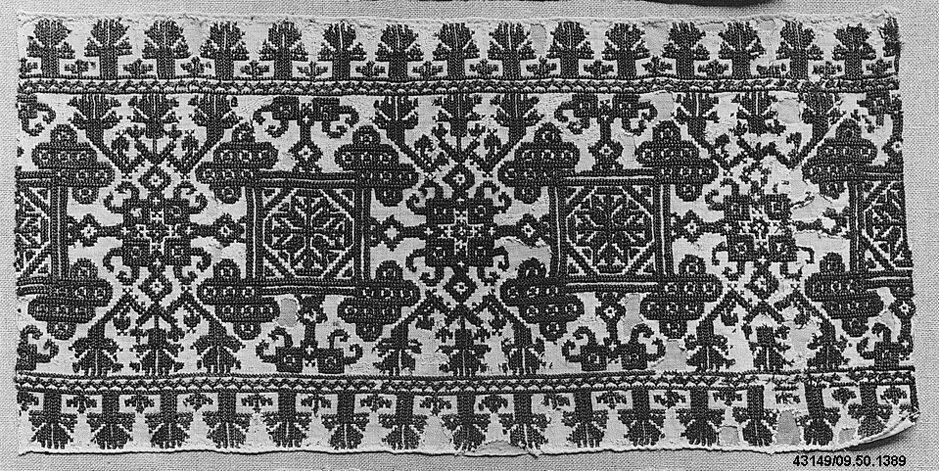
Within the vocabulary of couture, the band occupies a paradoxical position. It is neither garment nor accessory in the conventional sense, yet it performs both roles with quiet authority. This standalone study examines a single band construction executed in silk on linen—a pairing that situates the object at the intersection of global heritage and contemporary material intelligence. The band, in this instance, is not a decorative afterthought. It is a self-contained thesis on structure, surface, and the transmission of cultural memory through textile practice.
The decision to isolate the band as a subject of analysis reflects a broader shift in fashion scholarship: the recognition that small-scale constructions often carry disproportionate semiotic weight. A band encircles, binds, and delineates. It marks boundaries—between body and garment, between one cultural tradition and another, between ornament and function. When rendered in silk on linen, these boundaries become materially legible, inviting close reading.
Material Dialectics: Silk on Linen
The Tension of Dissimilar Fibers
Silk and linen are not natural companions. Silk, a protein fiber produced by Bombyx mori, offers lustrous drape, high tensile strength, and a capacity for chromatic depth that has made it a currency of luxury for millennia. Linen, a cellulose fiber derived from the flax plant, presents a contrasting profile: matte, crisp, and structurally rigid, with a natural irregularity that resists uniformity. To combine them is to stage a material dialectic.
In this band, the silk is not merely applied to the linen surface. It is integrated through a technique that allows the silk to float above the linen ground, creating a shallow relief. This three-dimensionality is subtle—visible only at oblique angles—but it transforms the band from a flat strip into a sculptural object. The linen provides the armature; the silk provides the skin. The result is a construction that honors both fibers without subordinating one to the other.
Historical Precedents and Global Heritage
The silk-on-linen combination is not a modernist invention. It appears in diverse textile traditions across Asia, the Middle East, and Europe, each time adapted to local resources and symbolic needs. In certain Central Asian suzani traditions, silk embroidery on linen or cotton grounds served as a marker of familial identity and dowry wealth. In Renaissance Europe, silk thread on linen canvas underpinned the development of needlepoint as both domestic craft and courtly accomplishment. The band in question draws on this global heritage without citing any single source directly. It is a synthesis, not a pastiche.
What distinguishes this study is its refusal to treat heritage as a fixed archive. Instead, the band positions heritage as a living grammar—one that can be spoken with a contemporary accent. The silk-on-linen pairing is thus both a historical reference and a forward-looking proposition.
Construction and Technique: The Band as Architecture
Edge Treatment and Structural Integrity
The band measures approximately four centimeters in width—a dimension that demands precision. At this scale, every stitch is visible, every deviation from the intended line becomes a compositional event. The edges are finished with a silk binding that folds over the linen core, enclosing the raw margins and creating a continuous, unbroken perimeter. This binding is not merely functional; it establishes a rhythm of light and shadow that runs the length of the band.
The linen core itself is densely woven, with a thread count high enough to prevent distortion under the tension of the silk application. This is critical: a band must resist stretching, or it loses its architectural integrity. The maker has chosen a linen that has been washed and pressed before construction, a process that shrinks the fiber and stabilizes the weave. The silk, by contrast, is left largely untreated, allowing its natural elasticity to interact with the linen’s rigidity. The band thus possesses a dynamic tension—firm enough to hold its shape, supple enough to conform to the body.
Surface and Light
Under raking light, the silk on the linen band reveals a complex surface topography. The silk threads catch the light and release it in small, concentrated flares, while the linen ground absorbs and diffuses illumination. This interplay creates a visual shimmer that shifts with the wearer’s movement. It is a quality that cannot be captured in a static photograph; it must be experienced in motion.
This optical behavior is not accidental. It is the result of deliberate material selection and thread placement. The silk is not embroidered in a uniform direction; instead, the angle of application varies across the band’s length, producing a subtle anisotropy. The band is therefore never the same twice—its appearance depends on the angle of view, the quality of light, and the position of the body.
Cultural Signification: The Band as Carrier of Meaning
Boundaries, Identity, and Exchange
Bands have historically served as markers of identity, status, and affiliation. They appear in religious vestments, military insignia, bridal attire, and everyday dress across cultures. The band binds the waist, encircles the wrist, or edges a hem. It is a liminal object, existing at the threshold between one state and another.
In this standalone study, the band’s cultural references are deliberately plural. The silk-on-linen technique evokes multiple geographies—the Silk Roads, the Mediterranean, the Indian subcontinent—without claiming any one as origin. This is a strategic ambiguity. It positions the band as a global heritage object, one that belongs to no single tradition but participates in many. In an era of cultural appropriation debates, this approach is both risky and necessary. It demands that the viewer engage with the object’s materiality rather than its presumed ethnicity.
The Ethics of Material Choice
Silk production raises ethical questions: silkworms are typically killed in the reeling process, and the labor conditions in silk supply chains vary widely. Linen, by contrast, is often promoted as a more sustainable fiber, requiring less water and fewer pesticides than cotton. The pairing of silk on linen can therefore be read as an ethical negotiation—a willingness to acknowledge the costs of luxury while seeking a more balanced material footprint.
This band does not resolve that negotiation. It stages it. The silk’s beauty is inseparable from its provenance; the linen’s humility is inseparable from its agricultural reality. The wearer is invited to hold both truths simultaneously.
Conclusion: The Band as Proposition
This standalone study of a silk-on-linen band demonstrates that couture analysis need not focus on the gown or the jacket. The band, in its modesty, offers a concentrated site for examining material intelligence, cultural heritage, and ethical complexity. It is a reminder that in fashion, as in architecture, the smallest details often carry the greatest weight.
The band does not shout. It does not seek to dominate the body or the gaze. Instead, it proposes a quiet argument: that beauty can be structural, that heritage can be plural, and that a four-centimeter strip of silk and linen can hold as much meaning as a full ensemble. For Katherine Fashion Lab, this study affirms a commitment to slow looking—to the idea that the most rigorous analysis often begins with the smallest object.