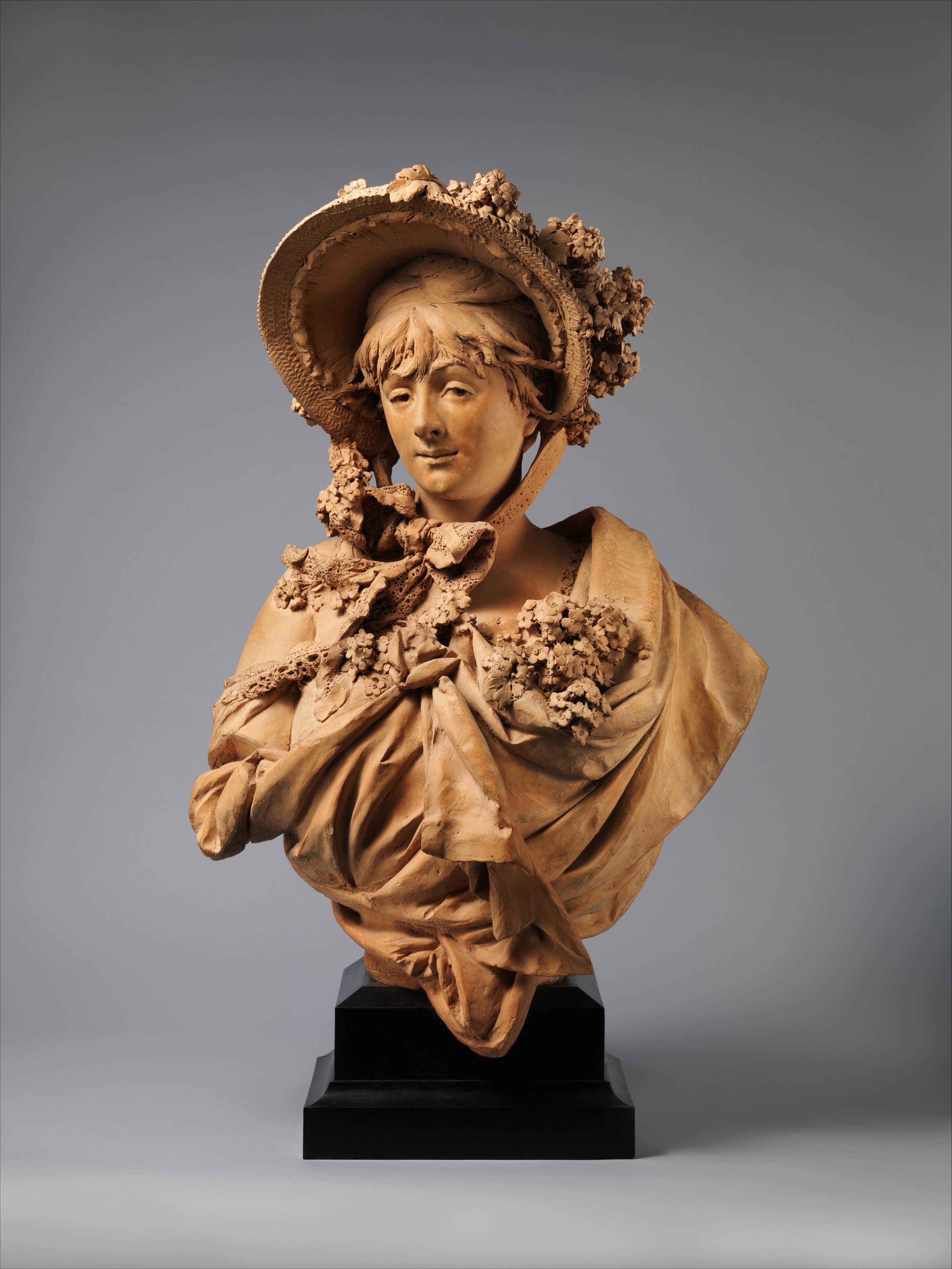
Heritage Asset Analysis: Girl in a Straw Bonnet
Object Identification and Material Context
The object under review—Girl in a Straw Bonnet—is a terracotta figure mounted on a wood base, attributed to an ancient civilization and held within the strategic standalone research portfolio of Katherine Fashion Lab. Terracotta, fired clay, represents one of the earliest and most democratically distributed sculptural media in human history. From the Tanagra figurines of Boeotia (circa 300 BCE) to the funerary attendants of the Chinese Tang and the votive figures of the Indus Valley, terracotta served a dual function: it was both a utilitarian craft material and a vessel for spiritual investment. The wood base, likely a later addition, signals the object's transition from archaeological artifact to curated collectible—a shift that itself carries narrative value for luxury positioning.
The choice of terracotta is not incidental to the object's symbolic power. Unlike marble or bronze, which were reserved for imperial and divine commissions, terracotta was the medium of the intimate, the domestic, and the personal. A girl in a straw bonnet, rendered in fired earth, speaks to the representation of everyday femininity—yet the survival of such an object across millennia elevates the mundane into the monumental. This tension between the ordinary and the enduring is precisely the territory that contemporary luxury brands must occupy.
Symbolic Power and Historical Adornment
The straw bonnet is the object's primary semiotic anchor. In ancient agrarian societies, the straw hat was a functional artifact: protection from sun, dust, and field labor. However, its depiction in a sculpted figure transforms it into a marker of identity. The bonnet frames the face, drawing attention to the gaze and the countenance—a technique that anticipates the portrait conventions of later European painting. For a girl to be depicted wearing a bonnet rather than a veil or diadem suggests a specific social location: she is not royal, not priestly, but she is adorned. Adornment, even in its humblest form, is an act of self-respect and cultural signaling.
From a historical adornment perspective, the straw bonnet occupies a liminal space between utility and ornament. It is woven, plaited, and shaped—techniques that require skill and patience. The labor embedded in the bonnet mirrors the labor embedded in the terracotta itself. This double layer of craftsmanship—the weaver and the sculptor—creates a palimpsest of human effort that luxury consumers in 2026 are increasingly conditioned to value. The bonnet is not a crown, but it is a construction of care.
Spiritual Meaning and Votive Function
In many ancient civilizations, terracotta figures were deposited in tombs, temples, and domestic shrines. They served as votive offerings, substitutes for living attendants, or companions for the deceased. A girl in a straw bonnet may have been a mourner, a servant, a daughter, or a deity in disguise. Her spiritual meaning lies in her ambiguity. She is not a named goddess with a canonical iconography; she is a generic yet individuated presence. This ambiguity allows her to function as a spiritual proxy—she carries the prayers, hopes, and griefs of those who placed her.
For the modern luxury strategist, this votive dimension is critical. High-end consumers in 2026 are not merely purchasing objects; they are purchasing meaning, protection, and continuity. The Girl in a Straw Bonnet offers a narrative of endurance: she has survived empires, religions, and economies. To own a reproduction or a brand-inspired interpretation is to participate in that endurance. The spiritual meaning is not doctrinal but existential—a reminder that fragility (terracotta is brittle) and permanence (she still stands) can coexist.
2026 Luxury Strategy: From Artifact to Aspiration
Katherine Fashion Lab's 2026 strategy must translate this object's heritage into a coherent luxury proposition. Three vectors emerge:
1. Material honesty and tactile luxury. The terracotta surface—matte, warm, slightly irregular—contrasts with the high-gloss, synthetic finishes of much contemporary fashion. A 2026 collection inspired by this figure should prioritize unglazed ceramics, raw silk, hand-plaited straw, and wood grain. The wood base becomes a design motif: grounding, architectural, and sustainable.
2. The bonnet as accessory archetype. The straw bonnet is not a historical curiosity; it is a precursor to the modern sun hat, the bucket hat, and the headscarf. Katherine Fashion Lab can reinterpret the bonnet in luxury millinery—using artisanal straw weaving, subtle terracotta-toned dyes, and structural silhouettes that reference the ancient figure without resorting to costume. The bonnet becomes a symbol of protective femininity, recontextualized for contemporary women who navigate public and private spheres.
3. Narrative scarcity and provenance storytelling. Standalone research assets like this figure are not mass-market references. They are anchors for limited-edition capsules, private client events, and museum partnerships. The 2026 strategy should position the Girl in a Straw Bonnet as a "quiet icon"—an object that does not shout its luxury but rewards close looking. Marketing language should emphasize continuity, craft, and the spiritual dignity of the everyday.
Conclusion
The Girl in a Straw Bonnet is more than an ancient terracotta. She is a strategic asset: a material archive of adornment, a vessel of spiritual ambiguity, and a prototype for sustainable, meaning-driven luxury. For Katherine Fashion Lab, her value lies in her ability to bridge archaeological authenticity with 2026 consumer desire for depth, provenance, and tactile beauty. The bonnet protects; the terracotta endures; the girl looks forward. That is the heritage proposition.