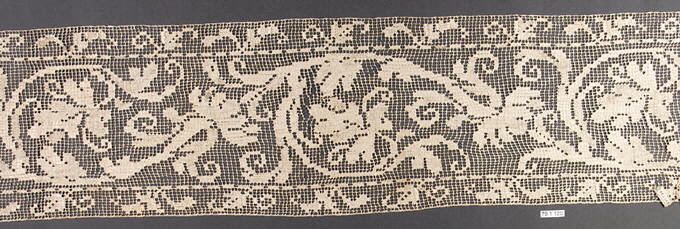
Border as Conceptual Territory: The Liminal Aesthetics of Embroidered Net
In the lexicon of haute couture, the term border has long been relegated to the functional periphery—a decorative terminus where fabric meets finish. Yet within the global heritage of textile artistry, the border operates as far more than an edge condition. It is a threshold, a zone of cultural negotiation, and a semiotic membrane through which civilizations have historically exchanged visual grammars. This standalone study examines the embroidered net border as a site of profound aesthetic inquiry, tracing its migration from South Asian ceremonial drapery to the contemporary couture atelier, where it now functions as both archive and avant-garde proposition.
Historical Provenance: The Border as Cultural Archive
The embroidered border emerges from a global heritage of textile traditions in which the edge carries as much narrative weight as the field. In the Indian subcontinent, the kinar—the border of a sari or dupatta—has historically served as a canvas for genealogical and devotional inscription. Mughal workshops refined this impulse into an imperial idiom, deploying zardozi metallic threadwork along garment edges to signal rank and courtly affiliation. Parallel traditions in Ottoman kasnak embroidery, Persian gul-i-bulbul border motifs, and West African adire resist-dyed selvedges demonstrate that the border is a universal site of cultural self-definition.
What unites these disparate traditions is the border's function as a liminal device. Anthropologically, the border demarcates the known from the unknown, the body from the environment, the sacred from the profane. When rendered in embroidered net, this liminality acquires a paradoxical quality: the net itself is a permeable structure, a grid of absence through which light and skin pass freely. The embroidery that adorns it thus hovers between presence and dissolution—a material meditation on the very nature of boundaries.
Materiality of Embroidered Net: Transparency and Tension
Net, or tulle in the Francophone couture tradition, is a fabric of engineered emptiness. Its hexagonal or diamond mesh provides a substrate that is simultaneously structural and ethereal. When couture houses such as Maison Lemarié or the ateliers of Kolkata's Chandni Chowk apply embroidery to net, they exploit this duality. The needle must negotiate a surface that offers no continuous ground; each stitch is an act of suspension, a thread held in tension across a void.
This technical challenge produces a distinctive aesthetic. Embroidered net borders possess a floating quality—motifs appear to hover, untethered from any opaque field. In the chikankari tradition of Lucknow, white-on-white shadow work on fine net creates borders that read as whispers rather than declarations. Conversely, the gota patti borders of Rajasthan, applied to net odhnis, produce a metallic rigidity that contrasts sharply with the substrate's softness. The border becomes a site of material dialectic: structure against transparency, weight against weightlessness, permanence against evanescence.
The Border as Standalone Study: Autonomy and Abstraction
To isolate the border as a standalone study is to liberate it from its subordinate role. In contemporary couture, designers increasingly treat the border not as a finishing device but as an autonomous compositional unit. The border can be detached, enlarged, repeated, and recontextualized—a process that transforms a functional element into an abstract motif. When a zardozi border is removed from its original lehenga context and applied to a minimalist column gown, it ceases to be heritage and becomes citation.
This decontextualization raises critical questions. Does the standalone border honor its origins or commodify them? The answer lies in intentionality. When designers collaborate with heritage artisans—as in the Katherine Fashion Lab methodology—the border functions as a living archive rather than a museum specimen. The embroidered net border becomes a translational object, carrying encoded knowledge from one cultural frame into another without erasing its provenance.
Global Heritage, Contemporary Iteration
The global heritage of the embroidered border is not a static inheritance but a dynamic conversation. Contemporary couture has absorbed border traditions from Kutch mirror work, Phulkari darning, Vietnamese lanh my A net embroidery, and Sicilian punto tagliato cutwork. Each tradition contributes a distinct vocabulary of stitch, motif, and material logic. The embroidered net border, in particular, has become a transcultural signifier—recognizable across contexts yet irreducible to any single origin.
In the standalone study, the border achieves what philosopher Michel Serres might call a quasi-object: it belongs to no single culture yet mediates between all of them. It is a threshold object, perpetually in transit. The embroidered net border, suspended between opacity and transparency, tradition and innovation, periphery and center, offers couture a profound meditation on the nature of belonging itself.
Conclusion: The Border as Couture's Conscience
To study the border is to confront couture's deepest anxiety: the relationship between the garment and the world it inhabits. The embroidered net border, drawn from global heritage and rearticulated in contemporary practice, refuses the false choice between authenticity and innovation. It demonstrates that the edge is not where meaning ends but where it begins—a liminal zone where cultures meet, negotiate, and transform one another. In this sense, the border is not couture's decoration but its conscience, reminding us that every garment is a boundary object, and every boundary a site of becoming.