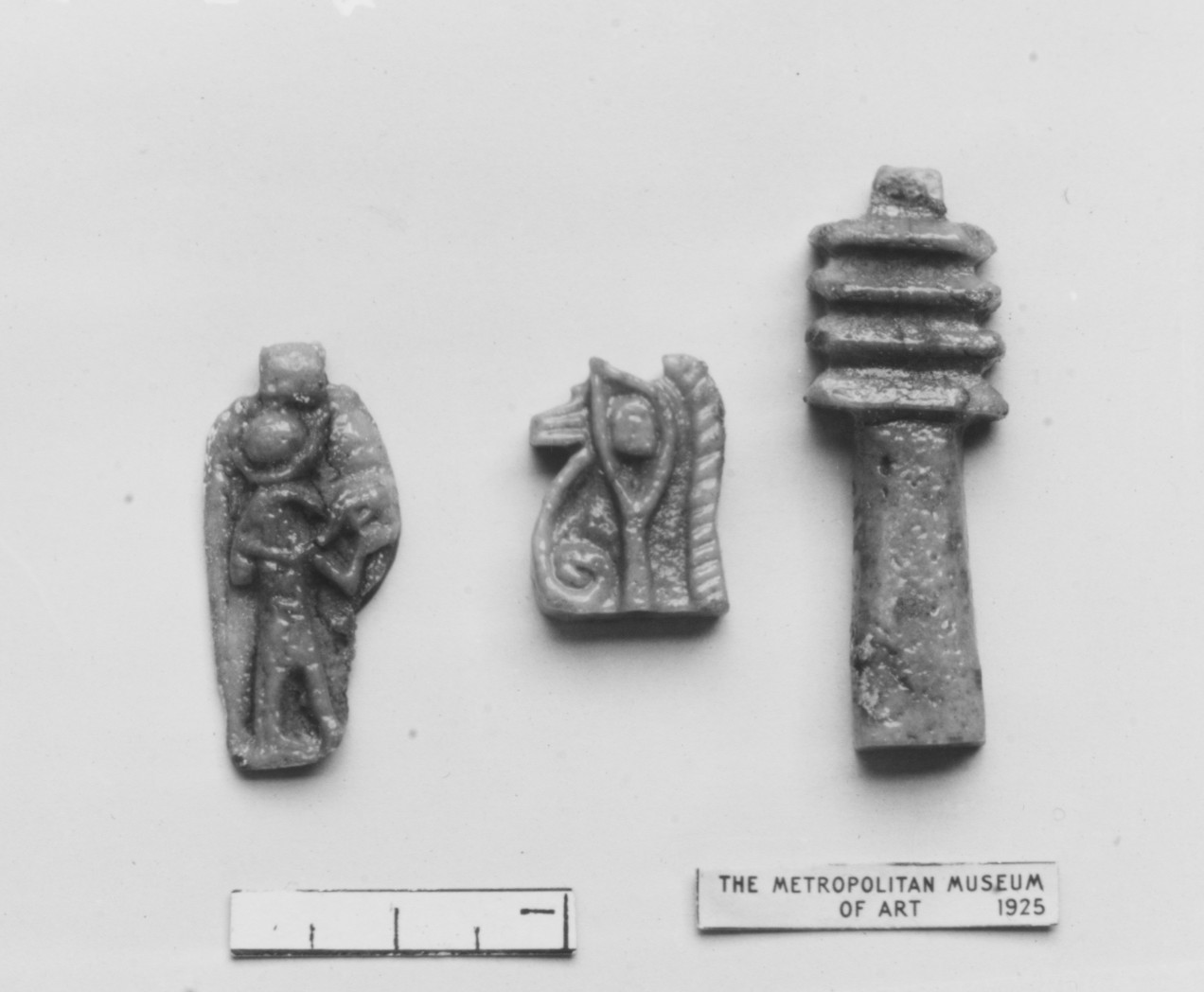
Heritage Asset Analysis: The Wedjat Eye Amulet
Introduction: A Civilizational Icon in Faience
Within the Katherine Fashion Lab heritage portfolio, few artifacts possess the durable symbolic equity of the Wedjat Eye amulet. Originating in ancient Egyptian civilization and rendered most distinctively in faience—a sintered quartz paste with a vitreous, turquoise-blue glaze—the Wedjat Eye represents one of the earliest and most sustained examples of protective adornment in human history. For a luxury house operating in 2026, the amulet is not merely an archaeological curiosity; it is a strategic asset whose symbolic density, material narrative, and cross-millennial endurance offer a defensible platform for high-end product architecture and brand storytelling.
Symbolic Power: The Mechanics of Meaning
The term Wedjat derives from the Egyptian root wḏꜣ, meaning "to be whole, sound, or complete." The symbol depicts the restored eye of the god Horus, torn out in mythological combat and subsequently healed by the god Thoth. This narrative of injury, restoration, and wholeness is the amulet's core symbolic engine. Unlike a static emblem, the Wedjat Eye encodes a transformation arc: fragmentation followed by reintegration. For contemporary luxury consumers navigating fractured attention economies, this narrative of restoration carries immediate psychological resonance.
The amulet's component hieroglyphs—the teardrop, the curling tail, the eyebrow—each carry discrete meaning, functioning as a compressed visual language. This layered legibility is precisely what distinguishes heritage symbols from generic ornament. A luxury brand can extract individual motifs or deploy the complete form, generating a modular design system with inherent narrative depth.
Historical Adornment: From Amulet to Accessory
Wedjat Eye amulets were produced in extraordinary quantities across the Pharaonic period, appearing in funerary contexts, domestic settings, and personal adornment. They were worn as pendants, strung into broad collars, incorporated into finger rings, and placed among mummy wrappings. The material choice of faience is strategically significant: it was an affordable, moldable medium that allowed symbolic protection to be democratized across social strata, yet its luminous blue-green glaze evoked tjehenet—the Egyptian concept of brilliant, life-giving light associated with the sun, rebirth, and the inundation of the Nile.
This duality—accessible materiality married to elevated spiritual function—mirrors the contemporary luxury paradox. High-end consumers seek both exclusivity and authentic connection to enduring human narratives. The Wedjat Eye's historical trajectory demonstrates that a symbol can be simultaneously intimate and universal, personal talisman and civilizational marker.
Spiritual Meaning: Protection, Healing, and Continuity
Functionally, the Wedjat Eye was an apotropaic device: it deflected harm, cured illness, and ensured regeneration. Its association with lunar and solar cycles positioned it as a mediator between darkness and light, decay and renewal. In funerary practice, it was placed upon the body to protect the deceased during transition; in daily life, it guarded the living against malevolent forces.
For a 2026 luxury strategy, this spiritual dimension must be handled with cultural precision. The amulet is not a decorative motif to be superficially appropriated; it is a ritual technology whose power derives from specific theological and cosmological frameworks. Katherine Fashion Lab's positioning should emphasize stewardship rather than extraction—partnering with Egyptological scholars, commissioning material research into historically accurate faience techniques, and framing product narratives around protection, restoration, and continuity rather than exoticism.
Material Strategy: Faience as Luxury Differentiator
Faience offers a compelling material narrative for high-end application. Its production—crushed quartz or sand bound with lime and alkali, shaped, then fired with a copper-based glaze—is a pre-industrial ceramic technology that predates glass. The resulting surface possesses a depth and variation that synthetic glazes cannot replicate. For 2026, Katherine Fashion Lab can develop a proprietary faience-inspired ceramic or composite, translating the ancient medium into contemporary jewelry, objet d'art, and hardware for leather goods.
The material's inherent variability—each firing yields subtle differences in hue and crackle—aligns with luxury's valuation of the singular and the handcrafted. A faience-derived line would occupy a distinctive position between fine jewelry and artisanal ceramics, a white space in the current market.
2026 Luxury Strategy: Positioning the Wedjat Eye
Three strategic pillars emerge for the Wedjat Eye within Katherine Fashion Lab's portfolio:
1. The Restoration Narrative. Position the symbol as an emblem of personal and collective healing. In a post-pandemic, climate-anxious decade, the Wedjat Eye's mythology of wholeness offers emotional utility. Marketing should foreground the story of Horus's eye restored—not as ancient history but as a timeless archetype of resilience.
2. The Talisman Economy. The luxury talisman market—encompassing protective charms, intention-setting jewelry, and meaningful adornment—continues to expand among affluent consumers seeking objects with spiritual capital. The Wedjat Eye is the archetypal talisman, with five millennia of provenance. Limited editions, numbered series, and bespoke commissions can elevate the amulet from souvenir to heirloom.
3. Cultural Stewardship. Differentiation in 2026 requires ethical and intellectual rigor. Katherine Fashion Lab should establish a visible advisory relationship with Egyptian heritage authorities and academic institutions, ensuring that any commercial deployment of the Wedjat Eye contributes to preservation, scholarship, and local economic benefit. This stewardship model converts cultural sensitivity from a compliance cost into a brand asset.
Conclusion: From Amulet to Asset
The Wedjat Eye amulet in faience is a heritage asset of exceptional strategic value. Its symbolic power—wholeness, protection, restoration—addresses enduring human needs. Its historical adornment record demonstrates versatility across scales and contexts. Its spiritual meaning, when approached with scholarly respect, offers depth that competitors' generic iconography cannot match. For Katherine Fashion Lab in 2026, the Wedjat Eye is not a relic to be displayed but a living symbol to be responsibly activated—a bridge between ancient faience workshops and the future of meaningful luxury.