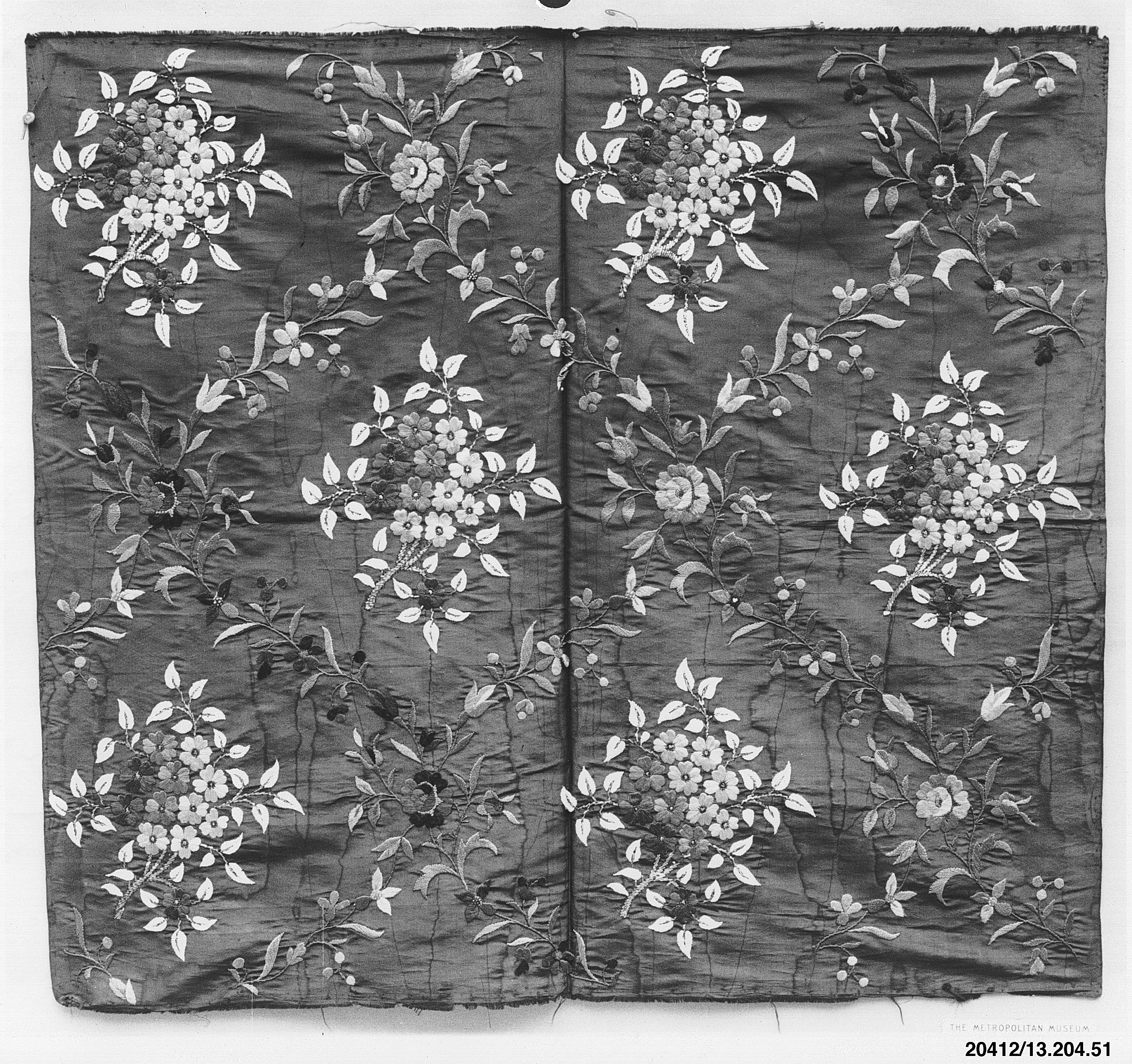
The Singular Object: Deconstructing the Couture Piece as Autonomous Artifact
Within the taxonomy of haute couture, the piece occupies a category of peculiar distinction. It is neither ensemble nor collection, neither seasonal statement nor commercial proposition. A standalone piece, examined in isolation from the runway narrative that might otherwise contextualize it, reveals couture's most elemental ambition: the creation of a self-sufficient aesthetic object whose meaning is generated entirely from within its own material and formal logic. When such a piece is executed in silk and draws upon global heritage for its vocabulary, the analysis acquires a double register—one that interrogates both the technical mastery of the atelier and the ethical, historical, and semiotic weight of cultural transmission.
This study undertakes a close reading of a single couture piece, treating it as what art historian George Kubler would term a "prime object"—a work whose significance resides not in its position within a sequence but in its capacity to embody solutions to formal problems. The standalone piece, freed from the gravitational pull of collection and commerce, becomes a laboratory for the couturier's most rigorous thinking.
Silk as Epistemological Medium
Silk is not a neutral substrate. Its material properties—the triangular protein structure of fibroin, the lustrous refraction of light across its filament surface, its tensile strength paradoxically coupled with extraordinary drape—predispose it toward certain formal outcomes while resisting others. In couture, silk operates as both medium and message, its historical associations with trade routes, imperial courts, and artisanal economies embedding every garment in networks of exchange that predate the modern fashion system by millennia.
The piece under consideration exploits silk's amphoteric character—its ability to appear simultaneously rigid and fluid, opaque and translucent, structural and ethereal. The atelier's hand is legible in the coupe, the cutting process that determines how the fabric's natural properties will be harnessed or subverted. A bias cut, for instance, releases silk's elasticity and allows the garment to articulate the body's movement; a straight grain cut, by contrast, imposes architectural discipline upon the fabric's tendency toward fluidity. The couture piece in silk thus becomes a meditation on the dialectic between material agency and artisanal intention—a dialectic that no other textile stages with comparable clarity.
Global Heritage as Formal Vocabulary
The designation global heritage requires careful handling. It is not a marketing category, nor a gesture toward exoticism. Rather, it describes the deliberate mobilization of techniques, motifs, and structural principles that have developed outside the Euro-American couture tradition—often over centuries—and their integration into a contemporary garment whose formal language is nonetheless unmistakably that of haute couture.
This integration raises questions that the standalone piece, precisely because it is standalone, is uniquely positioned to address. When a couturier incorporates a weaving technique from West Africa, a dyeing method from Japan, or a pattern-cutting logic from South Asia, what is the nature of the resulting object? Is it synthesis, appropriation, or something more complex—a form of material dialogue in which the couture piece functions as a site of encounter between distinct artisanal epistemologies?
The answer, this analysis contends, depends upon the depth of engagement. A superficial citation—a motif lifted without understanding of its context—produces pastiche. A profound engagement, by contrast, requires the couturier to internalize the grammar of the source tradition: its rules of composition, its material logic, its relationship to the body and to movement. Only then can the resulting piece be said to participate in global heritage rather than merely to consume it.
The Standalone Piece as Critical Form
Why examine a piece in isolation? The answer lies in the epistemic value of singularity. Within a collection, individual pieces are relational: they signify through contrast, progression, and narrative arc. The standalone piece, stripped of these contextual supports, must generate its own coherence. Every decision—the weight of the silk, the direction of the seam, the placement of a single closure—becomes disproportionately significant. The piece is forced to justify itself entirely through its own formal and material logic.
This condition approximates the autonomy of the artwork as theorized by Adorno: the object that, in its very self-sufficiency, encodes the social and historical conditions of its production. The couture piece in silk, drawing upon global heritage, is never merely itself. It carries within its threads the histories of sericulture, the labor of the atelier, the cultural memory of the traditions it engages, and the economic structures that make its existence possible. Its autonomy is not isolation but concentration—a distillation of meaning into a single, irreducible form.
Toward an Ethics of the Singular
The couture piece, then, is not a minor genre. It is the form in which couture's claims to artistic seriousness are most rigorously tested. When executed in silk and informed by global heritage, it demands of its maker and its reader a double competence: technical mastery of the material and critical awareness of the cultural stakes. The piece that succeeds does not resolve the tensions between these demands; it holds them in productive suspension.
For Katherine Fashion Lab, the standalone study serves as a methodological commitment. By examining the single piece with the same rigor that might be applied to an entire collection, we affirm that couture's most radical gestures are often its quietest—a length of silk, cut with intention, carrying the weight of the world's textile histories into the present tense.