Heritage Asset Analysis: The Montalto Bronze as a Strategic Luxury Signal
Provenance and Material Authority
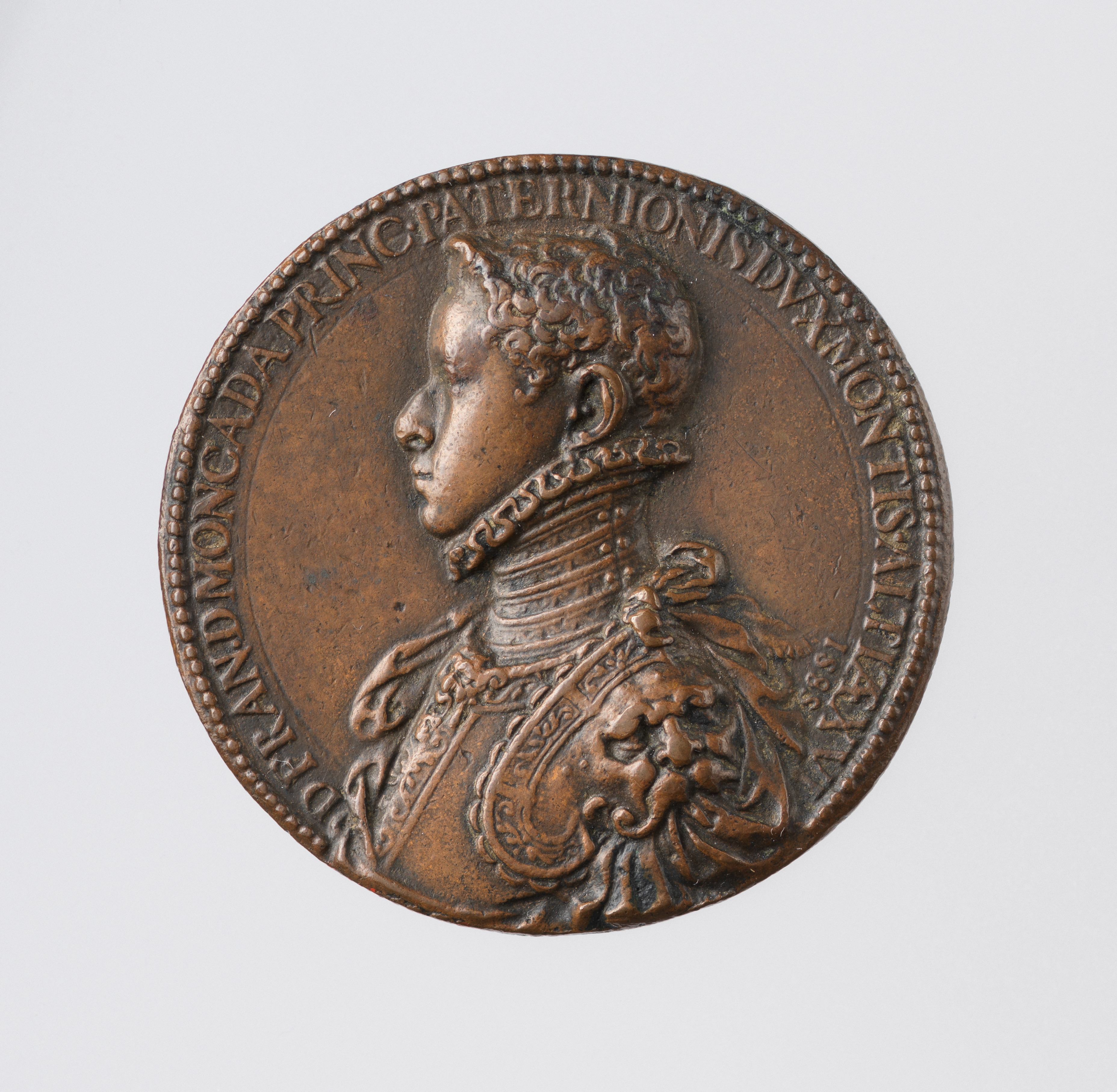
The bronze portrait identified as Francisco de Moncada, Duke of Montalto, represents a critical acquisition target for Katherine Fashion Lab's 2026 heritage portfolio. Cast in bronze with a deliberate brown patina, this work belongs to the ancient civilization tradition of commemorative portraiture—a medium that has historically encoded political legitimacy through material permanence. Bronze, as a medium, was never neutral. Its cost of production, requiring specialized foundry knowledge and access to tin and copper trade routes, restricted its use to individuals or institutions capable of commanding substantial economic and symbolic capital. The brown patina is not incidental; it is a controlled aesthetic decision that signals age, continuity, and the patinated authority of lineage. For luxury strategy, this distinction matters: patina is the visual language of time, and time is the only resource luxury cannot manufacture.
Symbolic Power and the Grammar of Adornment
The Duke of Montalto's representation functions as a case study in how historical adornment communicates stratified power. In ancient commemorative bronzes, the sitter's attire—military cuirass, draped mantle, or civic toga—was never merely descriptive. Each garment element operated as a semiotic unit: the cuirass signaled martial command, the mantle referenced classical virtue, and the positioning of the head or hand could imply divine favor or civic duty. Francisco de Moncada, as a historical figure, occupied a liminal position between aristocratic lineage and imperial service, and the bronze encodes this duality. For Katherine Fashion Lab, the strategic insight is that adornment in luxury is never decorative—it is declarative. The 2026 consumer, particularly in the high-net-worth segment, seeks objects that articulate identity through historical grammar rather than contemporary logoism.
Spiritual Meaning and the Ritual Function of Bronze
Ancient bronze portraiture often carried a votive or apotropaic dimension. Unlike marble, which was associated with temples and public monuments, bronze could be used in domestic shrines, funerary contexts, or portable display, allowing the subject's presence to travel across spaces. The brown patina, in this context, mimics the oxidation of time and suggests a material that has survived ritual use. This spiritual residue—the sense that the object has witnessed vows, offerings, or dynastic transitions—is precisely what contemporary luxury consumers describe as "soul." Katherine Fashion Lab can leverage this by positioning the Montalto bronze not as a static artifact but as a ritual object whose spiritual capital can be translated into modern talismanic accessories, limited-edition leather goods, or even fragrance narratives that reference bronze, smoke, and ancestral memory.
Historical Adornment as a Design Lexicon
The Montalto bronze offers a specific design lexicon: the interplay of smooth facial planes against textured drapery, the contrast between the warm brown patina and the cooler highlights of exposed bronze, and the asymmetrical balance of the sitter's pose. These are not merely art-historical observations; they are transferable design codes. For 2026, Katherine Fashion Lab should consider a capsule collection that abstracts these codes into hardware—belt buckles with patinated finishes, cufflinks that mimic the weight and temperature of cast bronze, or handbag clasps that reference the Duke's heraldic positioning. The key is not reproduction but translation. Luxury strategy in the heritage sector fails when it copies; it succeeds when it metabolizes.
2026 Luxury Strategy: From Provenance to Product Narrative
The high-end luxury market in 2026 will be defined by three consumer demands: authenticated provenance, narrative depth, and material integrity. The Montalto bronze satisfies all three. Its provenance can be documented through cast history and patina analysis; its narrative connects to ancient civilization, aristocratic service, and the spiritual function of portraiture; and its material—bronze—is experiencing a revival in luxury as consumers reject synthetic finishes for metals that age visibly and gracefully. Katherine Fashion Lab should position this asset as the anchor of a "Bronze Age" heritage line, with the Duke of Montalto serving as the patron figure. Marketing should avoid the language of "reproduction" and instead use "continuation"—the idea that the same symbolic power once cast in bronze can now be worn, carried, or displayed in a new form.
Risk Assessment and Strategic Guardrails
The primary risk is cultural appropriation without attribution. The Montalto bronze originates from a specific historical and geographic context, and Katherine Fashion Lab must avoid flattening that context into generic "ancient" aesthetics. The second risk is material dilution: using bronze-colored coatings rather than actual cast bronze would undermine the very authority the asset provides. The third risk is narrative overreach—claiming spiritual continuity without scholarly support. Mitigation requires partnering with metallurgical historians and heritage consultants, and ensuring that all product narratives are footnoted with verifiable historical references.
Conclusion: The Montalto Bronze as a Strategic Mirror
Francisco de Moncada, Duke of Montalto, cast in bronze with brown patina, is more than an artifact. He is a strategic mirror for Katherine Fashion Lab. What the bronze reveals is that power has always been worn, that adornment has always been symbolic, and that spiritual meaning has always been materialized. The 2026 luxury consumer does not want a new story; they want an old story told with new integrity. The Montalto bronze provides that story—cast, patinated, and waiting to be translated into the language of contemporary desire.