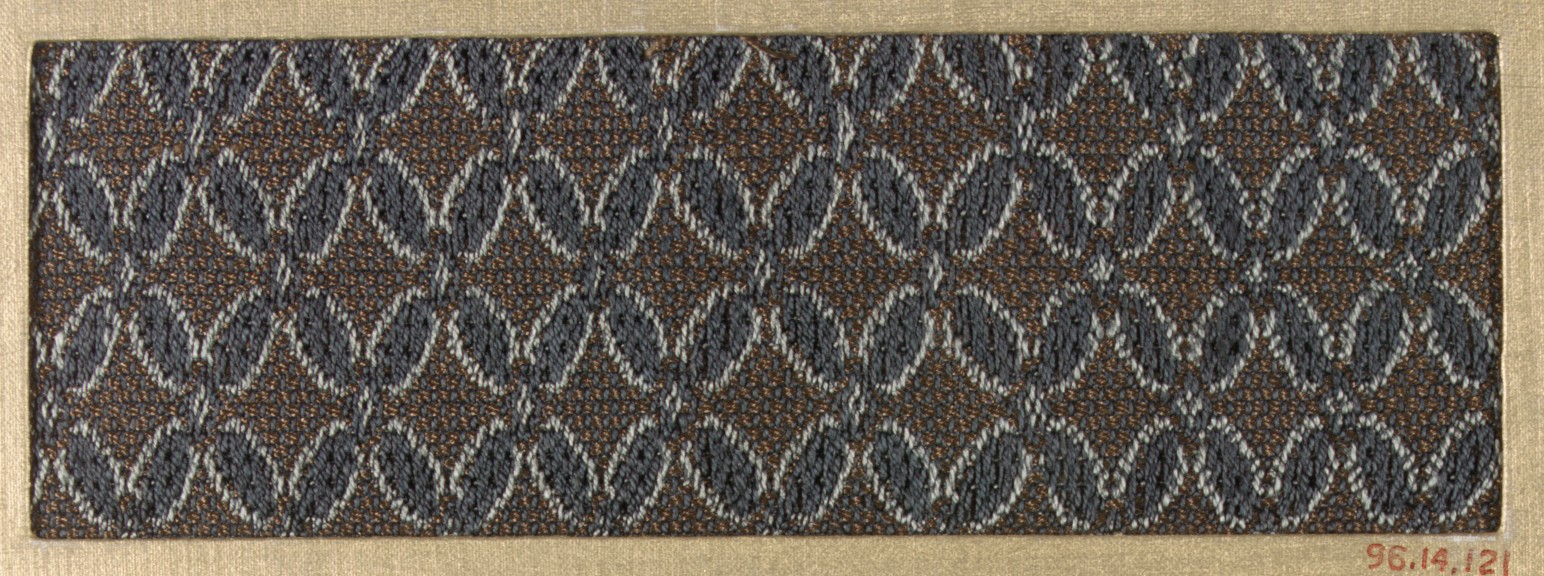
Anatomy of a Singular Gesture: The Japanese Silk Piece as Autonomous Couture
The artifact under examination in this standalone study resists the conventional taxonomies of fashion history. It is not a garment in the strict sense, nor is it a textile fragment awaiting integration into a larger composition. It is, more precisely, a piece—a discrete, self-contained proposition in silk, conceived and executed within the Japanese craft tradition yet operating outside the seasonal rhythms of the runway and the commercial imperatives of the atelier. To analyze such an object is to confront a category problem: how does one evaluate a work that refuses the teleology of the ensemble?
Materiality as Argument
Silk, in the Japanese context, is never merely fiber. It is a philosophical medium. The piece demonstrates this with unusual clarity. Its surface registers the interplay of light and shadow not as decoration but as structural logic—each thread positioned to modulate the viewer's perception of depth. The weave is tight enough to suggest armor, supple enough to imply skin. This duality is not accidental; it is the foundational argument of the piece itself.
The selection of silk here carries specific historical weight. Japan's sericultural heritage—from the ancient cultivation of kaiko to the refined yuzen dyeing techniques of the Edo period—provides a lineage that the piece both acknowledges and subtly subverts. Where traditional kimono silk subordinates itself to the geometry of the body, this piece subordinates the body to the geometry of the cloth. The material dictates the terms.
Close examination reveals a finish that oscillates between matte and luster depending on the angle of incidence. This is not the uniform sheen of commercial habotai or the heavy drape of crepe de chine. It is a controlled iridescence, achieved through tension rather than chemical treatment—a technique that speaks to the maker's intimate knowledge of sericin removal and loom calibration. The hand of the fabric is cool, almost mineral, yet it warms perceptibly with sustained contact. The piece remembers the body.
Form and the Refusal of Utility
What strikes the analyst most forcefully is the piece's structural autonomy. It does not open. It does not fasten. It does not accommodate the standard choreography of dressing. Instead, it presents a continuous surface interrupted only by a single seam—a seam that, upon inspection, serves no functional purpose beyond marking a beginning and an end. This is couture as tautology: the piece exists to demonstrate the possibility of its own existence.
The silhouette, if one can call it that, is determined entirely by the interaction between gravity and the silk's inherent memory. Draped, it forms a series of overlapping planes that recall the folded screens of Japanese interiors. Suspended, it assumes a conical volume that evokes the kasa—the traditional umbrella—without ever becoming one. The piece refuses to settle into a single readable form, and this refusal is its most eloquent statement.
In the context of Japanese aesthetics, this resistance to fixed meaning aligns with the concept of ma—the meaningful interval, the negative space that gives shape to the positive. The piece is largely ma. Its silk is the vehicle, but its subject is emptiness: the space between threads, between folds, between the object and its beholder.
Craft as Epistemology
The technical execution warrants separate consideration. The edges are finished with a technique that resembles fukuro-nui—the bag-stitch closure used in traditional Japanese garment construction—yet the scale is exaggerated, the stitches visible and deliberate. This is not a hiding of the maker's hand but a foregrounding of process. The piece announces its own making.
Such transparency is rare in couture, where the illusion of effortless perfection typically prevails. The Japanese silk piece rejects that illusion. It invites the viewer to trace the path of the needle, to imagine the hours of tension and release required to achieve such evenness. In doing so, it shifts the locus of value from the finished object to the knowledge embedded within it.
This epistemological dimension connects the piece to a broader Japanese craft philosophy in which the artisan's mastery is measured not by the invisibility of labor but by its legibility. The piece is a document as much as an object—a record of decisions made at the loom, at the dye vat, at the cutting table. To own it would be to own a fragment of another person's disciplined attention.
Conclusion: The Piece as Proposition
As a standalone study, this Japanese silk piece resists the usual metrics of couture evaluation—wearability, versatility, market positioning. It offers instead a purer proposition: that a textile can function as a complete aesthetic statement without reference to the body it might clothe or the occasion it might serve. It is couture stripped of its social function, reduced to its essential elements of material, form, and intention.
For the contemporary collector or curator, such an object presents both opportunity and challenge. It demands a mode of looking that is contemplative rather than acquisitive, analytical rather than decorative. It asks not "What is this for?" but "What does this know?" And in the answering, it expands the boundaries of what fashion—and fashion writing—might legitimately consider.
The piece does not resolve. It proposes. And in that irresolution lies its enduring power.