Deconstructing the Monumental: The Stucco Fragment as a Couture Catalyst
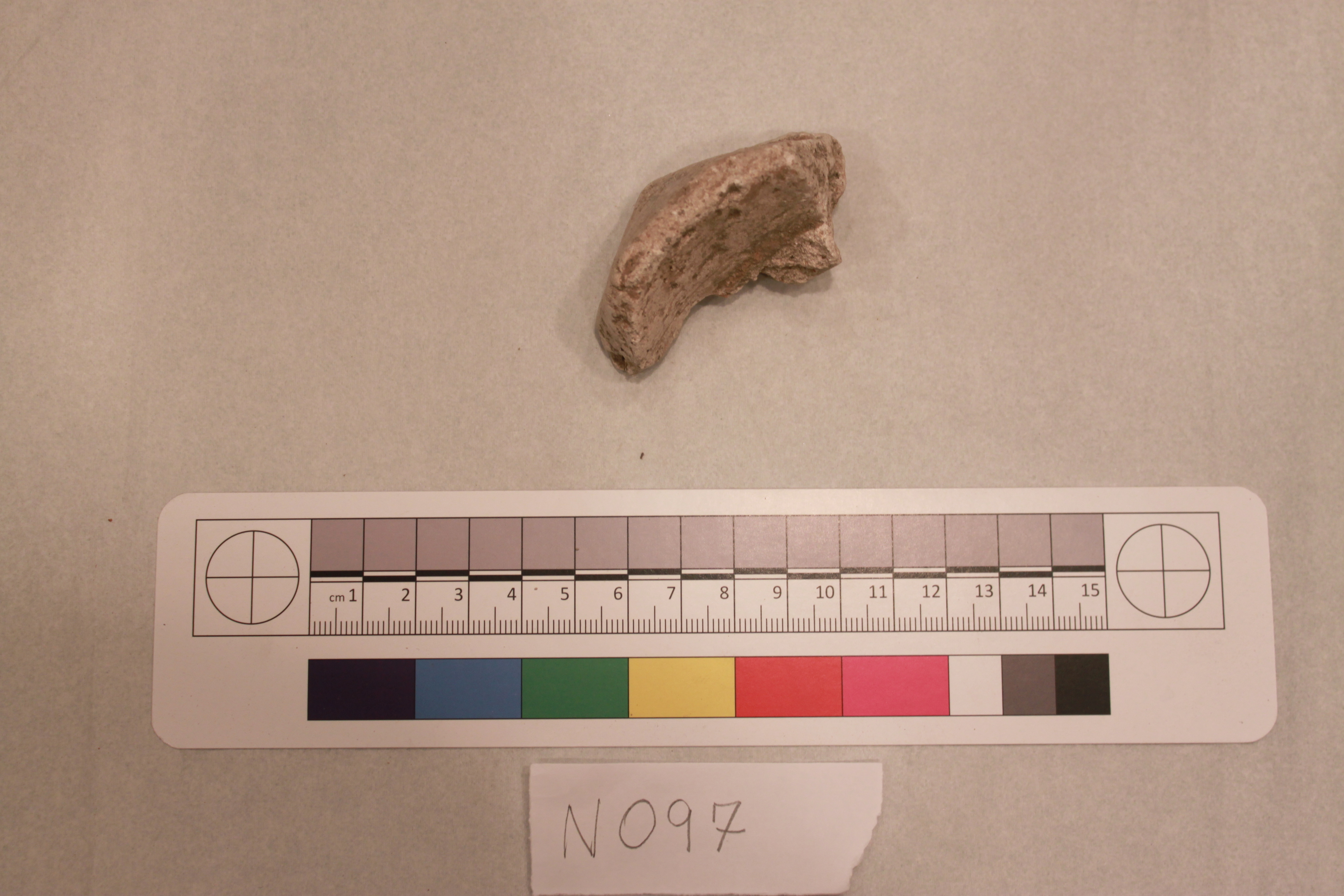
Within the hallowed archives of global heritage, the stucco fragment stands as a profound paradox. It is a remnant of wholeness, a shattered piece of a once-cohesive narrative, bearing the visceral marks of time's passage. For Katherine Fashion Lab, such an artifact is not merely an object of archaeological interest but a primary source code for a radical design philosophy. This analysis posits the stucco fragment—carved, painted, and isolated as a standalone study—as the ultimate muse for contemporary couture, challenging the very notions of completion, ornament, and structural integrity that dominate the fashion landscape.
The Poetics of Imperfection and Fractured Narrative
The immediate power of the fragment lies in its inherent incompleteness. Unlike a pristine artifact, it does not offer easy answers; it invites interrogation and imagination. The broken edge is not a flaw but a new contour, a serendipitous silhouette waiting to be translated. At Katherine Fashion Lab, this translates to a deliberate departure from the predictable symmetry of traditional garment construction. We explore asymmetrical draping that seems to have been interrupted, hemlines that appear eroded by time, and bodices that suggest a former, larger form. The narrative is not presented whole but implied, allowing the wearer to become the living continuum of the story. The "standalone study" context is crucial—it elevates the fragment from a broken piece to a self-contained universe of texture, form, and history, worthy of examination in its own right. A gown, therefore, can be a standalone study in texture and rupture, demanding to be read not as a complete outfit but as an autonomous artistic statement.
Material Transubstantiation: From Mineral to Textile
The materiality of stucco—a malleable plaster used for relief ornamentation—provides a masterclass in paradoxical properties. It is both robust and fragile, capable of holding sharp, carved detail while being susceptible to catastrophic fracture. Our design process engages in a form of material transubstantiation, seeking textile and construction techniques that embody these contradictions.
The carved surface speaks to techniques like laser-cutting on layered organza or jacquard weaving with raised, three-dimensional patterns, creating bas-relief effects on a gown’s surface. The painted aspect, often faded and patchy on the original fragment, inspires degraded ombré effects, hand-painted pigments that seep into fabrics unevenly, and embroidery where threads are deliberately omitted to mimic pigment loss. We treat heavyweight silks and technical felts like architectural plaster, sculpting them into rigid, shell-like structures that suddenly fracture into fluid chiffon—a literal translation of stucco’s breakage. The goal is not to mimic the look of stucco literally, but to evoke its tactile and behavioral essence: a garment that appears architecturally solid from one angle and delicately crumbling from another.
Ornament as Structure: The Archaeology of Embellishment
In historical stuccowork, ornament is never merely applied; it is integral to the wall’s surface, carved from the very same material. This collapses the hierarchy between structure and decoration, a principle Katherine Fashion Lab adopts rigorously. Embellishment is not an afterthought but a structural component. A beaded motif may begin as a scattered, archaeological find on one shoulder, gather density to form a supporting strap, and then dissolve again along the spine. Embroidery is engineered to contract the underlying fabric, creating intentional puckers and dimensional folds that are both decorative and functional in shaping the silhouette.
Furthermore, the fragment’s context urges us to reconsider the scale of ornament. A small, recovered fragment often contains a breathtaking density of detail originally meant to be viewed from a distance on a vast wall. We apply this principle by creating micro-ornamentation so intricate that its full complexity is revealed only upon intimate inspection, rewarding the viewer who engages closely with the wearer. This creates a deeply personal dialogue between the garment and its observer, mirroring the relationship between an archaeologist and a precious find.
The Color Palette of Time: Patina as Pigment
The color story of a stucco fragment is authored by centuries. It is not the story of a single hue but a complex stratification: the original, perhaps bold, mineral pigment; the accretions of dirt and soot; the bleaching of sun and wind; the ghostly pallor of exposed plaster where paint has flaked away. At Katherine Fashion Lab, we develop patina as a proprietary color palette. We dye silks in multiple submerged layers to achieve a depth that recalls stratigraphy. We experiment with techniques like devoré to "weather" velvet, creating voids where color disappears. The palette leans into chalky whites, earthen umbers, oxidized terracottas, and faded mineral blues—colors that feel excavated rather than applied. This approach rejects the commercial obsession with flat, uniform color in favor of a chromatic richness that tells a story of process and endurance.
Conclusion: The Autonomous Garment as Artifact
The ultimate conceptual leap inspired by the standalone stucco fragment is the redefinition of the couture garment itself. It becomes an autonomous artifact, unmoored from transient trends. It is designed with a sense of inherent history, as if it were itself recovered from a future archive. The construction includes elements that hint at a previous, unknown purpose—a fastening that seems to reference a lost counterpart, a lining stamped with a cryptic, lab-created provenance. This approach fosters emotional durability, positioning the piece as a future heirloom whose narrative is only partially written, to be completed by the life it leads with its wearer. In deconstructing the stucco fragment, Katherine Fashion Lab does not seek to replicate history but to engage in a continuous dialogue with it, crafting not mere clothing but wearable hypotheses on beauty, decay, and the enduring power of the incomplete masterpiece.