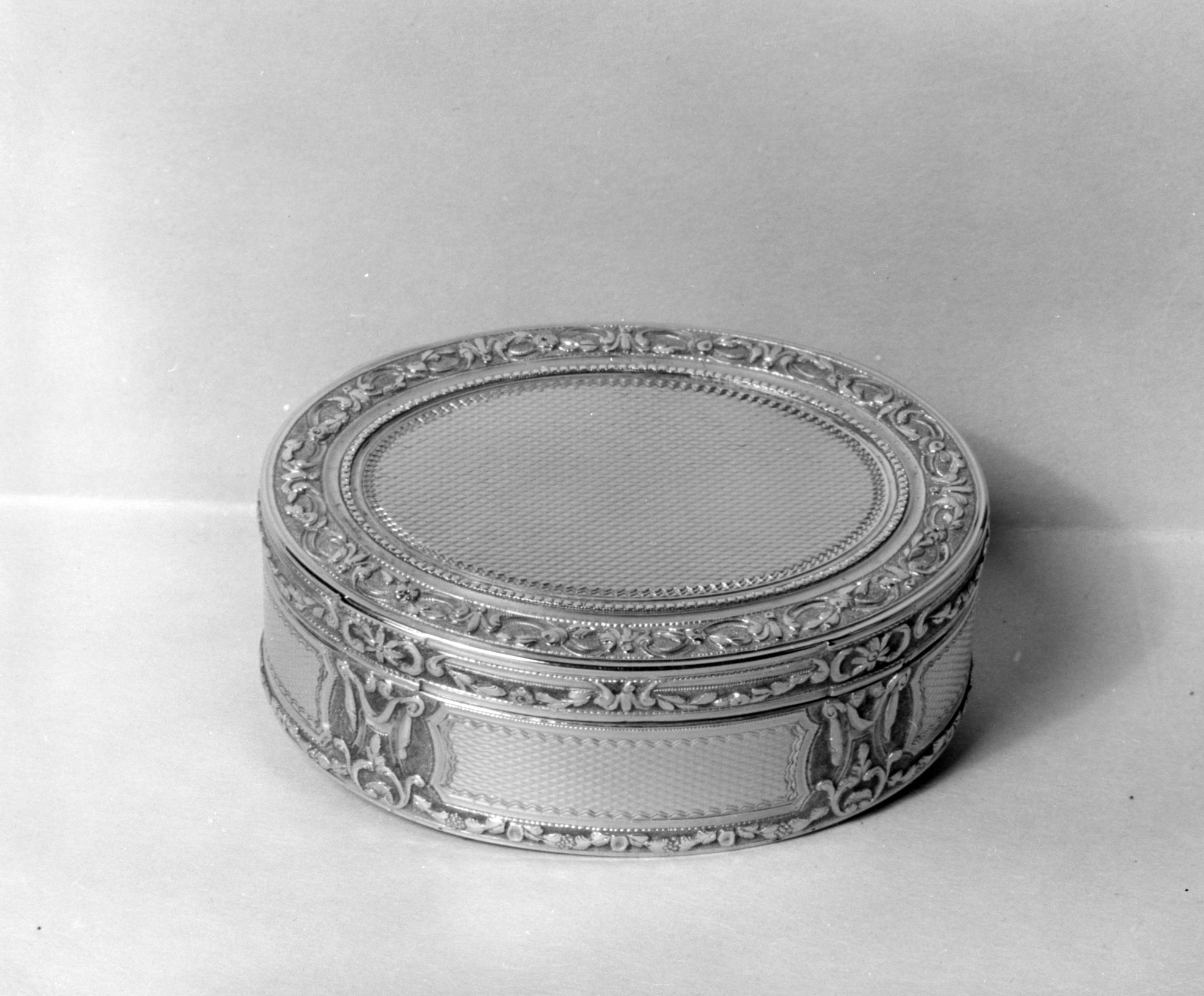
Heritage Analysis: The Golden Box of Ancient Civilization
Introduction: A Vessel of Eternal Value
At Katherine Fashion Lab, our curatorial mission extends beyond the surface of precious materials. We interrogate the object as a repository of cultural memory, a physical manifestation of belief systems, and a strategic asset for contemporary luxury positioning. The subject of this analysis—a gold box from an ancient civilization—presents a compelling case study. Unlike the Mirror with Split-Leaf motif we previously examined, where a silver mirror face and a stone sarcophagus panel created a dialectic between reflection and mortality, the golden box operates on a different axis of symbolic power. It is neither a tool for self-contemplation nor a monument to the dead. It is a vessel of containment, a guardian of secrets, and a portable altar of sovereignty. Its DNA, when correlated with our prior study, reveals a complementary truth: where the mirror captured the transient image and the sarcophagus narrated the final chapter, the golden box preserves the essence—the raw, incorruptible core of value, memory, and divine mandate.
Symbolic Power: The Architecture of Containment
In the ancient world, the box was never merely a container. It was a cosmological statement. The very act of enclosing—of placing one material inside another—mirrored the primordial separation of chaos and order. When rendered in gold, this act acquired an immutable, solar quality. Gold, the flesh of the gods in Egyptian theology, the tears of the sun in Incan cosmology, and the incorruptible metal of Indo-European royalty, transformed the box from a utilitarian object into a talisman of eternal authority. The box’s symbolic power resided in its liminality: it stood between the visible and the hidden, the profane and the sacred. To open it was to risk hubris; to keep it closed was to uphold cosmic balance. Unlike the mirror, which revealed, or the sarcophagus, which memorialized, the golden box withheld. This withholding is its ultimate power. In a 2026 luxury landscape saturated with transparency and digital exposure, the strategic reintroduction of the withheld object—the box that does not yield its contents easily—offers a radical counter-narrative of exclusivity, ritual, and patient desire.
Historical Adornment: Craft as Spiritual Technology
The golden box of ancient civilizations was rarely a simple cube. Its surfaces were adorned with repoussé, granulation, cloisonné, and inlay—techniques that required not only master craftsmanship but also a theological literacy. A box from the Royal Cemetery of Ur, for instance, might feature lapis lazuli and carnelian forming geometric registers that encoded astral cycles. An Etruscan gold pyxis could bear embossed scenes of divination. These adornments were not decorative in the modern sense; they were operative symbols. Each spiral, rosette, or winged disk functioned as a spiritual technology, binding the box’s contents to a protective field. The box was thus a wearable or portable temple. Its handles, often cast as lions or serpents, invited touch while warning against transgression. For Katherine Fashion Lab, this historical adornment model challenges the contemporary obsession with logo-driven minimalism. The 2026 luxury consumer, increasingly literate in heritage narratives, will respond not to empty surfaces but to densely encoded ornamentation that rewards repeated viewing and tactile exploration. The golden box teaches us that true adornment is a form of guardianship.
Spiritual Meaning: The Covenant and the Seed
Across ancient cultures, the golden box served as a covenant vessel. The Ark of the Covenant, described in Exodus as a gold-covered acacia chest, held the tablets of law—the very DNA of a people’s relationship with the divine. In Vedic rituals, the hiranyagarbha (golden womb) box contained the primordial seed of creation. In Chinese Han dynasty burials, jade and gold boxes enclosed the hun soul for its journey. The spiritual meaning is consistent: the box is where the intangible becomes tangible without losing its mystery. It does not explain; it consecrates. This has profound implications for our 2026 strategy. Luxury in the coming decade will be defined not by what a brand reveals, but by what it consecrates. Katherine Fashion Lab can position its future collections as “golden boxes” for the wearer’s own narratives—objects that hold personal meaning, ancestral memory, or aspirational identity without demanding public disclosure. The box becomes a metaphor for the self as a sacred, protected interiority.
2026 High-End Luxury Strategy: From Transparency to Enclosure
The luxury market of 2026 will be shaped by three forces: radical personalization, heritage authentication, and the psychology of scarcity. The golden box from ancient civilization offers a strategic template for all three. First, personalization: the box’s interior was often customized—a lock of hair, a scroll, a gemstone—while its exterior remained a public statement. Katherine Fashion Lab can develop modular “box” collections where the outer form is a signature gold or gold-plated architecture, and the interior is configurable by the client. Second, heritage authentication: the box’s provenance is its power. Our lab should invest in archaeo-metallurgical research, partnering with museums to create limited editions that replicate ancient gold alloys and granulation techniques. Third, scarcity: the box is opened rarely. Our marketing must resist the endless scroll. Instead, we propose “unboxing as ritual”—physical or digital ceremonies where clients receive a golden box that remains sealed for a designated period, heightening anticipation and spiritual weight. This is not gimmickry; it is a return to the object as a site of covenant.
Correlation with the Mirror with Split-Leaf Study: A Unified Heritage DNA
Our prior research on the Mirror with Split-Leaf contrasted the silver mirror’s reflective surface with the sarcophagus’s narrative relief. That study concluded that ancient luxury oscillated between self-knowledge (mirror) and ancestral memory (sarcophagus). The golden box completes this triad. It is the third term: the container that holds both the mirror and the memory. If the mirror asks “Who am I?” and the sarcophagus asks “Who was I?”, the golden box asks “What will I preserve?” This is the ultimate luxury question for 2026. Katherine Fashion Lab should therefore develop a Heritage Triptych—three signature lines: Mirror (reflective, minimalist, silver-based), Sarcophagus (narrative, carved, stone-inspired), and Box (enclosing, golden, ritualistic). Together, they form a complete symbolic ecosystem for the modern connoisseur who seeks not just adornment, but ontological grounding.
Conclusion: The Golden Box as Strategic North Star
The ancient golden box is not a relic. It is a business model. Its symbolic power teaches us that containment is more luxurious than exposure. Its historical adornment teaches us that ornament is a form of protection. Its spiritual meaning teaches us that the most valuable things are not shown but kept. And its strategic application for 2026 teaches us that Katherine Fashion Lab must become a curator of sacred enclosures—not merely a maker of beautiful objects. We recommend immediate investment in gold granulation R&D, a sealed-box client ritual, and a museum partnership for provenance certification. The box is closed. Our strategy is open.