Executive Summary: The Waist as Locus of Sovereign Authority
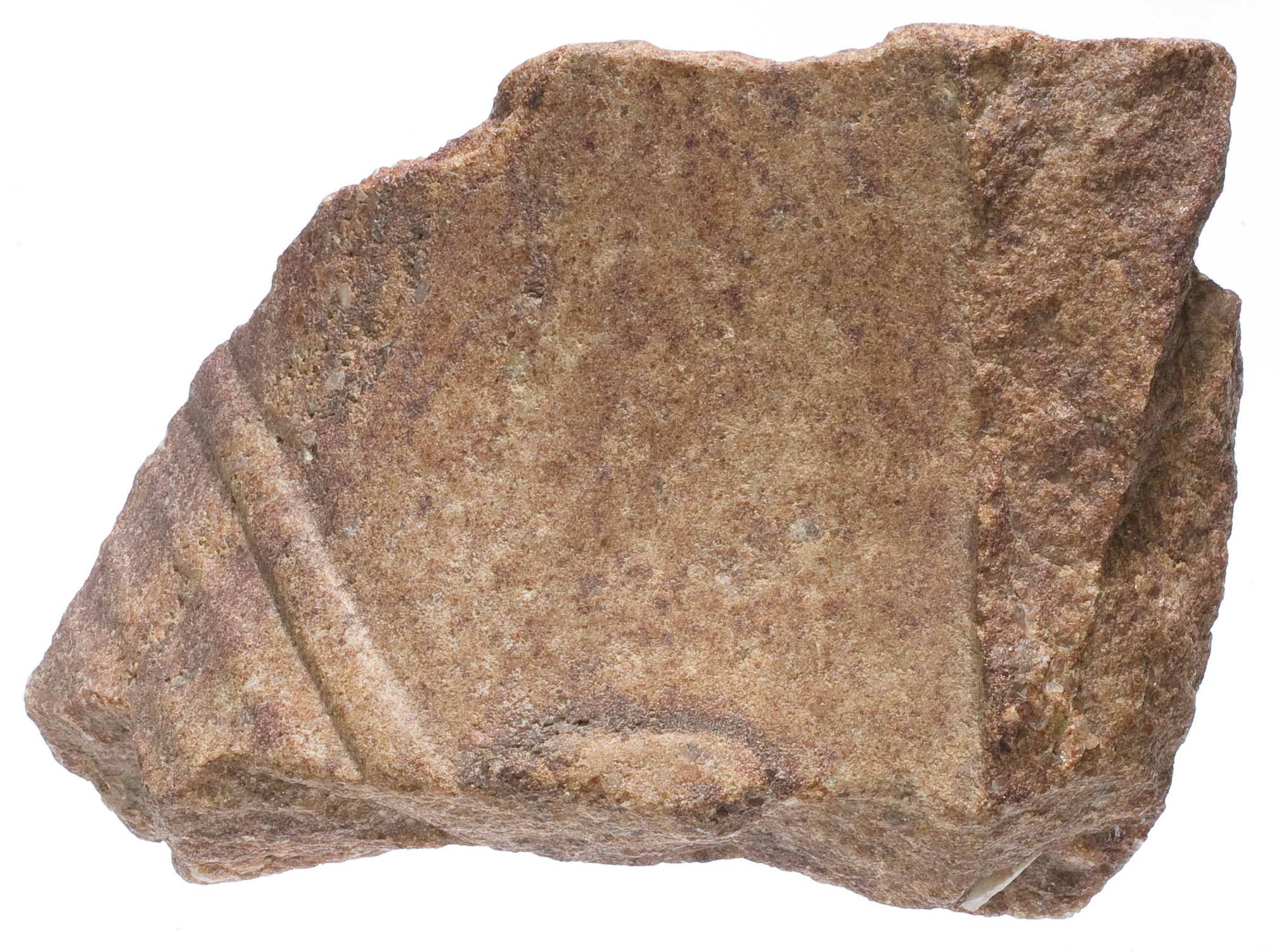
The fragment under examination—a waist section carved from red quartzite, attributed to a royal statue of an Ancient Civilization—constitutes a strategic asset for Katherine Fashion Lab's 2026 heritage-driven luxury positioning. This analysis treats the waist not as a peripheral anatomical detail but as a concentrated site of symbolic power, ritual adornment, and spiritual mediation. For a luxury house competing in an era of provenance fatigue and AI-generated sameness, the waist fragment offers a defensible narrative architecture: tangible, mineral, and historically anchored in the iconography of kingship. The following paper examines the object across four dimensions—symbolic power, historical adornment, spiritual meaning, and commercial translation—to establish a research framework for product development, brand storytelling, and collector engagement.
Materiality and the Semiotics of Red Quartzite
Mineral Authority in Ancient Sculpture
Red quartzite was not a casual selection in Ancient Civilization statuary. Its hardness—measurably greater than limestone or sandstone—demanded exceptional lapidary skill, signaling that the commissioned object was intended for permanence rather than display ephemera. The stone's warm ferrous hue carried solar associations, linking the king's body to the life-giving disk and, by extension, to cosmic order. In MBA terms, the material functioned as a quality signal: costly to source, difficult to carve, and visually distinct within temple or palace contexts. For Katherine Fashion Lab, red quartzite provides a chromatic and tactile reference point—dense, granular, and unpolished in its natural state—that can inform hardware finishes, leather treatments, and textile weights without literal quotation.
The Waist as Structural and Symbolic Threshold
Anatomically, the waist is the body's fulcrum: the point where the ribcage meets the pelvis, where breath and posture converge. In royal statuary, this zone was rarely left unadorned. It is the transitional territory between the chest—seat of courage and command—and the legs—instruments of dominion and movement. To isolate the waist from a king's statue is to isolate the moment of girding: the ritual act of binding authority to the body. This threshold quality makes the fragment commercially potent. It speaks to the modern luxury consumer's desire for garments and accessories that mark transformation—belts, corsetry, cummerbunds, and structured waistlines that perform the same symbolic work as their ancient counterparts.
Historical Adornment: The Belt as Instrument of Rule
Iconography of the Royal Girdle
Across Ancient Civilizations, the royal belt or waistband was never merely functional. It frequently bore cartouches, protective hieroglyphs, or emblematic animals rendered in relief. The belt demarcated the king's body from the ordinary body, functioning as a portable boundary between the sacred and the profane. In ceremonial contexts, the act of fastening the belt—often performed by a deity or high priest—constituted a transfer of legitimacy. The waist fragment, therefore, preserves evidence of a performative technology: adornment as political speech.
Craft Techniques and Their Modern Analogues
Red quartzite carving required abrasive techniques—likely corundum sand and copper tools—followed by careful smoothing to achieve a surface that could receive fine incised detail. The waist area, being relatively flat and accessible, often showcases the sculptor's finest linear work. For Katherine Fashion Lab, this suggests a design directive: prioritize precision at the waist. Buckles, clasps, and waist seams should demonstrate visible hand-finishing, irregular enough to confirm human intervention but controlled enough to signal mastery. The 2026 luxury market rewards such "slow detail" as a counterpoint to algorithmic perfection.
Spiritual Meaning: Breath, Protection, and Regeneration
In many Ancient Civilizations, the waist was associated with breath and vital force. The diaphragm, situated just above the waist, was understood as the seat of the soul or the animating principle. A king's waist, therefore, was a spiritual conduit: the point through which divine energy entered the body and through which royal blessing was distributed to the realm. Protective amulets were frequently suspended from belts, and the knot that secured the king's garment carried apotropaic significance—a binding that kept chaos at bay.
This spiritual dimension offers Katherine Fashion Lab a narrative of care and guardianship rather than mere status. A 2026 collection informed by this research could position waist-focused pieces as objects of personal ritual: a belt worn before a negotiation, a corset fastened as a deliberate act of centering. The language shifts from "power dressing" to "power binding"—a subtle but commercially meaningful distinction in a market saturated with aggressive luxury tropes.
2026 Luxury Strategy: From Fragment to Collection Architecture
Provenance as Product Platform
The waist fragment should not be treated as a one-off inspiration but as the seed of a multi-season platform. Katherine Fashion Lab can establish a "Red Quartzite" line—not a literal reproduction, but a design system defined by three rules: (1) waist emphasis as the primary silhouette gesture; (2) mineral red as the anchor color, tempered with sand, iron, and bone; (3) hardware that mimics the weight and matte authority of carved stone. This platform supports handbags with sculpted waist straps, outerwear with belted architectural seams, and fine jewelry in hammered red gold or carnelian.
Collector Engagement and Institutional Validation
High-end luxury in 2026 demands more than beauty; it requires intellectual provenance. Katherine Fashion Lab should commission a limited-edition catalogue that pairs each product with a short essay on the corresponding ancient motif. Museum partnerships—particularly with institutions holding red quartzite royal statuary—can lend scholarly credibility. The waist fragment becomes a "research object" that justifies premium pricing and invites collectors into a narrative of continuity: the same gesture that girded a king now fastens a modern garment.
Risk Management and Ethical Framing
Any engagement with Ancient Civilization imagery must avoid appropriation or exotification. The strategy should emphasize material study and structural analogy, not costume. Language must credit unnamed ancient artisans and acknowledge the fragmentary, decontextualized nature of the source object. Transparency about research methods—including the limits of what a waist fragment can tell us—builds trust with informed consumers and protects the brand from accusations of shallow citation.
Conclusion: The Waist as Strategic Asset
The red quartzite waist from a royal statue is more than an archaeological remnant. It is a compressed statement of sovereignty, protection, and craftsmanship—three values that align precisely with Katherine Fashion Lab's 2026 ambition. By treating the waist as a site of symbolic power, historical adornment, and spiritual meaning, the brand can develop products that feel inevitable rather than invented. The fragment teaches restraint: it shows that authority resides not in excess but in the precise binding of the body at its center. For a luxury house navigating a decade of noise, that lesson is worth more than any trend forecast.