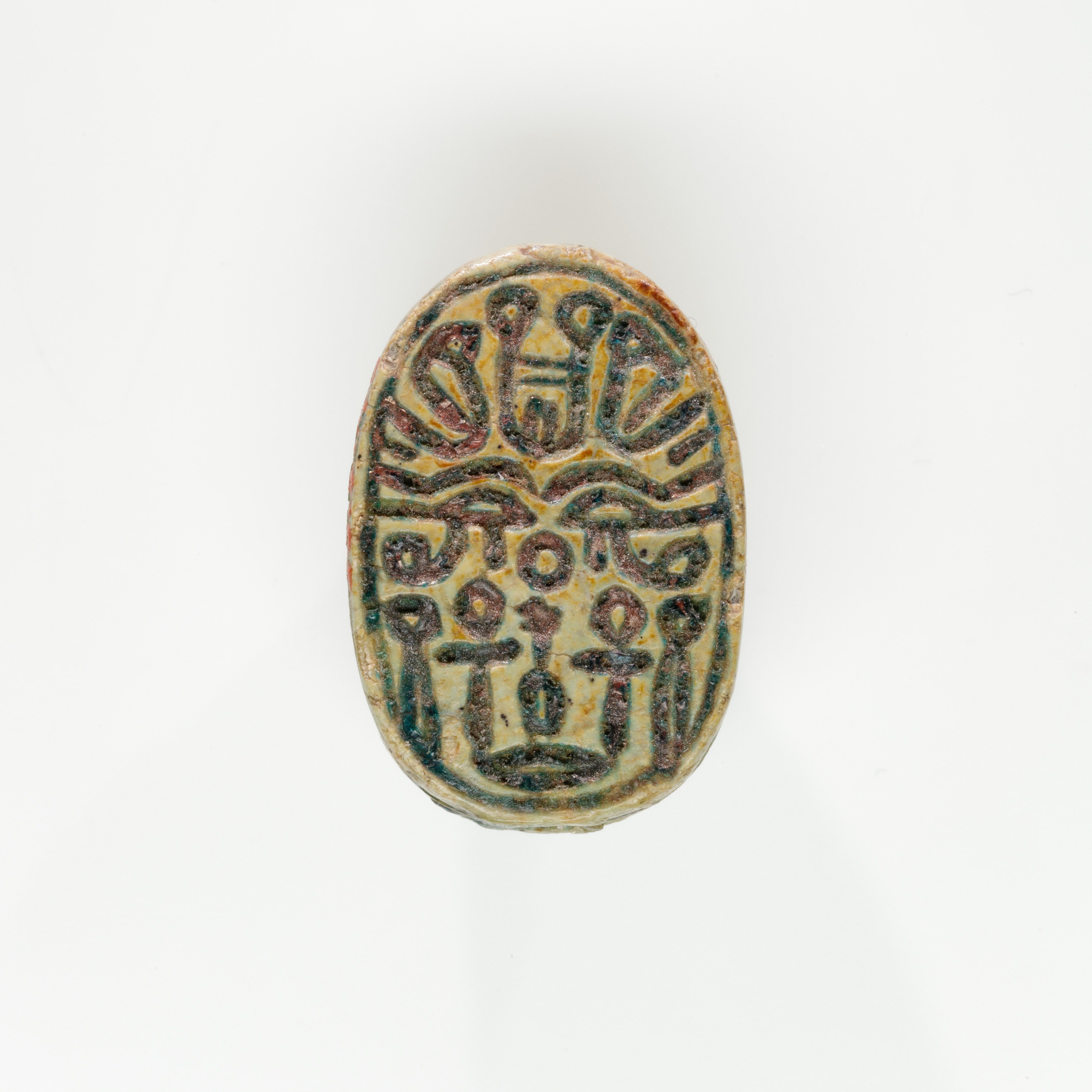
Heritage Asset Analysis: The Glazed Steatite Scarab from the Ruiu Burial
Executive Summary
This paper examines the glazed steatite scarab recovered from the Ruiu burial as a strategic heritage asset for Katherine Fashion Lab. The artifact sits at the intersection of symbolic power, funerary adornment, and early industrial craft, making it an unusually versatile reference point for a 2026 luxury collection. The analysis proceeds from material composition through symbolic function, then translates those findings into an actionable brand and product strategy.
Materiality and Craft: Steatite as a Luxury Precedent
The scarab's medium is central to its strategic value. Steatite is a soft stone, easily carved, which was then fired and glazed to produce a hard, luminous surface. This is, in effect, an ancient composite material: humble in origin, transformed through heat and chemistry into something that reads as precious. The glazing technique—typically a blue-green copper oxide finish—produced a surface that referenced turquoise, lapis, and the waters of renewal without requiring those rare materials themselves.
For Katherine Fashion Lab, this offers a defensible narrative: transformation as luxury. The scarab is not a story about rare inputs; it is a story about mastery over material. In a 2026 market increasingly skeptical of raw-material scarcity claims, this positions the brand around craft intelligence rather than extraction. It also opens concrete material directions—engineered ceramics, glazed resin composites, and fired enamel finishes—that carry genuine technical credibility rather than decorative nostalgia.
Symbolic Power: The Scarab as Agency and Rebirth
The scarab beetle, Scarabaeus sacer, rolls a ball of dung across the ground, an observed behavior that ancient Egyptian cosmology read as the sun god pushing the solar disc across the sky. The insect thus became Khepri, the aspect of the divine associated with sunrise, self-creation, and the daily renewal of the world. The scarab amulet is therefore not merely a charm; it is a compressed cosmological statement about agency, cyclical return, and the capacity to remake oneself.
In funerary contexts, this meaning intensifies. Placed within a burial, the scarab served as a seal of transformation—an assertion that the deceased would pass through dissolution and emerge renewed. The Ruiu burial context anchors the object in this liminal function: it is an adornment made specifically for the threshold between ending and beginning. This is a symbol system built for transition rituals, and transition is precisely the emotional territory luxury consumers occupy in moments of life change—career shifts, marriage, inheritance, reinvention.
Historical Adornment: From Amulet to Wearable Authority
Scarabs were worn in life as much as deposited in death. They appear as rings, pendants, and seal-stones, often inscribed with names, titles, or royal cartouches. This dual function—ornament and instrument—is strategically significant. A scarab could authorize a document, identify a bearer, and protect a body, all while functioning as a visually distinctive object of personal adornment.
This precedent supports a product architecture in which jewelry carries functional authority: signets, seal-engraved pendants, and convertible pieces that move between ritual, professional, and everyday wear. The Ruiu scarab's burial provenance adds a further layer—an object designed to accompany its owner beyond the visible world—which lends the collection a narrative of permanence and accompaniment rather than seasonal novelty.
Spiritual Meaning: Protection, Memory, and Continuity
The scarab's spiritual logic is fundamentally protective and regenerative. It does not ward off evil through aggression; it asserts continuity through repetition and return. This is a gentler, more sophisticated spiritual register than many heritage symbols offer, and it aligns well with contemporary luxury values around mindfulness, legacy, and conscious ownership.
For Katherine Fashion Lab, the spiritual dimension should be handled with restraint and precision. The goal is not to appropriate ritual language, but to translate the underlying principle: objects that hold meaning across time. This supports storytelling around heirloom potential, repair and restoration services, and archival numbering that treats each piece as a document of its own passage.
2026 Luxury Strategy: Positioning and Execution
Three strategic pillars follow from this analysis.
First, a "Khepri" capsule built around transformation narratives—glazed ceramic and enamel hardware, scarab-form clasps, and seal-engraved signets. Pricing should sit in the accessible-heirloom tier, where symbolic density justifies premium positioning without requiring gemstone provenance.
Second, a material innovation story. The steatite-to-glaze transformation becomes the brand's proof of craft: engineered surfaces, fired finishes, and controlled color chemistry presented as direct descendants of ancient technique. This is technically defensible and visually distinctive.
Third, a ritual-and-legacy service layer. Engraving, archival registration, and restoration programs convert the scarab's funerary logic into a contemporary promise of continuity. The customer does not buy a season; they buy an object intended to outlast it.
Conclusion
The glazed steatite scarab from the Ruiu burial is a high-value heritage asset because it unifies material transformation, symbolic authority, wearable function, and spiritual continuity in a single, compact object. For Katherine Fashion Lab in 2026, the strategic opportunity is not reproduction but translation: to build a collection that treats adornment as authorization, material as mastery, and luxury as a promise of renewal carried across time.