Heritage Analysis: Two Lohans — Symbolic Power, Adornment, and the 2026 Luxury Horizon
Introduction: A Strategic Standalone Research Brief
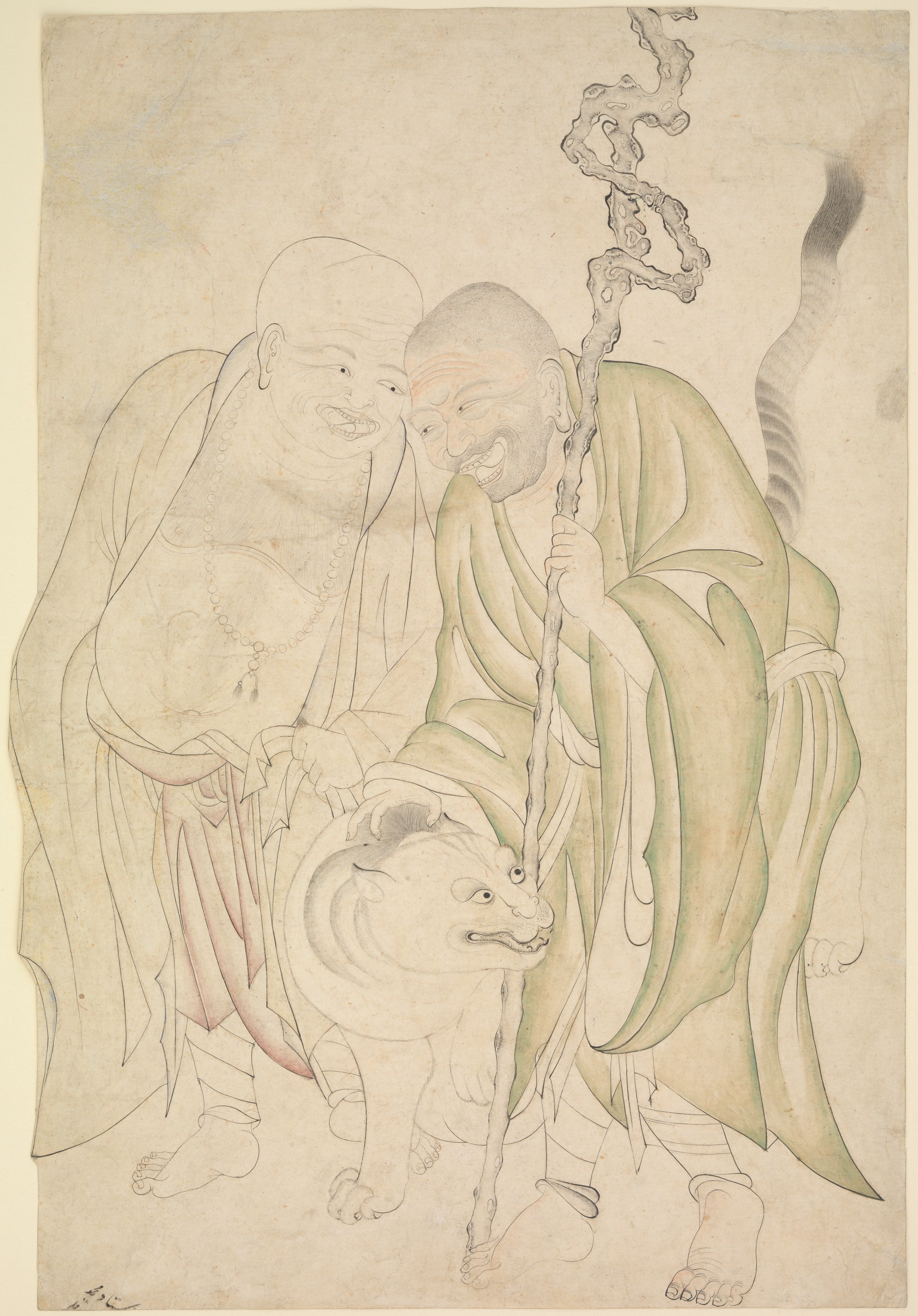
This paper examines Two Lohans, a work executed in ink and transparent watercolor on paper, originating from an Ancient Civilization context. Commissioned as a strategic standalone research initiative for Katherine Fashion Lab, the analysis interrogates the object across four vectors: symbolic power, historical adornment, spiritual meaning, and 2026 high-end luxury strategy. The objective is not connoisseurship for its own sake, but the translation of heritage intelligence into actionable brand equity. In an era where luxury consumers increasingly demand provenance, narrative density, and cultural authenticity, the Lohan figure offers a rare convergence of iconographic authority and material subtlety—qualities directly transferable to product architecture, communications, and client experience.
Symbolic Power: The Lohan as Guardian of Thresholds
In the Buddhist visual tradition, the Lohan (Sanskrit: arhat) denotes a practitioner who has attained enlightenment and is no longer subject to rebirth. Unlike the serene, idealized bodhisattva, the Lohan is frequently depicted with rugged, individualized features—a deliberate iconographic choice that signals hard-won wisdom rather than innate divinity. The pairing of two Lohans in a single composition is significant: it establishes a dialectical relationship between figures, often read as complementary forces—discipline and compassion, severity and mercy, age and vitality. This duality confers symbolic power on the object as a mediator of opposites, a visual argument for balance. For a luxury house, this translates into a powerful brand narrative: the tension between heritage and innovation, tradition and disruption, is not a contradiction but a governing principle.
The Lohans' placement—typically flanking a central axis or engaged in silent exchange—reinforces their role as threshold guardians. In architectural and ritual contexts, such figures demarcate sacred from profane space. Applied to retail and digital environments, this logic supports the construction of transitional brand zones: entrances, appointment-only salons, or VIP digital portals where the client crosses from the ordinary into the curated.
Historical Adornment: Materiality, Gesture, and the Ink-Wash Discipline
The medium—ink and transparent watercolor on paper—is itself a statement of adornment philosophy. Unlike opaque mineral pigments, transparent washes require controlled layering, each application modifying the last. The paper support absorbs and records every gesture, making the surface an archive of the artist's decision-making. This is adornment as process rather than accretion: the Lohans are not decorated with gold leaf or precious stones; they are adorned by line, wash, and negative space. The figures' robes, often rendered in broad, calligraphic strokes, function as drapery of the mind—outward signs of inward states. Accessories such as staffs, rosaries, or begging bowls are minimal but charged with meaning, each a portable relic of the ascetic life.
Historically, such works were commissioned by merchant guilds, monastic patrons, and literati collectors, positioning the Lohan image at the intersection of commerce and devotion. The transparent watercolor technique, likely a later refinement or cross-cultural adaptation, introduces a lyrical, almost atmospheric quality that softens the austerity of pure ink. This hybridity is strategically valuable: it demonstrates that ancient civilizations were themselves engaged in material innovation and cultural exchange, undermining any notion of heritage as static or hermetic.
Spiritual Meaning: Interiority, Discipline, and the Luxury of Attention
The spiritual meaning of the Lohan is rooted in interiority. The arhat's enlightenment is not a public spectacle but a private achievement, often depicted through downcast eyes, slight smiles, or gestures of teaching and restraint. The two figures may represent teacher and student, or two stages of the same path—an invitation to the viewer to locate themselves within a continuum of practice. In a luxury context, this maps onto the client journey: from aspiration to mastery, from acquisition to discernment. The Lohan does not promise transcendence through consumption; it models discipline, patience, and the refinement of perception—values that resonate with the most sophisticated luxury consumers, who increasingly seek meaning over mere display.
Moreover, the Lohans' imperfect, human faces challenge the airbrushed aesthetics of conventional luxury advertising. Their beauty is earned, not given. This aligns with the 2026 consumer's preference for authenticity, aging, and character over artificial perfection.
2026 High-End Luxury Strategy: From Iconography to Product and Experience
Translating Two Lohans into a 2026 luxury strategy requires disciplined abstraction. The following pillars emerge:
1. Narrative-Led Product Design: The duality of the Lohans suggests paired collections—two complementary silhouettes, two fragrance profiles, two watch complications—designed to be worn or used in dialogue. Materials should echo the medium: sheer layered textiles, watercolor-effect prints, ink-wash leathers, and matte paper-like finishes on hardware.
2. Guardian Retail Architecture: Physical and digital spaces should adopt the threshold logic of the Lohan pair. Entrances framed by two sculptural or digital figures; a transitional antechamber where clients are invited to "set down the ordinary mind" before entering the main salon.
3. Adornment as Discipline: Instead of maximalist logos, the brand should champion reductive adornment—a single calligraphic clasp, a transparent wash of color on a silk scarf, a rosary-inspired chain that is functional rather than decorative. The message: what you remove is as important as what you add.
4. Spiritual Currency: In a market saturated with "wellness" clichés, the Lohan offers rigorous, pre-modern spirituality. Brand content can explore attention as the ultimate luxury—through meditation guides, artisan interviews, or silent product films that mimic the slow layering of ink wash.
5. Provenance and Ethics: The Ancient Civilization origin demands transparent sourcing and cultural attribution. Partnerships with museums, monastic archives, or living artisans should be structured as long-term endowments, not one-off licensing. The 2026 luxury client will audit this.
Conclusion: The Lohan as Strategic Mirror
Two Lohans is not a decorative artifact but a governing metaphor for Katherine Fashion Lab. Its symbolic power lies in duality; its adornment philosophy in transparency and restraint; its spiritual meaning in interior discipline; and its strategic value in offering a counter-narrative to excess. As the luxury sector enters 2026, the brands that endure will be those that can hold two truths at once—heritage and innovation, commerce and contemplation—without collapsing into either. The Lohans have been holding that tension for centuries. The house that learns to do the same will not merely sell products; it will curate a practice.