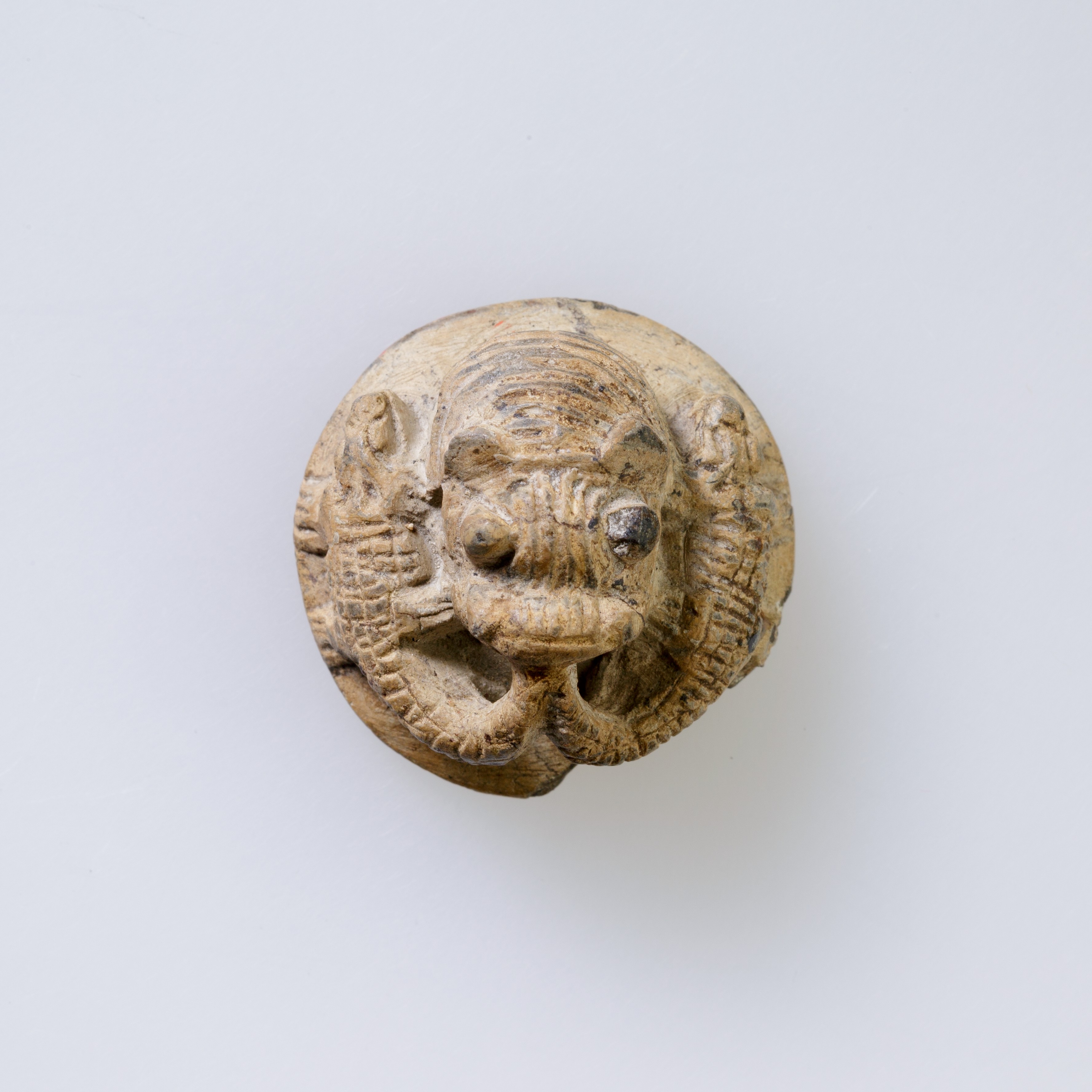
Heritage Asset Analysis: Hippopotamus-Head Design Amulet Inscribed With Four Linked Ibex Heads
Introduction: A Compact Artifact of Civilizational Density
Within the Katherine Fashion Lab's strategic standalone research portfolio, few objects compress symbolic, material, and spiritual capital as efficiently as the hippopotamus-head amulet inscribed with four linked ibex heads. Executed in steatite and finished with a white glaze, this Ancient Civilization artifact belongs to the broader tradition of protective amulets that circulated across the Nile Valley and adjacent trade corridors. Its dual iconography—the hippopotamus and the ibex—positions it at the intersection of fertility, rebirth, and apotropaic defense, making it an unusually rich reference point for a luxury house seeking narrative depth rather than surface-level exoticism. For 2026 luxury strategy, the object offers a masterclass in how a single, palm-sized design can carry layered meaning across ritual, adornment, and identity.
Materiality and Craft: The Authority of Steatite and White Glaze
Steatite, or soapstone, was the preferred medium for small-scale amuletic and seal production across the Ancient Near East and Egypt precisely because of its workability and its transformation under heat. When fired, steatite hardens considerably, and the application of a white glaze—likely an alkaline or tin-based finish depending on period and region—created a lustrous surface that mimicked more precious materials while remaining accessible. This is a critical insight for luxury strategy: the object demonstrates that perceived value is a function of finish and intention, not raw material scarcity alone. The white glaze also carried symbolic weight, associating the wearer with purity, luminosity, and the regenerative powers of the sun. In a contemporary luxury context, this translates into a design philosophy where surface treatment, tactility, and light interaction become the signature of the house rather than the exclusivity of the stone itself.
Symbolic Power: Hippopotamus as Guardian and Ibex as Vitality
The hippopotamus in Ancient Civilization iconography is a deliberately ambivalent figure. In its wild form, it represented chaos, brute force, and the untamed Nile. Yet in amuletic and funerary contexts, the hippopotamus—particularly the female—was associated with Taweret, the protective goddess of childbirth and household defense. The hippopotamus-head amulet therefore channels danger into guardianship: the wearer appropriates the animal's power for protection rather than destruction. This inversion is a sophisticated branding mechanism, one that luxury houses can emulate by positioning strength as a form of care, and ferocity as a form of stewardship.
The four linked ibex heads introduce a second symbolic register. The ibex, a mountain-dwelling caprid, symbolized agility, fertility, and the cyclical renewal of the seasons. Its horns, curving backward with geometric elegance, were associated with lunar cycles and the regenerative power of the natural world. The fact that four ibex heads are linked—likely in a continuous frieze or interlocking arrangement—suggests themes of unity, repetition, and the binding of natural forces into a single protective field. Numerically, four evokes stability, cardinal directions, and material completeness. Together, the hippopotamus and ibex create a talismanic system: defense from without, vitality from within.
Historical Adornment and Social Function
Amulets of this type were not merely decorative. They were worn, carried, or deposited in tombs and domestic shrines, functioning as portable theology. Their small scale made them intimate—touching the body, hidden beneath clothing, or strung on cord. This intimacy is precisely what contemporary luxury consumers seek: objects that feel personal, private, and meaningful rather than performative. The hippopotamus-ibex amulet was also likely a marker of status, not because of its material cost, but because of its access to specialized knowledge. The wearer understood the symbolism, the correct ritual context, and the protective contract it enacted. In 2026 luxury strategy, this translates into limited-edition pieces accompanied by provenance narratives and symbolic decoding, where the consumer becomes an initiate rather than a mere purchaser.
Spiritual Meaning: Protection, Rebirth, and the Bound Forces of Nature
The white glaze reinforces the amulet's spiritual function. White in Ancient Civilization contexts frequently denoted purity, sacredness, and the threshold between the living and the divine. Combined with the hippopotamus's association with rebirth and the ibex's link to seasonal renewal, the object operates as a compact resurrection machine: it protects the body, nourishes the spirit, and cycles life forward. The linkage of four ibex heads may also imply the binding of chaotic natural forces into a harmonious order—a theme that resonates with modern luxury narratives around balance, wellness, and intentional living.
2026 Luxury Strategy: From Artifact to Atelier
For Katherine Fashion Lab, this amulet suggests a 2026 strategy built on four pillars. First, symbolic layering: designs should carry at least two readable meanings, one protective and one generative, allowing consumers to discover depth over time. Second, material transformation: prioritize finishes—glazes, patinas, micro-textures—that elevate accessible materials into objects of desire, echoing steatite's fired transformation. Third, intimate scale: champion amulet-sized accessories, talismanic jewelry, and pocket-sized leather goods that function as personal guardians rather than public logos. Fourth, narrative provenance: pair each collection with curatorial research, museum-grade documentation, and symbolic decoding, positioning the house as a custodian of cultural knowledge rather than a borrower of motifs.
The hippopotamus-head amulet with four linked ibex heads is not a quaint curiosity. It is a strategic blueprint: a small, glazed, dual-symbol object that converted raw natural power into wearable protection. For a luxury house entering 2026, that is the ultimate heritage proposition—danger bound into beauty, chaos rendered as care, and a white-glazed surface that promises renewal to whoever wears it.