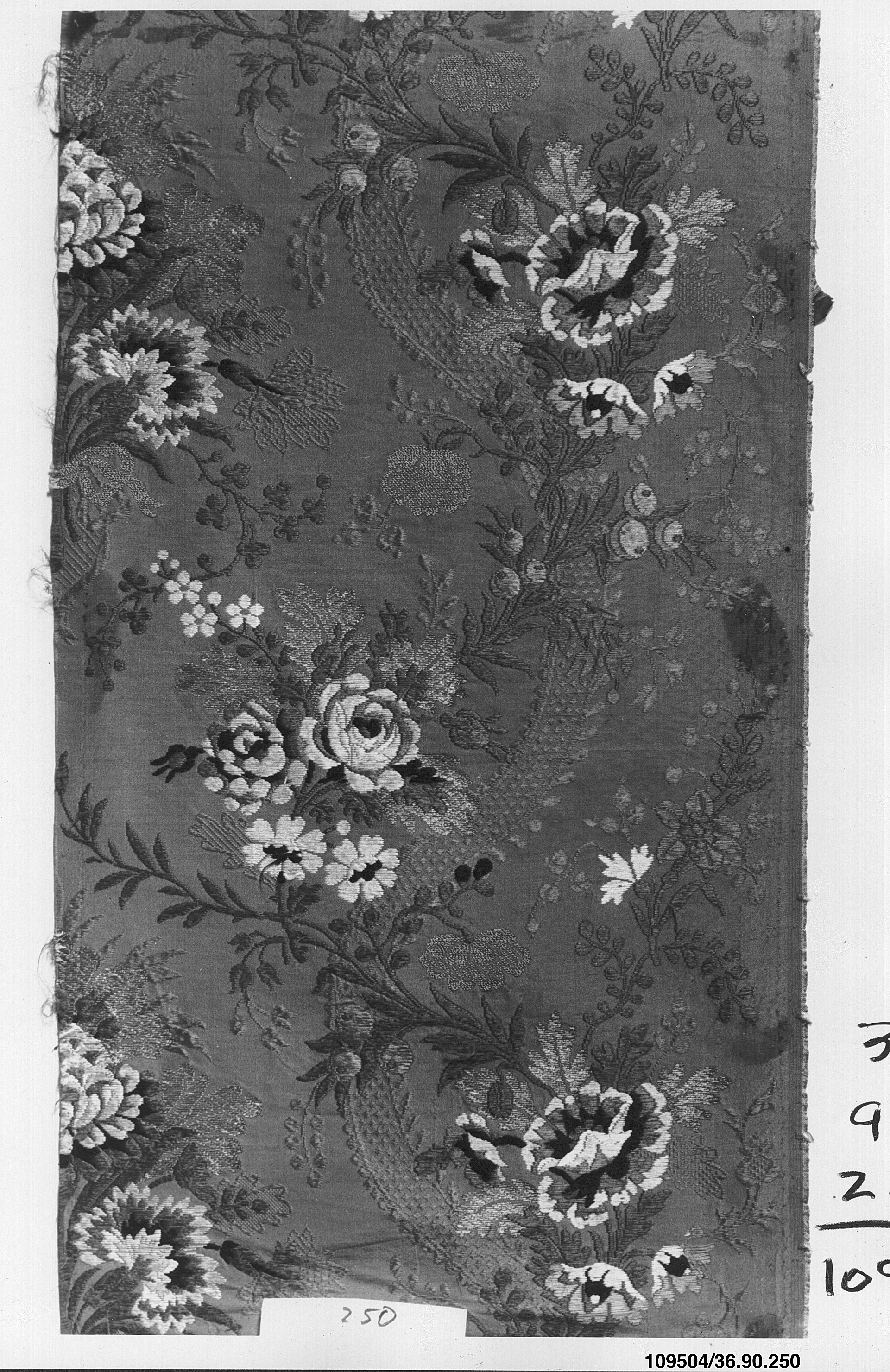
Heritage Analysis: The Silk-and-Metal-Thread Adornment of Ancient Civilization
Introduction: The Artifact as Strategic Asset
Within the Katherine Fashion Lab's portfolio of standalone heritage research, few material categories command the interpretive authority of silk interwoven with metal thread. This analysis examines a singular piece—an adornment object originating from an advanced Ancient Civilization—as both a historical document and a strategic commercial instrument. For a luxury house positioning itself for 2026 and beyond, the artifact is not merely decorative. It is a compressed archive of symbolic power, spiritual technology, and pre-industrial metallurgical craft. Its translation into contemporary luxury strategy requires rigorous decoding rather than superficial homage.
Material Vocabulary: Silk and Metal Thread as Dual Language
Silk and metal thread operate as two distinct but mutually reinforcing semiotic systems. Silk, produced through sericulture, historically signaled access to long-distance trade networks, controlled agricultural knowledge, and courtly refinement. In Ancient Civilizations, silk was often restricted to ritual and elite use, making it a material proxy for political legitimacy. Metal thread—typically drawn gold, silver, or gilded copper wound around a fibrous core—introduced permanence, luminosity, and a direct association with the sacred and the solar.
When combined, these materials create a hybrid surface that shifts with light and movement. This is not accidental. The textile becomes a dynamic object, activated by the body and by ritual space. For Katherine Fashion Lab, this duality offers a foundational design principle: luxury is not a static finish but a responsive system. The piece demonstrates that adornment can encode both earthly hierarchy (silk) and celestial authority (metal), a binary that remains commercially potent in 2026's high-end market.
Symbolic Power: Adornment as Political and Cosmic Claim
In the context of Ancient Civilization, adornment was rarely ornamental in the modern sense. It was juridical. Metal-thread motifs—repeating geometric bands, solar discs, serpentine forms, and stylized flora—functioned as a visual constitution. To wear such a piece was to assert a specific relationship to the cosmos and to the state. Gold thread, in particular, was often reserved for figures claiming divine sanction. Its reflectivity was understood as a physical manifestation of spiritual radiance.
The strategic implication for a heritage-driven luxury house is clear: symbolic power must be legible without being literal. The 2026 consumer of high-end adornment is not seeking costume. They are seeking narrative authority—a defensible claim to meaning that survives trend cycles. The Ancient Civilization piece provides this through its layered iconography. Each motif can be traced to a specific cosmological function, allowing Katherine Fashion Lab to build a product narrative around continuity, protection, and sovereign identity rather than ephemeral aesthetics.
Historical Adornment: Craft as Knowledge Transfer
The production of silk-and-metal-thread adornment required a supply chain of extraordinary sophistication: sericulture, reeling, dyeing, metal drawing, gilding, and specialized embroidery or weaving. This was not artisanal improvisation. It was industrial intelligence in a pre-industrial frame. The metal thread had to be flexible enough to survive manipulation yet durable enough to retain its luster across generations. The silk ground had to accept heavy metallic embroidery without distortion.
For Katherine Fashion Lab, this history is a benchmark for supply-chain storytelling. In 2026, luxury consumers and investors increasingly reward transparency and technical mastery. The Ancient Civilization piece allows the brand to position its own ateliers within a lineage of material science, not merely design. The message is that heritage luxury is a form of engineering—one that predates and informs modern material innovation.
Spiritual Meaning: The Adornment as Talismanic Object
Beyond political display, the piece carries spiritual meaning. Metal thread in Ancient Civilizations was frequently associated with incorruptibility and the afterlife. Silk, biologically derived from the silkworm's metamorphosis, symbolized rebirth and continuity. Together, they formed a talismanic technology: an object intended to protect, transform, or transport the wearer across thresholds—ritual, social, and metaphysical.
This spiritual dimension is commercially relevant because it addresses a contemporary luxury demand for meaningful materialism. The 2026 high-end consumer, particularly in mature markets, seeks objects that function as personal anchors. Katherine Fashion Lab can translate this by treating adornment as a form of wearable intention—not through New Age rhetoric, but through rigorous historical reference. The piece demonstrates that spiritual meaning can be embedded in material and motif without sacrificing aesthetic restraint.
2026 Luxury Strategy: From Heritage Analysis to Market Position
For Katherine Fashion Lab, the strategic standalone research on this piece yields four actionable directives for 2026:
1. Material authenticity as differentiation. The silk-and-metal-thread combination is difficult to replicate at scale without losing integrity. The brand should invest in limited-series production that preserves the technical distinction between filament silk and true metal-wrapped thread, positioning these as non-negotiable quality markers.
2. Symbolic literacy as brand education. Rather than appropriating motifs, Katherine Fashion Lab should develop an interpretive framework—published research, client-facing dossiers, and atelier narratives—that explains the original symbolic function of each design element. This transforms the consumer from buyer to initiate.
3. Spiritual resonance without esotericism. The talismanic history of the piece supports a luxury proposition centered on protection, continuity, and personal sovereignty. Marketing should emphasize these themes through historical evidence, not vague spirituality.
4. Heritage as forward-looking R&D. The Ancient Civilization piece is not a relic. It is a case study in responsive materials, layered meaning, and elite supply chains. Katherine Fashion Lab should treat it as a strategic template for future collections, where every adornment object carries a defensible historical argument and a clear contemporary function.
Conclusion: The Curatorial Mandate
The silk-and-metal-thread adornment of Ancient Civilization is a high-value heritage asset because it operates simultaneously as artifact, argument, and archetype. For Katherine Fashion Lab, the curatorial mandate is not to preserve it behind glass but to translate its logic into a 2026 luxury strategy defined by material integrity, symbolic depth, and spiritual utility. The piece proves that adornment, at its highest level, is never merely decorative. It is a claim—about power, about cosmos, about the self. A luxury house that understands this will not chase trends. It will inherit authority.