Deconstructing the Universal: A Standalone Study of Cotton in Global Couture
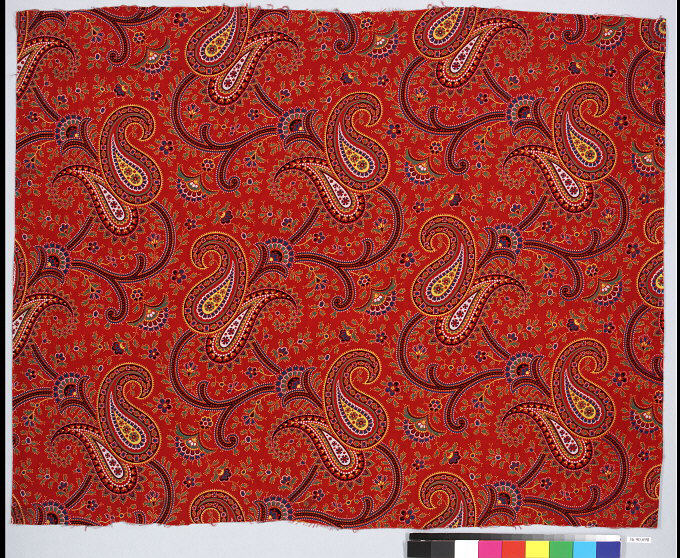
In the rarefied atmosphere of haute couture, where narratives are often built upon rarity and exclusivity, the choice to center a standalone study on cotton is a profound intellectual and aesthetic statement. This analysis, conducted by Katherine Fashion Lab, interrogates not merely a material but a global cultural constant. Cotton, often relegated in luxury discourse to the realms of the casual or the foundational, is here elevated to the subject of a singular, focused examination. This piece—originating from the concept of "Global Heritage"—transcends geographical and temporal boundaries to explore the fibre’s intrinsic couture potential when stripped of overt thematic context. It is a laboratory experiment in pure form, texture, and memory, where the weight of collective human history is woven into every thread.
The Substance of Commonality: Cotton as Couture Canvas
At its core, this standalone study challenges the very hierarchy of materials. Eschewing silk’s sheen, velvet’s plush, or technical fabrics’ futurism, the piece returns to a substrate known to virtually every culture on earth. The selection of cotton is a deliberate democratization of the couture premise. The Lab’s investigation begins with the hand—the *hapticity*—of the material. Through meticulous sourcing, the cotton employed is not a generic industrial product but likely represents specific, heritage varieties: perhaps the long-staple luxury of Suvin from India, the resilient strength of Egyptian Giza, or the subtle luster of Sea Island cotton. Each brings a distinct narrative of soil, climate, and cultivation practice into the atelier.
The treatment of this canvas is where the couture intellect manifests. The study explores cotton’s full spectrum: its behavior under extreme manipulation. We observe architectural rigidity achieved through complex fabric laminations or natural starching techniques, creating volumes that defy the material’s presumed softness. Conversely, other sections of the piece might explore ethereal transparency, where hand-loomed cotton is worked into layers of gossamer-thin muslin or voile, each layer air-whipped and finished to a weightless perfection. The standalone context forces the observer to appreciate the material’s duality—its capacity for both structural integrity and poetic fluidity—without the distraction of an external storyline.
Memory Woven In: Technique as Heritage
Without a prescribed geographical origin, the piece’s "Global Heritage" is encoded not in iconography but in technique. The couture construction becomes a silent lexicon of human ingenuity. This is where the analysis reveals its depth. We may encounter:
Smocking and Shirring executed with a precision that references English pastoral workwear, yet scaled and contorted to create avant-garde, three-dimensional textures across the bodice. Indian Chikankari shadow-work embroidery, rendered not in colorful threads but in self-fabric, creating a play of density and light that speaks of immense, quiet labor. Japanese Sashiko stitching, traditionally a functional reinforcement, elevated to a graphic, rhythmic surface pattern that speaks of longevity and repair. West African strip-weaving principles might be interpreted in panels of irregular, off-grain construction, celebrating the beauty of the imperfect and the hand-woven.
Each technique is disembodied from its specific cultural costume and re-contextualized into the standalone couture form. They converse with one another on a single garment, a summit of global artisanship. The "piece" becomes a testament to the human hand’s universal language of needle, thread, and loom. The Lab’s role is that of curator and synthesizer, demonstrating that heritage in couture is not merely aesthetic appropriation but a deep, respectful engagement with the intelligence embedded in traditional craft, repurposed for a contemporary, singular vision.
The Monastic and the Modern: Form in Isolation
The decision for a standalone study liberates the form from the constraints of narrative wearability. The silhouette can exist purely as an exploration of idea. We might analyze a shape that draws from the monastic robe—a universal garment of simplicity and contemplation—deconstructed through couture’s exacting standards. Voluminous sleeves, informed by the proportions of a Japanese kimono or a Bhutto, are engineered from dozens of meticulously shaped cotton panels to achieve a specific drape or angular suspension.
Conversely, the form could embrace a hyper-modern, minimalist rigor, using cotton’s ability to hold a sharp press to create clean, geometric lines that rival the finest wool. The focus shifts entirely to the precision of the cut, the perfection of the seam, and the fall of the cloth. In this vacuum of context, every dart, every seam allowance, and every hem becomes a critical subject of the study. The absence of embellishment or obvious reference points forces an appreciation for the fundamentals of construction, where the beauty lies in the integrity of the inner structure—the boning, the internal corsetry made from layered cotton coutil, the hidden supports that give humble cotton a majestic, transformative posture.
Conclusion: The Radical Intimacy of the Everyday Sublime
Katherine Fashion Lab’s standalone study on cotton ultimately posits a radical thesis: that true luxury and profound couture intelligence lie in the deep, transformative examination of the familiar. By isolating this single, globally shared material, the analysis reveals universality as a source of infinite variation. The piece stands as a monument to quiet expertise, a reminder that heritage is not always a loud symbol but often a silent, tactile knowledge passed through hands across continents and centuries.
This study does not simply present a garment; it offers a methodology for seeing. It argues that couture’s future may not solely be in the invention of the new, but in the radical, respectful, and ingenious re-conception of the ancient and the ordinary. In elevating cotton to the subject of a pure, focused analysis, the Lab redefines the couture object as a site of cultural convergence and material philosophy, proving that the most profound stories are often woven from the threads we hold in common.