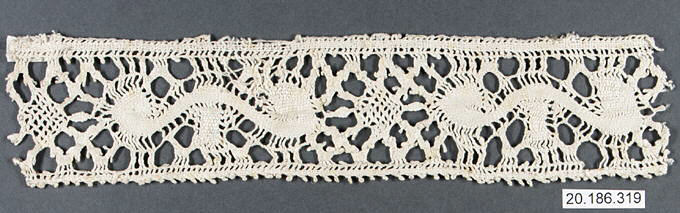
Insertion: The Architecture of Interstitial Elegance
Within the disciplined vocabulary of haute couture, few techniques embody the paradox of structural engineering and ethereal delicacy as completely as insertion. Unlike appliqué, which imposes a motif upon a finished ground, or embroidery, which embellishes a surface, insertion operates through a logic of calculated absence. It is the art of removing material in order to place something more consequential within the void—a strip of hand-woven bobbin lace that transforms a negative space into a positive statement of craftsmanship. For the contemporary atelier, insertion represents both a historical inheritance and a forward-facing methodology, one that speaks to fashion's enduring dialogue between construction and ornamentation.
This standalone study examines insertion through the lens of global heritage, with particular attention to bobbin lace as its principal material. By tracing the technique across Flemish, Venetian, and Asian traditions, we can appreciate how a single structural principle—the strategic interruption of a textile ground—has generated radically different aesthetic outcomes while remaining tethered to a shared artisanal grammar.
Defining the Technique: Between Seam and Sculpture
Insertion, in its most precise couture definition, refers to the joining of two separate edges of fabric by means of a decorative intermediary element. That element may be a lace band, a ribbon, a crocheted strip, or a patterned braid. The technique requires the couturier to first separate the ground fabric—whether silk crepe, organza, or fine wool—along a predetermined line, then to rejoin the severed edges through the inserted material. The result is not merely decorative but structural: the insertion functions as a seam, a hinge, and an ornament simultaneously.
The historical lineage of this practice is remarkably broad. In sixteenth-century Italy, punto in aria—literally "stitches in air"—emerged as an early form of needle lace that effectively inserted openwork into linen garments. By the seventeenth century, Flemish bobbin lacemakers in Bruges and Brussels had refined the craft to such a degree that their dentelle de Flandre became a prized insertion material for aristocratic bodices and sleeves. Concurrently, in the Ottoman Empire and later in colonial India, insertion techniques using metallic threads and fine muslin demonstrated that the principle was not exclusively European. The global heritage of insertion is thus a story of convergent invention: different cultures, working with distinct materials and symbolic systems, arrived at the same fundamental insight—that absence, when carefully framed, can be more eloquent than presence.
Bobbin Lace as Insertion Material: A Technical Appreciation
Among the many materials suited to insertion, bobbin lace occupies a singular position. Unlike needle lace, which is built stitch by stitch with a single thread, bobbin lace is woven from multiple threads wound onto bobbins and manipulated over a parchment pattern. This technique produces a fabric with inherent tension, flexibility, and a distinctive ground of twisted pairs. When used as an insertion, bobbin lace offers three properties that are difficult to replicate with other materials.
First, its dimensional stability allows it to bridge gaps between fabric edges without buckling or distorting the surrounding textile. Second, its translucency creates a visual rhythm—a pause in the opacity of the garment that draws the eye and articulates the body's contours. Third, its textural contrast against smooth silk or matte wool generates a tactile narrative, inviting the wearer and the observer to consider the garment as a layered composition rather than a monolithic surface.
In the Katherine Fashion Lab's material library, we categorize bobbin lace insertions by three variables: thread count (from 40/2 to 120/2), ground pattern (honeycomb, torchon, or binche), and motif scale (from 4mm edging to 12cm deep flounces). These variables determine not only the visual outcome but also the garment's behavior in motion. A binche ground, for example, with its hexagonal mesh, offers greater elasticity and is therefore preferred for insertion along bias-cut seams. A torchon ground, denser and more rigid, is better suited to vertical panel insertions where structural support is required.
Global Heritage, Contemporary Application
The global heritage of insertion is not a static archive but a living resource. In our studio practice, we have adapted traditional Flemish bobbin lace insertions for modern silhouettes by altering the scale and orientation of the lace bands. A technique originally used to join the sleeves of a chemise can now be deployed along the princess seams of a tailored jacket, creating a dialogue between historical handwork and contemporary tailoring. Similarly, we have experimented with Japanese kumihimo braids as insertion elements in wool crepe, and with Andean ñanduti lace in linen shifts—each iteration testing the principle that insertion is fundamentally a method of transition.
What emerges from this study is a recognition that insertion is not merely a finishing technique but a philosophical stance. It acknowledges that garments, like architecture, are composed of parts, and that the joints between those parts deserve as much attention as the parts themselves. In an era of seamless digital printing and bonded textiles, the deliberate cut-and-insert remains a radical act of craftsmanship. It asserts that the hand, the bobbin, and the thread still possess a authority that no algorithm can fully replicate.
For the couturier, insertion offers a disciplined freedom: the freedom to remove, to interrupt, and to rejoin—all in the service of a more articulate whole. It is, in the end, a lesson in restraint and precision, taught by centuries of lacemakers whose work continues to breathe within the interstices of contemporary fashion.