Executive Summary: Fragment as Foundation
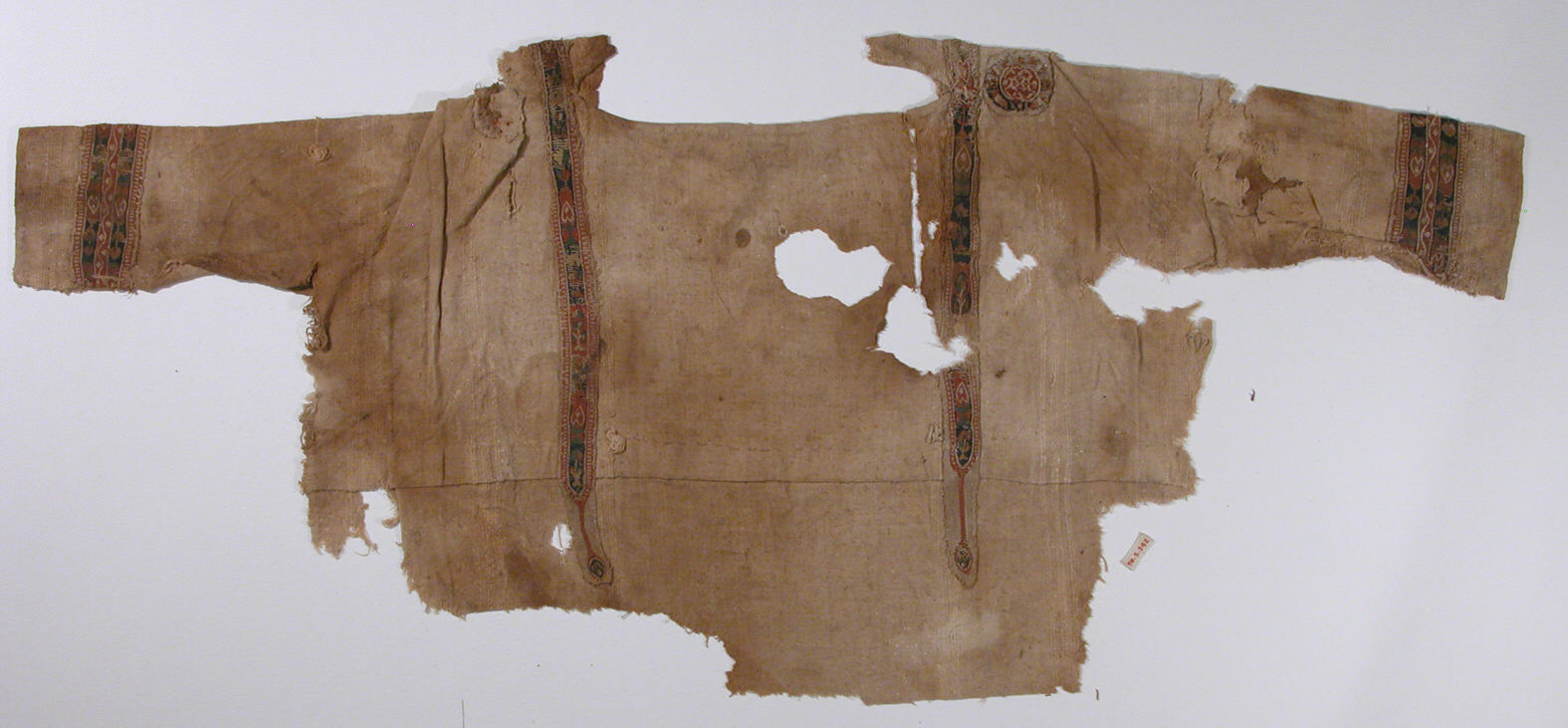
This strategic standalone research analyzes a textile fragment—a tunic segment from an ancient civilization, crafted in wool and linen utilizing plain and tapestry weave techniques—as the cornerstone for a forward-facing heritage narrative. For Katherine Fashion Lab, such an artifact is not a relic but a resonant system of codes. This analysis deciphers its intrinsic symbolic power and historical context of adornment to construct an actionable, high-value luxury strategy for 2026. We posit that in an era of experiential and intellectual luxury, depth of meaning derived from authentic, well-researched heritage provides the ultimate competitive edge. This fragment, in its materiality and craftsmanship, offers a non-verbal lexicon of status, spirituality, and connection that can be translated into a compelling modern idiom.
Decoding the Artifact: Material and Symbolic Stratigraphy
The assigned fragment’s material composition and construction are the first layer of strategic data. The combination of wool and linen is profoundly significant. In many ancient Mediterranean and Near Eastern cultures, this hybrid fabric was often restricted by sumptuary laws or reserved for priestly and high-status garments, as seen in parallels with documented Hesian textiles or certain Egyptian divine vestments. Wool, an animal fiber, symbolized wealth, pastoral authority, and physical protection. Linen, a plant fiber, was associated with purity, light, and spiritual sanctity. Their union in a single garment immediately signals a wearer operating at the intersection of temporal power and spiritual duty.
Weave as Narrative: The Tapestry Insert
The use of a tapestry weave within a predominantly plain weave ground is critical. Tapestry, a weft-faced technique allowing for detailed pictorial or geometric design, was a bandwidth-intensive technology. Its presence indicates a deliberate investment of skilled labor—the ancient equivalent of haute main. This insert would have borne the garment’s primary iconography. Analyzing its potential motifs (even abstractly) is key: repeating labyrinth patterns suggest a perilous journey or protected knowledge; stylized flora (lotus, tree of life) connect to cycles of rebirth and cosmic order; heraldic animals denote clan power or divine attributes. The tapestry panel is not mere decoration; it is a heraldic device and a talismanic interface, broadcasting identity and invoking protection simultaneously.
The Historical Context of Adornment: The Tunic as Social Skin
In ancient civilizations, clothing was a primary medium for non-verbal communication in a rigidly hierarchical world. A tunic was a second skin that articulated one’s position in the social, political, and cosmic hierarchy. This fragment, likely from a shoulder or chest area given the strategic placement of tapestry, would have been positioned in the sightline of both the wearer and the observer, functioning as a constant reminder of identity and obligation.
Spiritual Meaning and Embodied Sanctity
The spiritual meaning is embedded in the very act of wearing. Garments were often understood as microcosms or sacred enclosures. The integrity of the weave symbolized the integrity of the social or cosmic order. The combination of wool and linen could be interpreted as a harmonious balance of opposing forces—earth and sky, mortal and divine. The tapestry panel might have served as a focal point for meditation or a literal "screen" deflecting the malevolent gaze (the evil eye). Adornment was thus active, not passive—a performative technology for navigating seen and unseen worlds. For the modern luxury consumer, this translates to a desire for garments that do more than aesthetically please; they must confer a sense of identity, purpose, and intangible armor.
Strategic Translation: 2026 High-End Luxury Strategy for Katherine Fashion Lab
The 2026 luxury landscape will be defined by radical authenticity, intellectual resonance, and quiet, potent symbolism. Consumers will invest in brands that offer not just products, but coherent, credible worlds. Katherine Fashion Lab’s strategy must be to become an archaeologist of meaning, using this fragment as its Rosetta Stone.
Pillar 1: The "Stratigraphy" Collection
Launch a flagship collection where each piece is a conceptual excavation. Physically, this translates to layered fabrics: sheer linen grounds over dense wool substrates, with intricate jacquard or intarsia panels (modern tapestry) revealing themselves subtly. The narrative is one of revealed depth. Colors are derived from natural dyes and ancient palettes—ochre, madder, woad, indigo—presented in unexpectedly contemporary silhouences. Each garment is accompanied by a "Material Provenance" note, detailing the symbolic legacy of its fabric combinations and motif inspirations, transforming the product into a curated artifact.
Pillar 2: Modern Talismanic Design
Move beyond literal logo placement. Develop a suite of abstracted symbols derived from the fragment’s potential iconography—a minimalist labyrinth, a geometric branch, a distilled animal form. These become the house’s symbolic signatures, embroidered, woven, or engraved in precise locations (neckline seam, inner cuff, jacket lining) that recall the strategic placement of the original tapestry panel. This creates a discreet, high-IQ branding language understood only by initiates, catering to the desire for coded communication and personal sanctity.
Pillar 3: The "Ancestral Technique" Atelier
Position the brand’s craftsmanship as a direct, innovative dialogue with history. Establish a micro-atelier dedicated to fusing ancient methods with cutting-edge technology. For example, use AI pattern analysis to reconstruct possible complete weave structures from the fragment, then interpret them on state-of-the-art looms. Host private client "Adornment Rituals" where the purchase of a high-jewelry or couture item includes a consultation on the symbolic elements woven into the piece, tailored to the client’s personal narrative. This transforms the transaction into an initiation.
Conclusion: From Fragment to Framework
The wool-and-linen fragment is Katherine Fashion Lab’s strategic asset. It provides an unimpeachable foundation of authenticity, a rich lexicon of symbols, and a profound narrative connecting adornment to identity, power, and belief. The 2026 strategy must be to operationalize this heritage not through replication, but through conceptual translation. By building a luxury universe where every material choice, technical detail, and design motif is imbued with decipherable, strategic meaning drawn from this deep past, Katherine Fashion Lab will attract the discerning consumer of the future: one who seeks not just to wear beauty, but to embody legacy and narrative. The fragment is the seed; the 2026 strategy is the blueprint for the sanctuary that grows from it.