Introduction: The Cap Fragment as Material Testimony
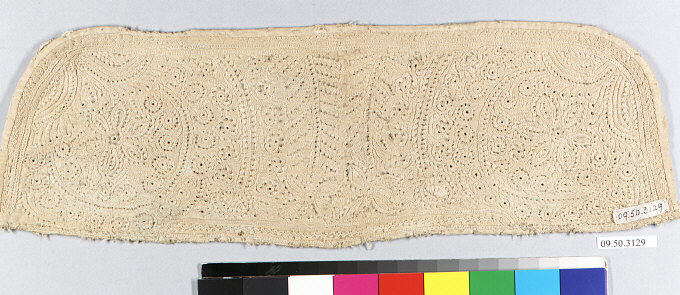
Within the expanding discourse of global heritage textiles, few artifacts carry the interpretive weight of the cap fragment. As a standalone object of study, it resists the completeness of the finished garment and instead offers what curators might call a "material testimony"—a partial record of construction, wear, and cultural memory. At Katherine Fashion Lab, this linen cap fragment is examined not as a deficient artifact but as a concentrated site of meaning. Its very incompleteness becomes an invitation to reconstruct the systems of labor, trade, and symbolic value that produced it. The fragment measures only a few centimeters across, yet it opens onto centuries of linen cultivation, weaving, and headwear traditions that span from the Nile Delta to the Baltic coast.
The decision to treat this piece as a standalone study reflects a broader curatorial shift in fashion scholarship: the move away from the "masterpiece" garment toward the fragment as a legitimate object of haute couture analysis. In this framework, the cap fragment is not a remnant of something lost but a self-sufficient text. It asks the viewer to read absence as evidence and to consider how linen, as a material, carries its own narrative of durability, breathability, and democratic utility.
The Materiality of Linen: From Fiber to Fragment
Botanical Origins and Textile Logic
Linen is derived from the bast fibers of the flax plant, Linum usitatissimum, a crop domesticated in the Fertile Crescent as early as 8000 BCE. Unlike cotton, which encloses its fibers in a protective boll, flax fibers run the length of the stalk, requiring retting, scutching, and hackling to separate the valuable cellulose from the woody core. This labor-intensive process explains why linen remained a luxury textile in many historical contexts, even as it became the standard for undergarments and headwear in others.
The cap fragment under study exhibits a plain weave with a thread count of approximately 28 threads per centimeter in both warp and weft—a medium-weight linen consistent with headwear intended for daily use rather than ceremonial display. The fibers show evidence of natural variation in thickness, a characteristic of hand-spun yarn rather than industrial machine spinning. This detail alone situates the fragment before the widespread mechanization of linen production in the nineteenth century, though precise dating requires further analysis.
Color, Wear, and the Archaeology of Use
The fragment's color is a muted, uneven off-white, with localized discoloration that suggests prolonged contact with skin oils and perspiration. In conservation terms, these stains are not defects but "use-wear signatures." They indicate that the cap was worn repeatedly, likely against the forehead or crown, and that it was not a purely decorative object. The edges of the fragment are frayed, with several warp threads severed and weft threads displaced—a pattern consistent with abrasion against a harder surface, perhaps a helmet lining or a wooden headrest.
Crucially, the fragment retains a single intact seam: a flat-felled join executed with linen thread of a slightly finer gauge than the main fabric. This seam type, common in historical headwear across Europe and the Mediterranean, serves both structural and aesthetic functions. It prevents raveling and distributes tension evenly across the curve of the skull. The presence of this seam confirms that the fragment was once part of a three-dimensional object, not a flat textile such as a shroud or towel.
Global Heritage Contexts: The Cap Across Cultures
Mediterranean and Near Eastern Traditions
Linen caps have been recovered from archaeological sites ranging from Pharaonic Egypt to Roman Britain. In Egypt, linen head coverings were standard among laborers, priests, and the deceased, often layered beneath wigs or outer headdresses. The dry climate of Upper Egypt has preserved these textiles with remarkable fidelity, allowing scholars to trace changes in weave density and seam construction over millennia. The cap fragment in this study shares affinities with Coptic textiles of the late antique period, particularly in its use of undyed flax and simple overcast stitching.
In the Islamic world, linen caps (known variously as taqiyah, kufi, or shashiyah) served both religious and practical functions. They were worn beneath turbans, during prayer, and as everyday headwear in warm climates. The breathability of linen made it ideal for such purposes, and its ability to absorb moisture without feeling damp contributed to its enduring popularity. While the fragment cannot be definitively assigned to any single culture, its material logic aligns with this broad Mediterranean and Near Eastern tradition.
Northern European and Atlantic Adaptations
Linen caps also appear in Northern European contexts, particularly as under-caps for woolen or felted hats. In early modern England and the Dutch Republic, linen coifs and nightcaps were standard household items, often embroidered or monogrammed to indicate ownership. The cap fragment's relatively coarse weave, however, suggests a utilitarian rather than elite context—perhaps a sailor's or laborer's cap, or a lining for a heavier headpiece.
The transatlantic trade in linen during the seventeenth and eighteenth centuries complicates any simple narrative of origin. Flax was grown in Ireland, the Low Countries, and Russia, woven into cloth, and then shipped to the Americas and Africa. A linen cap fragment could therefore embody multiple geographies: the flax field, the weaving shed, the merchant's warehouse, and the wearer's head. This layered provenance is precisely what makes the fragment a compelling object for global heritage studies.
Curatorial Interpretation: Reading the Fragment as Haute Couture
Construction as Design Language
In haute couture, the interior of a garment—its seams, linings, and finishes—is often as significant as its exterior. The cap fragment invites a similar reading. Its flat-felled seam, though utilitarian, demonstrates a sophisticated understanding of textile behavior: the seam must lie flat against the head, resist fraying, and accommodate the curve of the skull without puckering. This is not the work of an amateur. It reflects a transmitted body of knowledge, likely learned through apprenticeship or familial instruction.
The fragment's frayed edges, meanwhile, reveal the vulnerability of linen to abrasion. Unlike wool, which has natural crimp and elasticity, linen is relatively stiff and inelastic. Over time, repeated folding and unfolding along the same lines will cause the fibers to break. The pattern of fraying on this fragment suggests that the cap was folded for storage or worn under pressure, perhaps beneath a heavier hat. These are design constraints that any couturier working with linen must confront, and the fragment offers a historical precedent for solving them.
Ethical and Aesthetic Implications
To study a cap fragment is to confront the ethics of preservation. Should such a piece be stabilized, mounted, and displayed as a relic? Or should it be handled, photographed, and returned to its archival box, its fragility respected through minimal intervention? At Katherine Fashion Lab, we advocate for the latter approach: the fragment is a teaching object, not a trophy. Its value lies in what it can tell us about material intelligence, not in its completeness as a spectacle.
Aesthetically, the fragment aligns with contemporary couture's interest in deconstruction and the "unfinished" look. Designers such as Rei Kawakubo and Martin Margiela have long explored frayed edges, exposed seams, and garment fragments as formal strategies. The cap fragment anticipates this sensibility by centuries. It is, in its own quiet way, a piece of radical design: a textile that prioritizes function, durability, and the body's needs over ornamentation.
Conclusion: The Fragment as Future Archive
The linen cap fragment is more than a curiosity. It is a compact archive of global heritage, encoding the agricultural rhythms of flax, the technical knowledge of hand-spinning and weaving, and the intimate relationship between textile and skin. As a standalone study, it challenges the fashion historian to move beyond the complete garment and to embrace the partial, the worn, and the overlooked. In doing so, it opens new pathways for understanding how couture—at its most fundamental level—begins not with the runway but with the fiber, the seam, and the human head that wears it. Katherine Fashion Lab will continue to treat such fragments not as footnotes but as primary texts, worthy of the same analytical rigor we apply to the most celebrated gowns.