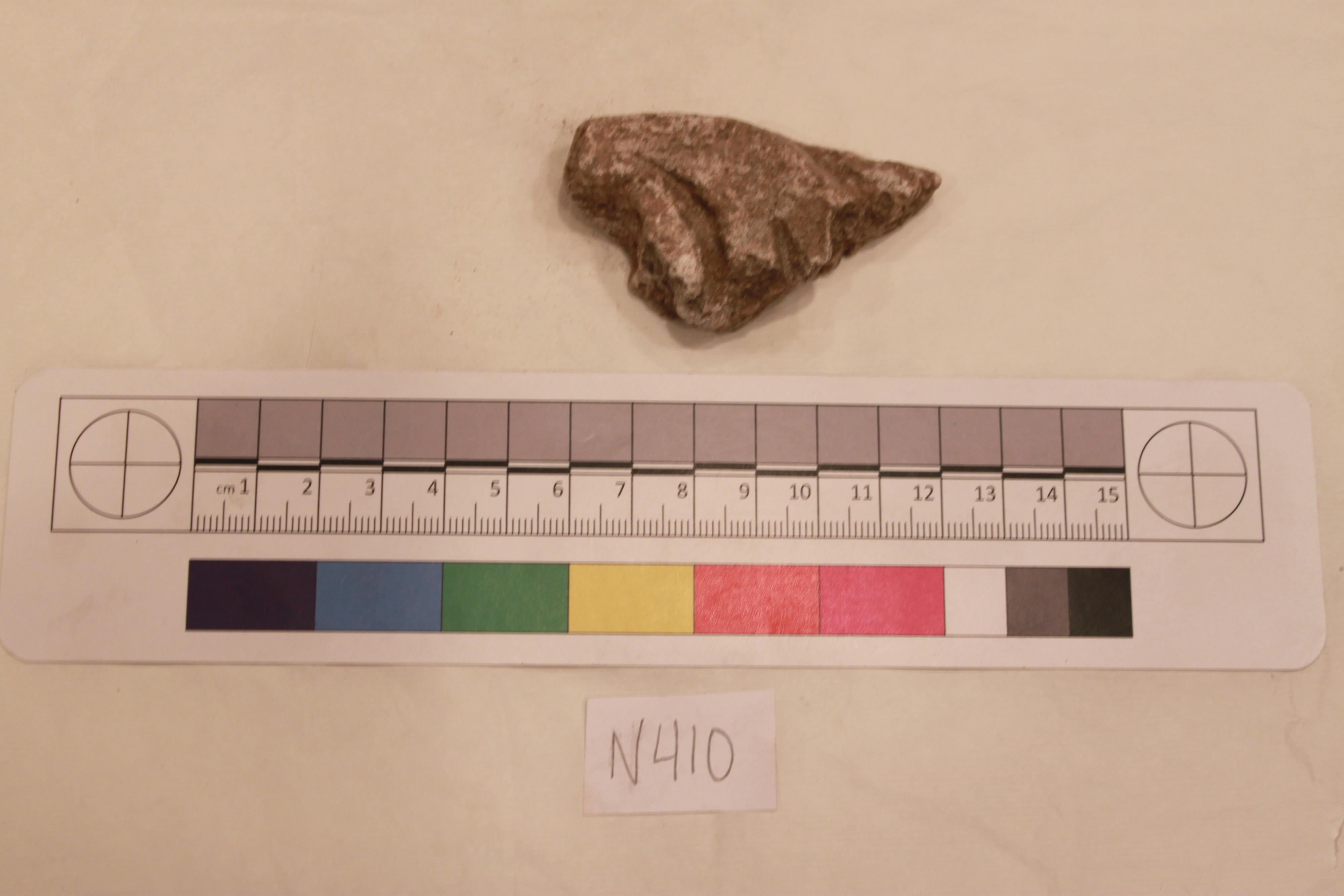
Deconstructing the Monumental: The Stucco Fragment as a Couture Catalyst
Within the hallowed archives of global heritage, fragments often speak more eloquently than intact wholes. A solitary Stucco Fragment, carved and weathered, transcends its archaeological context to become a profound study in texture, narrative, and structural integrity. For Katherine Fashion Lab, this artifact is not a relic of the past but a dynamic blueprint for the future of couture. It represents the very essence of our design philosophy: the deconstruction of monumental ideas into intimate, wearable art. This standalone study moves beyond mere aesthetic appropriation, engaging in a deep material dialogue where the principles of ancient stucco work—its plasticity, its narrative depth, its dialogue with light—are meticulously translated into a modern sartorial language.
Material Alchemy: From Mineral Matrix to Textile Architecture
The primary dialogue begins at the molecular level. Traditional stucco, a composite of lime, sand, and water, is a material of transformation. It begins as a malleable paste, is carved in its green state, and cures into a durable, stone-like surface. This process mirrors the very core of haute couture: the manipulation of pliable textiles into fixed, structural forms. At Katherine Fashion Lab, we engage in a form of textile alchemy, seeking fabrics that embody this duality. Heavy silk gazar, traditionally sculpted into volume, is instead meticulously pleated, crushed, and fused with resinous compounds to achieve a petrified, fragmentary drape. Felted wools are subjected to controlled felting and carving processes, their edges deliberately eroded to reveal raw, layered selvedges that echo the broken border of an archaeological find.
Furthermore, the application of specialized mineral-infused coatings creates surfaces that interact with light in a manner reminiscent of aged plaster. The goal is not to mimic stucco literally, but to emulate its tactile memory—the way it holds the mark of the tool, the variation in its porosity, and the subtle, granular shadow it casts. Embroidery transforms from mere decoration into a technique of bas-relief. Threads are couched, padded, and woven into dense, three-dimensional glyphs and patterns that replicate the carved channels and raised motifs of the original fragment, creating a topography that is meant to be read by the hand as much as by the eye.
Structural Philosophy: The Poetics of the Fragment
The form of the fragment itself is a masterclass in narrative and construction. It is a piece of a larger story, its edges speaking of both loss and enduring presence. This philosophy directly informs our silhouette development. We reject the notion of a garment as a complete, seamless whole. Instead, we embrace the poetics of incompletion. A gown may appear as if a section of its bodice has been excavated, revealing an underlying armature or a contrasting textural stratum beneath. Seams are emphasized, not hidden; they become the defining "fracture lines" of the garment, suggesting it is assembled from discovered panels of a greater, unseen whole.
This approach demands a radical rethinking of tailoring. Inspired by the structural role of stucco—often applied over a supportive armature—we develop complex internal architectures. Boning is not used solely for corsetry but is arranged in geometric, fragmentary grids that shape the garment from within, creating unexpected planes and angles. The silhouette itself becomes architectural and archaeological, featuring asymmetrical hems that resemble eroded strata, or sleeves that look as though they have been broken away to reveal the arm. The wearer becomes both the curator and the plinth for this living artifact, their movement animating the static history embedded in the form.
Narrative and Surface: Patina as a Design Language
No analysis of a heritage fragment is complete without addressing its patina—the accretions of time, environment, and human touch. This is where our couture practice moves into its most nuanced realm. We consciously reject the sterile and the new, developing intricate processes to engineer a sartorial patina. Fabric is hand-dyed in layered, sedimented washes of color, from the deep ochre of earth to the pale grey of limestone. Areas are carefully abraded, not to appear worn, but to appear historically inhabited.
Subtle, strategic discoloration and mineral-like deposits are applied through artisan techniques, telling a story of exposure and endurance. A cascade of sequins might be tarnished selectively, or lustrous silk chiffon could be overlaid with a veil of gossamer netting embedded with microscopic, crystal-like beads, mimicking the crystalline efflorescence that sometimes appears on ancient plaster. This is not about distress; it is about encoding time and value, suggesting that the garment possesses a biography that precedes its first wearing. It challenges the fashion cycle by presenting an object that appears to have evolved, rather than simply been manufactured.
Conclusion: The Fragment as a Complete Universe
The Standalone Stucco Fragment, in its silent, carved majesty, provides an inexhaustible source of inspiration precisely because it is incomplete. It invites extrapolation, interpretation, and completion through the body and movement. For Katherine Fashion Lab, this study culminates in a collection that is a meditation on memory, materiality, and the beauty of the imperfectly preserved. Each piece is conceived as a wearable fragment—a self-contained universe of texture, structure, and story that speaks of a grander narrative. It is couture that does not seek to dazzle with fleeting novelty but to resonate with the depth of human history, translating the monumental whispers of our global heritage into an intimate, profound, and powerfully contemporary sartorial statement. In this dialogue between ancient craft and future-facing design, the fragment is no longer broken; it is whole, re-constituted, and alive.