Executive Summary: The Cloisters Cross as a Paradigm of Symbolic Capital
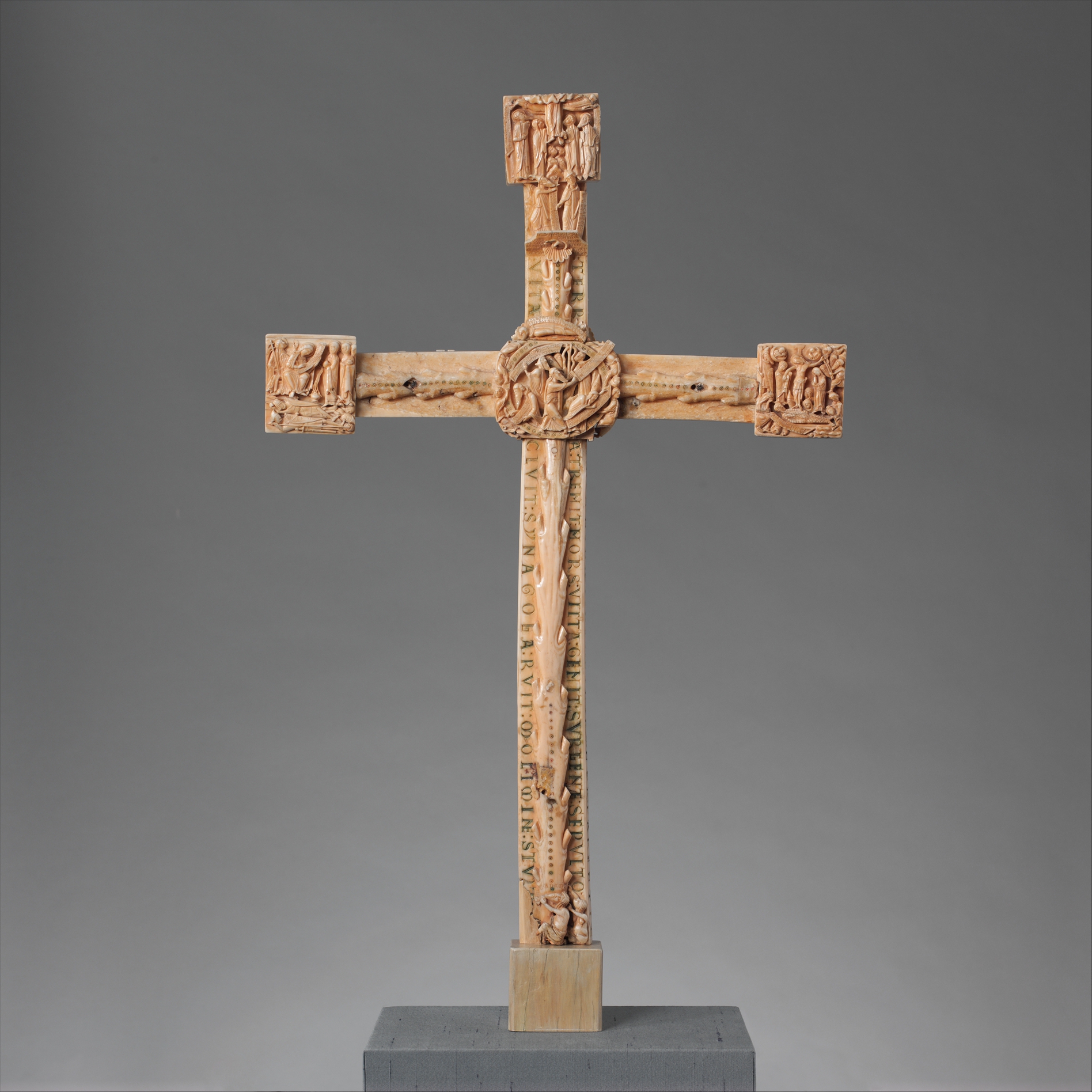
The Cloisters Cross, a masterwork of 12th-century English Romanesque art carved from walrus ivory, stands not merely as a relic but as a consummate case study in the construction of symbolic power through material and narrative. For Katherine Fashion Lab, this object transcends its ecclesiastical origins to offer a foundational blueprint for a 2026 luxury strategy. It embodies the core tenets of heritage luxury: the alchemy of rare material (walrus ivory) into a narrative-rich object, the encoding of profound spiritual and intellectual meaning within an adornment, and the assertion of identity through meticulously crafted symbolism. This analysis deconstructs the Cross’s historical value to architect a forward-facing strategy, positioning KFL not as a follower of trends, but as a curator of meaning, creating standalone pieces that function as modern talismans of power, intellect, and spiritual resonance for a discerning clientele.
Historical Deconstruction: The Anatomy of Symbolic Power
Created in England circa 1150-1200, likely in a monastic workshop with royal patronage, The Cloisters Cross is a monumental feat of micro-carving. Its medium, walrus ivory, sourced from the distant Arctic, immediately established its rarity, economic value, and status as an object of geopolitical reach—a medieval equivalent of an ethically complex, exotic material. Its form, a cross, is the ultimate symbol, but its power is unlocked through an intricate program of sculptural narrative.
Narrative as Adornment and Armor
The Cross is densely populated with 92 intricately carved figures and 66 inscriptions in Latin and Hebrew, transforming its surface into a theological manuscript in three dimensions. This is not passive adornment; it is an active intellectual and spiritual interface. The figures—prophets, apostles, allegorical representations of the Synagogue and Church—engage in a dynamic dialogue across the arms of the Cross. For the medieval elite, owning or gifting such an object signaled not just piety, but profound erudition and access to the highest levels of clerical and artistic intelligence. The adornment here is cognitive; it armors the owner in a narrative of divine wisdom and prophetic truth.
The Semiotics of Material and Craft
The choice of walrus ivory is profoundly strategic. Its dense, fine grain allowed for the unprecedented detail that defines the Cross, making craft itself a primary symbol. The material’s luminous, smooth surface, which ages to a warm patina, speaks to a sanctity of substance. Every chip from the sculptor’s chisel was a risk, elevating the final object’s value through visible virtuosity. This marriage of unforgiving medium and flawless execution creates an aura of the miraculous, a core driver of perceived value in luxury.
Strategic Translation: Pillars for a 2026 Luxury Strategy
For Katherine Fashion Lab’s 2026 vision, The Cloisters Cross provides a non-negotiable framework. The strategy moves from literal interpretation to philosophical adoption, building a "Symbolic Power" model for standalone pieces.
Pillar 1: The Archaeology of Meaning
KFL’s 2026 collections must embody what we term an Archaeology of Meaning. Each piece should be a layered artifact, where surface beauty is the entry point to a deeper narrative. Inspired by the Cross’s encoded program, designs could incorporate concealed symbolism, micro-engravings visible only upon intimate inspection, or modern allegories expressed through form and material juxtaposition. The client becomes an archaeologist, discovering the story—be it personal, cultural, or abstract—embedded within their adornment. This transforms consumption into a journey of intellectual and emotional discovery, fostering unparalleled brand attachment.
Pillar 2: Radical Materiality and Patina of Time
The walrus ivory principle mandates a focus on Radical Materiality. For 2026, this means pioneering the use of materials with inherent narrative: lab-grown gemstones with trace elements from specific locales, reclaimed aerospace alloys, or ethically transformed historic materials (e.g., vitrified archaeological glass). The goal is to select substances that speak of innovation, origin, and ethical consciousness. Furthermore, we must design for a Patina of Time—creating pieces that are engineered to evolve beautifully with the wearer, developing a unique character that chronicles a life lived, much like the Cross’s own centuries of handling.
Pillar 3: The Standalone Sanctuary Piece
The Cross was a focal point of contemplation and identity. In a 2026 context of digital saturation, KFL will champion the Standalone Sanctuary Piece. This is not an item for a trend-driven wardrobe, but a singular, investment-grade object meant to function as a personal anchor. It could be a brooch, a pendant, or a cuff conceived as a wearable sanctuary—a private locus of meaning, resilience, and spiritual or intellectual affirmation. Its value is not in complementing an outfit, but in centering the self. Marketing will focus on the piece’s role in personal ritual and identity constitution, not seasonal styling.
Conclusion: From Reliquary to Relevance
The Cloisters Cross demonstrates that ultimate luxury is the luxury of meaning, masterfully rendered in a rare material. For Katherine Fashion Lab, the strategic imperative for 2026 is to become a modern *scriptorium*—not of theology, but of contemporary symbolism. By adopting the principles of Narrative Adornment, Radical Materiality, and the Standalone Sanctuary, KFL will create heirlooms of the future. These pieces will carry the symbolic power of the Cross into a new era, offering the discerning luxury client not just an object of beauty, but a wearable manifesto—a deeply personal, intelligently crafted nexus of history, meaning, and identity. In doing so, KFL will not merely access the heritage market; it will author a new chapter in the enduring story of adornment as a vessel for human aspiration.