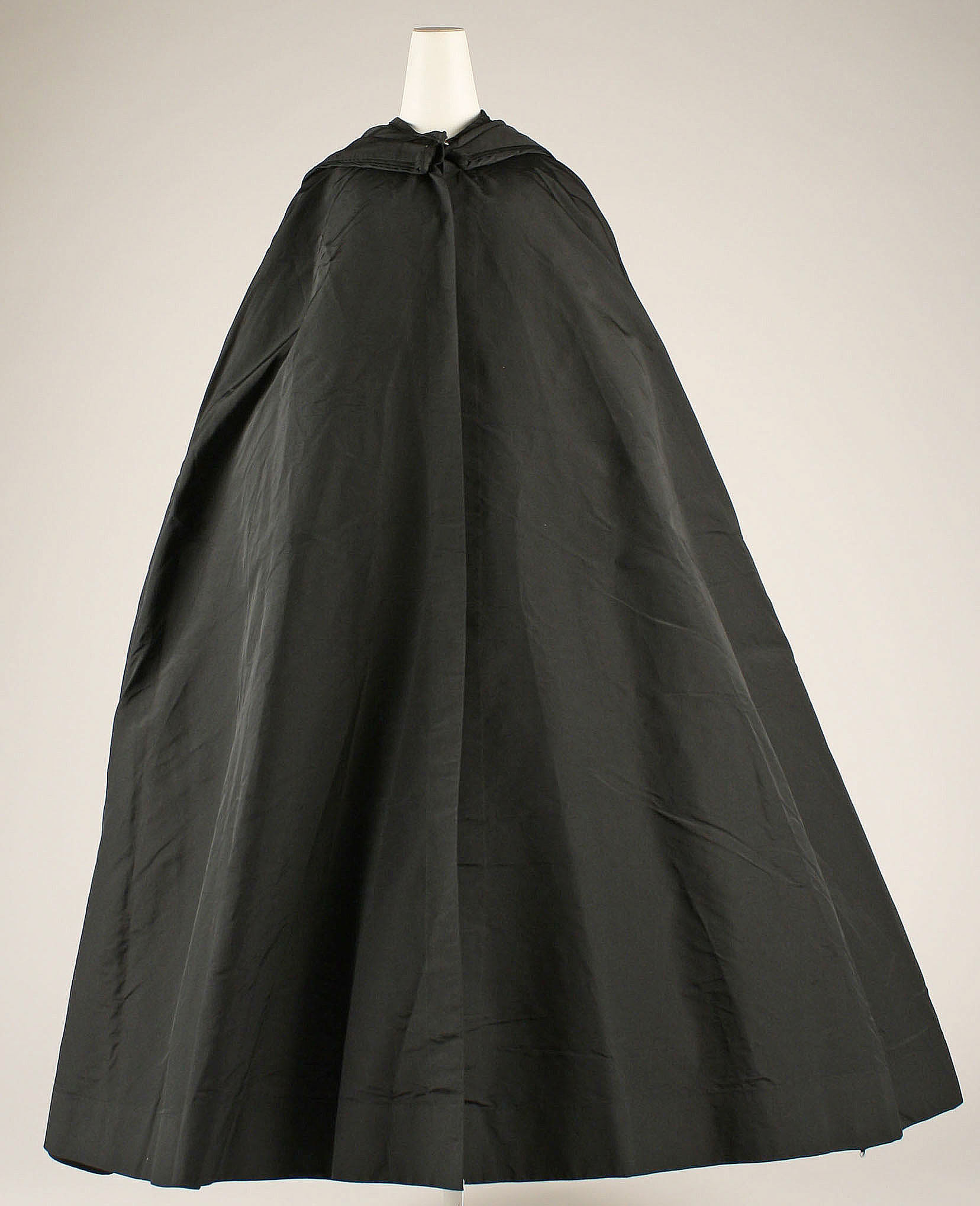
Deconstructing the American Cape: A Study in Silken Autonomy
Within the lexicon of couture, the cape stands as a garment of profound contradiction and compelling power. It is both armor and invitation, a symbol of authority that flows with every movement. This analysis, a standalone study from Katherine Fashion Lab, dissects the cape through a distinctly American lens, rendered in the quintessential luxury of silk. Moving beyond mere historical retrospective, we examine the American cape not as a derivative European relic, but as a canvas upon which narratives of independence, pragmatic innovation, and a redefined relationship with the body have been articulated. In isolating this garment, we engage in a focused sartorial autopsy, exploring how its very structure—a sleeveless, often open-fronted swathe of fabric—becomes a metaphor for a particular kind of freedom.
The American Silhouette: From Pragmatism to Performance
The cape's integration into American fashion history is rooted in a foundational pragmatism. Early American iterations, often in wool or sturdy cloth, provided warmth and mobility for pioneers and urban dwellers alike, offering protection without the constriction of set-in sleeves. This functional beginning, however, seeded a deeper philosophical alignment. The cape, by its architectural nature, rejects the tailored confines of the traditional tailored jacket. It does not delineate the arm from the torso in a prescribed manner; instead, it creates a dynamic, shifting space around the wearer. This inherent quality resonated with an emerging American ethos—one that valued individual motion over rigid, aristocratic formality.
As American couture evolved, particularly in the 20th century, designers transformed the cape from an outerwear staple into a statement of sophisticated performance. Claire McCardell, the progenitor of the American Look, implicitly understood this. While she championed separates and denim, her use of flowing, cape-like layers spoke to the same principle: ease of movement as the ultimate luxury. The cape became a garment for the woman in motion, a concept that would be pushed to its zenith by later designers. In this study, we position the cape as the archetypal garment of American non-conformity, a deliberate sidestepping of the structured European suit in favor of a silhouette that commands space on its own terms.
Silk: The Medium of Modern Fluidity
The specification of silk as our material is not arbitrary; it is the critical variable that elevates this study from the utilitarian to the sublime. Silk possesses a unique duality: it is both strong and supple, luminous yet fluid. An American cape in wool declares its purpose; an American cape in silk interrogates it. The material immediately introduces a dialogue between strength and softness, between the cape's historical role as a protective shield and its potential as an instrument of sheer, expressive beauty.
Silk’s behavior underlines the cape’s autonomy. A heavy fabric falls with predictable gravity, creating static, monumental shapes. Silk, particularly in varieties like charmeuse, habotai, or duchess satin, engages with air and movement. It billows, trails, and wraps with a life of its own, creating a kinetic sculpture around the wearer. This transforms the cape from a garment one wears into a phenomenon one orchestrates. The play of light on its surface, the sound of its whisper, the way it can cling one moment and float the next—these are the properties that make a silk cape a standalone event. It requires no underlying structure (no boning, no rigorous padding); its luxury is inherent in its materiality and cut. In our lab, we analyze the drag coefficient of silk versus taffeta, the weight distribution required for a perfect flare, and the hemline engineering that allows for dramatic movement without loss of control. The silk cape is a feat of precision disguised as effortless flow.
Architectural Autonomy: The Cape as a Standalone Environment
The directive for a "standalone study" is paramount. We are not considering the cape as an accessory to a gown or a companion to an ensemble. We examine it as a complete, self-contained architectural environment for the body. This perspective is inherently modern and aligns with American sportswear’s foundational principle of modular dressing. The standalone cape is the ultimate modular piece: it can transform a simple column dress beneath it, or it can be worn directly over the skin, its closure (or lack thereof) becoming a focal point of narrative.
This autonomy challenges traditional gender and power dynamics in dress. A cape confers authority through volume and gesture, not through masculine tailoring. It creates a personal space, a literal and figurative buffer zone. In a silk iteration, this authority is nuanced—it is persuasive rather than confrontational, magnetic rather than imposing. The open front is particularly significant; it is an invitation and a revelation, contrasting with the enveloping security of the back and shoulders. This asymmetry of exposure and protection is a powerful tool in the couture lexicon, one that American designers have leveraged to speak of confidence and choice.
Furthermore, in an era of sartorial self-definition, the standalone cape rejects categorization. It is not quite evening wear, not quite daywear; it exists in the interstice, making it profoundly relevant for contemporary life. It is a garment for making an entrance, for commanding a boardroom, or for providing a dramatic flourish in an otherwise minimalist wardrobe. Its value lies in its theatrical versatility and its unwavering statement of self-possession.
Conclusion: The Unbound Silhouette
This analysis from Katherine Fashion Lab concludes that the American silk cape is far more than a historical garment or a seasonal trend. It is a conceptual framework—a study in the power of unbound silhouette. It synthesizes American pragmatism (in its liberating cut) with couture-level luxury (in its exquisite material). It exchanges the defined armhole for the limitless possibility of space, making the wearer’s movement the primary design element. In its standalone capacity, it asserts that true luxury lies in garments that are complete in their ideology, that serve not to constrict the body but to amplify its presence in the world. The cape, in its silken American incarnation, is not a wrapping, but a manifesto written in air and light, a definitive statement that the most powerful fashion is that which grants the wearer the freedom to define the space she occupies.