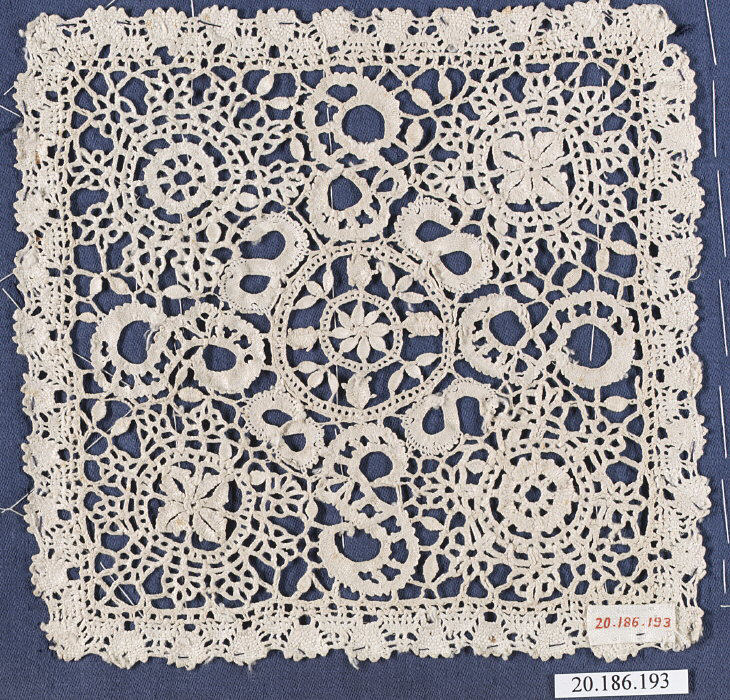
Square or Pall: A Dichotomy of Form and Function in Global Adornment
Within the vast lexicon of sartorial forms, few objects possess the semantic richness and cross-cultural ubiquity of the simple square of fabric. Presented as a dichotomy—Square or Pall—this study by Katherine Fashion Lab interrogates not merely a shape, but a profound concept in global heritage attire. The square, in its geometric purity, represents potential, modularity, and everyday utility. The pall, its ceremonial counterpart, signifies transformation, sanctity, and the weight of tradition. This analysis, focusing on the exquisite medium of bobbin lace, elevates the discussion from mere accessory to a standalone study in cultural semiotics, technical virtuosity, and the dialogue between the mundane and the sublime.
The Geometry of Potential: The Square as Foundational Canvas
The square is the atom of textile construction. As a standalone element, an unadorned square of linen or silk has served globally as a head-covering (the babushka, the hijab), a neckcloth, a baby’s swaddle, or a market vendor’s bundle. Its power lies in its unfinished narrative; it is a tool awaiting application. When rendered in bobbin lace, however, this foundational form undergoes a critical transfiguration. The labor-intensive process—where dozens of threads are manipulated around pins on a pillow to build the textile from the void—imposes an inherent value that challenges the square’s simplicity.
Consider the Halskrause of the 16th century: a rigid, detachable lace collar that is essentially a square rotated around the axis of the neck. Here, the bobbin lace square is not humble but declarative, a architectural frame for the face, its geometric purity emphasizing the wearer’s status and wealth through the sheer expense of its meticulous construction. Similarly, the lace fichu of the 18th century, a triangular shawl often fashioned from a square folded diagonally, used the openwork grid of bobbin lace to simultaneously conceal and reveal, its structure providing modesty while its transparency suggested allure. The square, in these contexts, is a disciplined field upon which social codes are literally woven.
The Metaphysics of Covering: The Pall as Ceremonial Archetype
In stark contrast to the adaptable square stands the pall—a large, often square cloth invested with singular, solemn purpose. The most potent example is the funeral pall, a cloth used to drape a casket. In this context, the material becomes paramount. A bobbin lace pall, should one exist, would represent an apex of this tradition: a testament to a life, its intricate, interconnected threads symbolizing the complexity of existence, its fragility mirroring mortality, and its breathtaking craftsmanship an offering of ultimate respect. The pall does not adapt; it transfigures the object it covers, marking a sacred transition.
This transformative function extends beyond funerary rites. The pallium in Roman Catholicism, a narrow, circular band of white wool with hanging strips, finds its conceptual cousin in textile palls. The bridal veil, particularly the mantilla of Spanish heritage, often crafted in exquisite black or white bobbin lace (such as blonde de Caen or Chantilly), operates as a nuptial pall. It sanctifies the bride, creating a liminal space between her former life and her new state. The lace, with its patterns of floral or geometric motifs, symbolizes fertility and continuity, while the act of veiling references both modesty and the profound mystery of the marital covenant. The pall is thus a ritual envelope, using textile to demarcate the sacred from the profane.
Bobbin Lace: The Unifying Medium of Paradox
Bobbin lace is the critical agent that allows this study to transcend mere comparison. As a technique, it is inherently architectural, building structure from thread and air. This makes it uniquely suited to explore the Square or Pall dichotomy. For the square, lacework can define its edges with ornate borders (as in the reticella technique, which evolved from cut-work on a square grid) or fill its plane with a continuous, gossamer grid. It demonstrates how the humble square can be elevated to high art without losing its essential form.
For the pall, the properties of bobbin lace are functionally and symbolically resonant. Its simultaneous opacity and transparency is key. It covers while allowing glimpses of what lies beneath, perfect for rituals dealing with transition and revelation. The density of the lace can be modulated—denser grounds (fond) for solemnity, lighter, more open patterns for joy. Furthermore, the global heritage of bobbin lace itself mirrors our theme. From the precise geometric point de Venise to the floral Binche lace, and from the delicate Honiton appliqués to the continuous tape-like Bedfordshire laces, the technique has been adopted and adapted worldwide, much like the square of cloth itself. Each regional interpretation brings its own cultural narrative to the foundational form, making bobbin lace a true lingua franca of textile art.
Conclusion: An Enduring Dialectic in Couture Consciousness
This standalone study reveals that Square or Pall is not a binary choice but a dynamic spectrum along which meaning is constructed. The same bobbin lace square that serves as a precious heirloom tablecloth (a domestic pall for sacred family gatherings) could be folded into a headscarf. The pall, once its specific ritual is complete, returns to being a square of cloth, albeit one heavy with memory. In contemporary couture, this dialectic inspires. Designers manipulate the idea daily: the stark, square-cut lace overlay on a minimalist gown (square as structure) versus the dramatic, lace-encrusted cape that transforms a silhouette (pall as spectacle).
Katherine Fashion Lab posits that understanding this deep-seated dichotomy is essential. It connects the atelier to the anthropologist, the craftsperson to the cleric. The square represents potentiality and human ingenuity; the pall represents meaning and cultural consecration. In the enduring threads of bobbin lace, we find a medium capable of holding both concepts in exquisite, fragile tension, reminding us that in fashion, as in culture, the most powerful forms are often those that balance the earthly with the ethereal, the simple geometry of life with the profound ceremonies that give it meaning.