Deconstructing the Dialectic: A Standalone Study of Heritage, Material, and Form
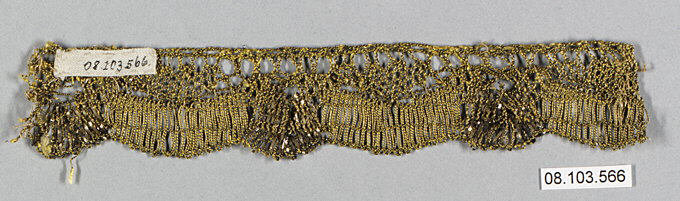
In the rarefied atmosphere of haute couture, where narrative often supersedes mere garment, the standalone piece exists as a profound manifesto. It is a concentrated thesis, unburdened by the commercial dictates of a collection, free to pursue a singular, uncompromising vision. This analysis examines such a piece: a couture study originating from a philosophy of Global Heritage, realized in the alchemical union of silk, metal thread, and bobbin lace. It is not a dress but a tangible dialectic, a conversation across time and territory that challenges the very categorization of sartorial origin.
The Philosophical Underpinning: Global Heritage as Method, Not Motif
The designation "Global Heritage" is pivotal, moving beyond superficial appropriation or pastiche. Here, heritage is not a library of decorative motifs to be mined, but a living methodology of construction and meaning. It rejects the parochialism of a single national narrative, instead positing that the highest forms of craftsmanship are themselves a shared, borderless legacy. The piece operates on a principle of synthesis, where the intellectual rigor of a Parisian atelier meets the fluid symbolism of Asian silk traditions, and the structural mathematics of European lace collides with the luminous spirituality of metallic embroidery from the Levant or South Asia. This is heritage as a curated, conscious fusion—a deliberate crafting of a new, hybrid lineage that speaks to a cosmopolitan, contemporary sensibility while honoring the depth of individual hands-on traditions.
Material Semiotics: Silk, Metal, and the Lace Matrix
The material selection is the primary vocabulary of this thesis. Each element is chosen for its profound historical weight and its capacity for transformation.
Silk serves as the foundational canvas, its protein structure a millennia-old testament to global trade—the original connective tissue of the Old World. Yet, its treatment is key. Perhaps it is weighted, a crêpe de Chine with a deliberate, architectural drape, or a duplex organza that creates volume through air and light rather than structure. It provides a field of sensual, organic fluidity against which more rigid elements will play.
Metal Thread—whether fine filé or wrapped passementerie—introduces a paradigm of light and permanence. Historically signifying divinity, power, and wealth from Byzantine ecclesiastical vestments to Indian zari work, the metal thread here is employed with contemporary restraint. It may not form dense, pictorial embroidery but instead trace geodesic pathways across the silk, acting as a conductive filament for light, or creating subtle, tensile reinforcements that mimic cybernetic circuits. It represents the infusion of the enduring and the valuable into the organic, a metaphor for technology's interplay with tradition.
Bobbin Lace is the piece's intellectual core and most complex signifier. A European technique of breathtaking mathematical complexity, it is built from nothing—creating substance out of void, pattern out of controlled entanglement. In this study, the lace is likely not an applied trim but the central structural armature. Imagine a corseted bodice or a sweeping sleeve where the lace is the primary fabric, a delicate, breathable exoskeleton. The silk may be laid beneath or poured through its apertures, and the metal thread may be integrated into the lace itself, glinting within its knotted nodes. This transforms the lace from decorative femininity into a blueprint of construction, a visible, honest map of its own making.
Form and Context: The Standalone as Autonomous Artifact
As a standalone study, the piece is liberated from the context of wearability or trend. Its form is likely architectural, perhaps a hybrid between a garment and a wearable sculpture—a cape that unfolds into a landscape, a tunic that deconstructs into a series of articulated panels, or a skirt that is a spiral of lace and light. The focus is on revealing the process. Seams may be exposed, layers separated to show the dialogue between materials, and the beginnings and endings of threads may be left visible as a record of the hand's journey.
This autonomy forces the viewer to engage with it on its own terms. It does not ask "Who would wear this?" but rather "What does this embody?" It embodies the patience of the lacemaker, whose weeks of labor are condensed into a single panel. It embodies the global journey of silk, from worm to loom to this final, radical re-contextualization. It embodies the contrast between the soft, yielding nature of silk and the unyielding, luminous line of metal. The piece becomes a microcosm of fashion's highest ambitions: to merge profound technical mastery with a coherent, critical intellectual concept.
Conclusion: A Blueprint for Conscious Creation
This couture study, in its meticulous materiality and philosophical grounding, offers a blueprint for the future of meaningful luxury. It argues that true innovation lies not in novelty for its own sake, but in the deep, respectful recombination of heritage codes. By elevating bobbin lace to structural centrality, by using metal thread as a drawn line of light rather than mere decoration, and by employing silk as a conscious carrier of historical memory, the piece transcends its components.
It stands as a testament to the idea that in an era of globalization, the most powerful statement is not one of purity, but of thoughtful, exquisite synthesis. It proves that heritage is not a static museum piece but a dynamic, collaborative toolkit. For Katherine Fashion Lab, such a study is more than an artifact; it is a declaration of principles, asserting that the couture of tomorrow will be built by those who can navigate the world's ateliers with both scholarly reverence and avant-garde vision, weaving not just thread, but narrative, history, and light into a single, breathtaking dialectic.