Executive Summary: The Bronze Mirror as a Foundational Heritage Asset
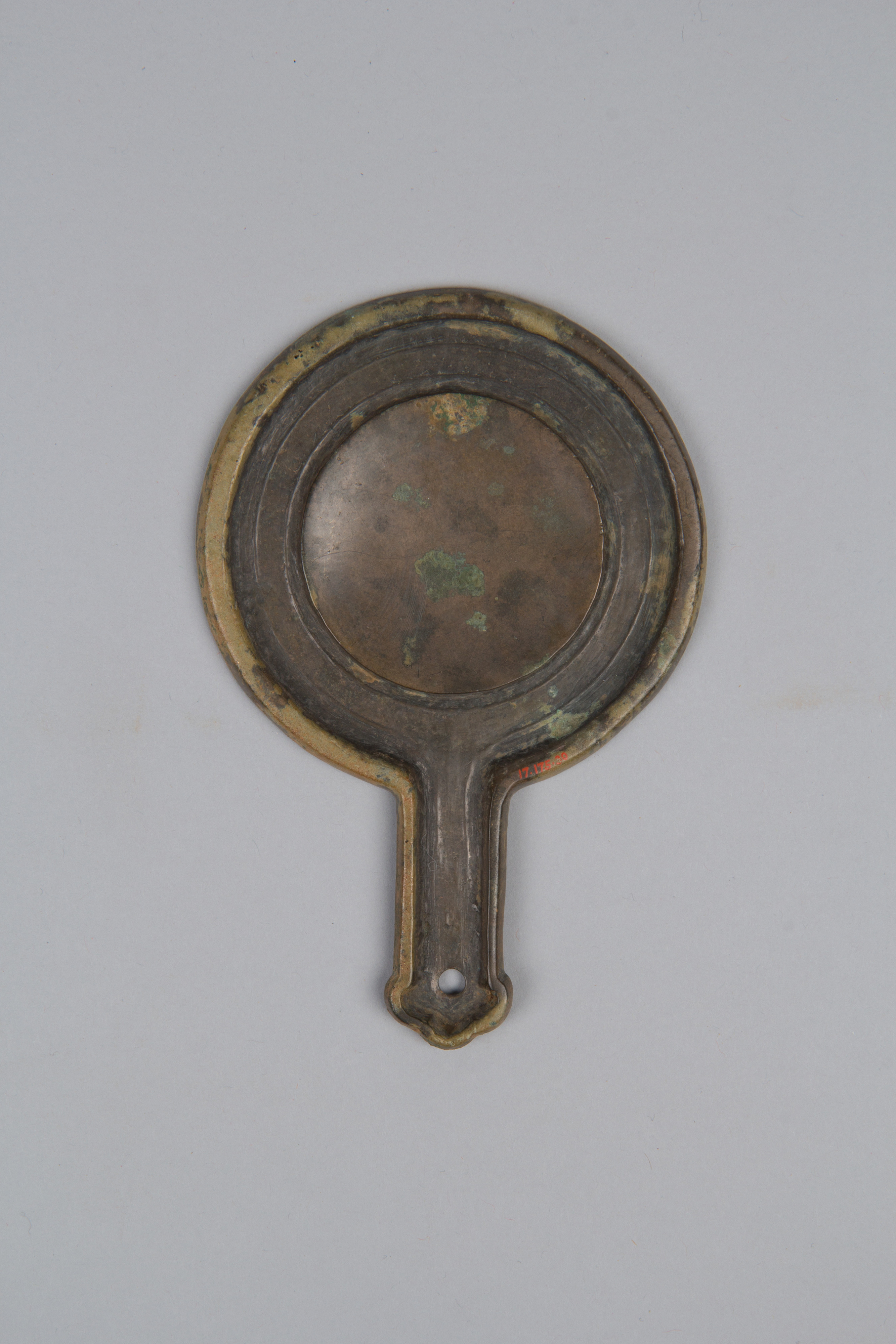
This analysis positions the Korean bronze mirror with handle as a critical heritage object for Katherine Fashion Lab's 2026 luxury strategy. Moving beyond superficial aesthetic appropriation, we decode its layered symbolism—as a vessel of spiritual power, a tool of personal adornment, and a mediator between worlds. This research establishes a direct DNA correlation with our prior studies on the Rock in the form of a fantastic mountain and the Jar in the shape of bronze container (hu). Collectively, these three artifacts form a trinity of concepts central to our brand philosophy: the mountain (enduring form and aspiration), the jar (contained essence and transformation), and the mirror (reflective identity and revelation). The mirror, in particular, offers a potent framework for a 2026 strategy centered on intimate luxury, spiritual technology, and the adornment of the inner self.
Historical and Cultural Context: More Than a Reflective Surface
In the Korean context, particularly during the Three Kingdoms (57 BCE – 668 CE) and Goryeo (918–1392) periods, bronze mirrors were far more than utilitarian objects. They were prestige goods, ritual implements, and sacred guardians. The very medium—bronze—signified technological sophistication, spiritual potency, and social status. The addition of a handle distinguishes it from Chinese counterparts, suggesting a more personal, held intimacy, a tool actively wielded rather than passively placed. These mirrors were often interred with the elite, serving to protect the soul in the afterlife, illuminate spiritual darkness, and reflect malevolent forces. Their decorated backs, featuring cosmological motifs like concentric circles, celestial animals, or vine patterns, mapped a microcosm of the universe, turning the act of gazing into a ritual of cosmic alignment.
Symbolic Power and Spiritual Meaning
The mirror’s primary symbolic power operates on three interconnected levels. First, it represents clairvoyance and truth—the ability to see beyond the superficial to the essential nature of things, and to confront one's own reality without illusion. Second, it embodies spiritual protection; the polished surface was believed to repel evil spirits, making it an amulet as much as an accessory. Third, it signifies the luminous soul. In Korean shamanic and Buddhist thought, a bright, clear mirror is analogous to a purified mind and enlightened consciousness. The handle acts as the conduit, the point of human agency where the individual connects with these profound powers, directing the gaze inward and outward.
DNA Correlation: The Trinity of Form, Essence, and Reflection
This artifact does not exist in isolation within our heritage archive. Its significance is exponentially amplified when placed in dialogue with our core study pieces.
Mirror and Mountain: Aspiration and Foundation
The Rock in the form of a fantastic mountain represents immutable form, eternal aspiration, and the journey upward. The mirror provides the complementary force: introspection as the foundation of ascent. One cannot climb without first knowing one's starting point. The mountain's rugged, external grandeur is balanced by the mirror's polished, internal clarity. For strategy, this translates to products that pair bold, architectural silhouettes (the mountain) with exquisite, precise detailing that invites personal connection (the mirror's reflective quality).
Mirror and Jar (Hu): Revelation and Containment
The Jar in the shape of bronze container (hu) is a vessel of contained transformation—holding wine, grain, or sacred offerings. It speaks to potential, essence, and what is kept within. The mirror is the tool that reveals that contained essence. If the jar holds the soul's substance, the mirror allows it to be seen and understood. This dialogue is crucial for luxury in 2026: it is no longer about the opaque container (the brand as a closed icon) but about creating pieces that facilitate a revelation of the wearer's own essence. The product becomes a catalyst for self-discovery.
Together, these three artifacts reveal a complete cycle: the Mountain (Aspiration) → the Jar (Contained Essence) → the Mirror (Revelation). This cycle informs a holistic brand ecosystem.
Strategic Application: The 2026 High-End Luxury Strategy
The post-pandemic, digitally saturated luxury consumer of 2026 seeks meaning, intimacy, and spiritual utility. The bronze mirror provides a blueprint to meet these needs through what we term "Adorned Introspection."
Product Narrative: Spiritual Technology and Intimate Adornment
Collections must transcend seasonal trends to embody timeless concepts. We propose a flagship line, 「Soulward」, inspired by the mirror's symbolism. Key initiatives include:
1. The Luminous Interface: Develop signature hardware—clasps, fastenings, bag handles—that recall the form and tactile presence of the mirror handle. These are not mere closures but "conduits," designed to be held and turned, engaging the wearer in a ritual of interaction. Materials will combine polished bronze alloys (for spiritual resonance) with modern composites for weight and feel.
2. Reflective Surfaces & Guarded Backs: Integrate subtle, high-quality reflective elements (polished metal, crystal, treated leather) into garments and accessories that only reveal themselves with movement—a lining, an under-collar detail. This echoes the mirror's dual nature: a public face and a private, symbolic back. Exterior designs will be clean and powerful (the protective surface), while interiors will feature intricate, celestial-inspired embroidery or patterning (the cosmological back).
3. The Adornment Ritual: Position products as tools for a personal practice. Limited-edition pieces may be accompanied by digital content—guided meditations on self-image, or archival stories on historical adornment—framing the act of dressing as a conscious ritual of self-alignment.
Brand Experience and Communication
Marketing must shift from showcasing the product to showcasing the reflection it enables. Campaign imagery should play with duality, shadow, and revelation, focusing on the moment of introspection rather than mere display. Retail spaces should incorporate tranquil, reflective zones (water features, calm lighting) that mimic the contemplative quality of gazing into a still mirror, transforming boutiques into sanctuaries of self-curation.
Conclusion: The Reflective Core of Modern Luxury
For Katherine Fashion Lab, the Korean bronze mirror with handle is not a relic but a resonant blueprint. It teaches us that the highest form of adornment is that which empowers the wearer's inner journey—offering protection, revealing truth, and connecting the individual to a broader cosmology. By synthesizing its DNA with the foundational mountain and jar, we build a robust, non-linear heritage narrative. Our 2026 strategy, therefore, will be to craft not just objects of desire, but modern talismans: impeccably crafted, spiritually resonant tools for navigating the world with clarity and intention. In an age of noise, we offer a reflective silence; in an age of external validation, we offer the tools for internal revelation.