The Art of Insertion: A Structural and Philosophical Exploration
Within the rarefied lexicon of haute couture, the term Insertion transcends its technical definition to become a profound metaphor for creation itself. It is not merely a seam or a joinery technique; it is the fundamental act of constructing beauty through strategic addition and intentional connection. At Katherine Fashion Lab, we approach Insertion not as a decorative afterthought, but as the core architectural principle—a philosophy where the space between elements is as definitive as the elements themselves. This standalone study traces the concept of Insertion from its tangible origins in global needle lace traditions to its abstract application in contemporary structural couture, positing it as the essential dialogue between void and volume, heritage and innovation.
Needle Lace: The Primordial Insertion
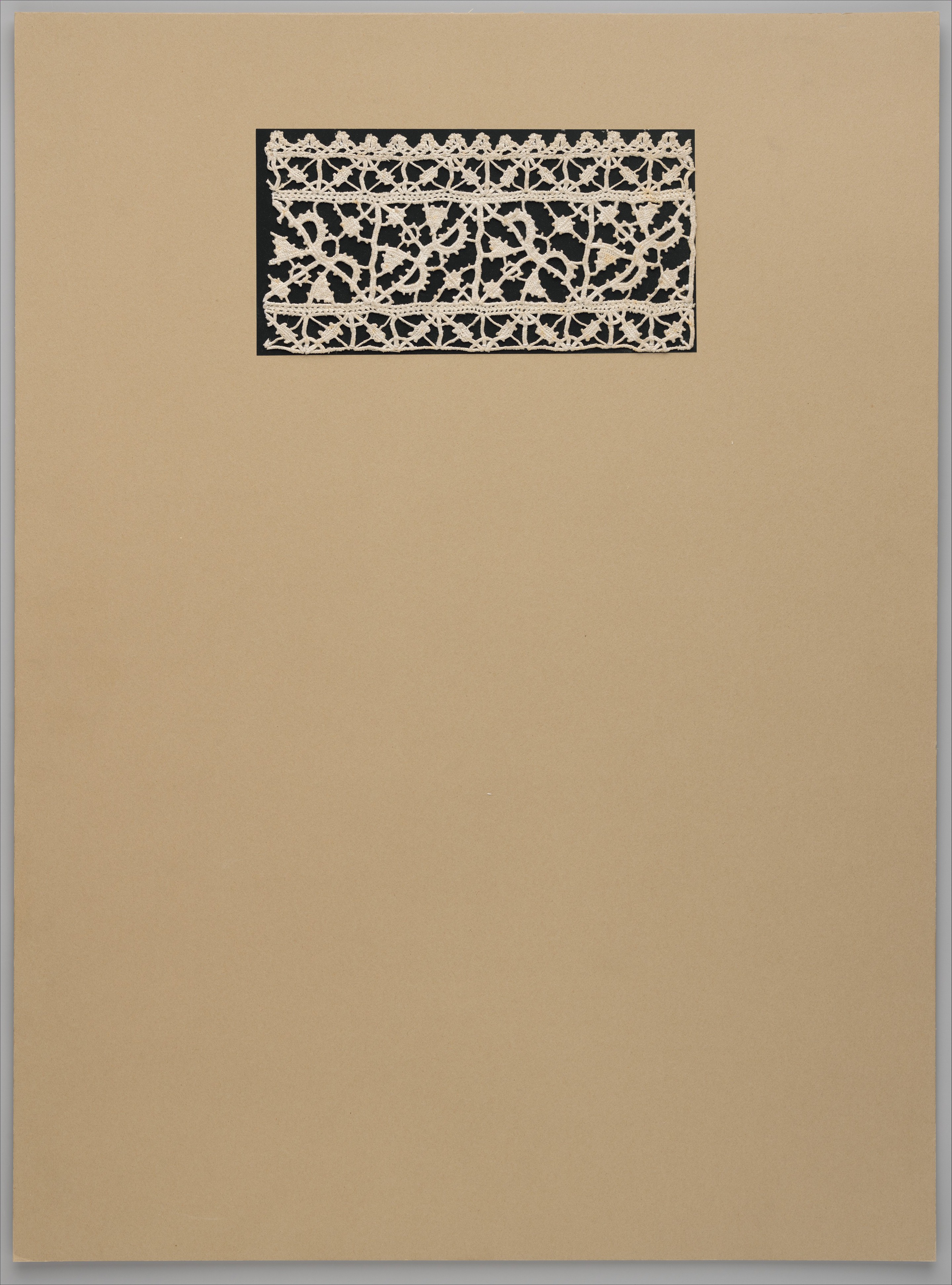
To understand Insertion at its most elemental, one must begin with needle lace, a material born from the very act it exemplifies. Unlike bobbin lace, which is built from threads twisted together, needle lace is created ex nihilo—from nothing. The artisan works with a single needle and thread, building a fabric ground (the *réseau*) while simultaneously inserting and crafting the decorative motifs (*toilé*). Every stitch is an insertion into empty space, a decision that defines both pattern and ground in a single gesture. This technique, with global heritage variants from Venetian *punto in aria* to Indian *chikankari* and Armenian *lacemaking*, establishes the first law of Insertion: it creates duality—form and field, positive and negative—in a unified field. The integrity of the final textile relies entirely on the strength and intentionality of these countless micro-insertions, making it a supreme exercise in disciplined, premeditated construction.
From Material Technique to Structural Doctrine
At Katherine Fashion Lab, we extract the principle from the material. The needle lace technique teaches us that insertion is about creating tension and dependency. We apply this doctrine to the very architecture of a garment. An inserted panel of *gazar* silk into a wool crepe bodice is not a patch; it is a calculated intervention that alters the tensile relationship across the entire silhouette. The inserted element, often cut on a different bias or possessing a distinct mechanical property, carries its own structural responsibility. It supports, pulls, or releases, governing the drape and movement of the whole. This is Insertion as kinetic engineering, where each added component recalibrates the garment’s behavior on the body. The seam becomes a loaded border, a site of negotiated power between differing materials, much like the *cordonnets* that outline motifs in needle lace, asserting definition and preventing unraveling.
The Metaphysics of the Seam: Insertion as Conceptual Interface
Moving beyond physical structure, Insertion operates on a metaphysical plane. It represents the interface between heritage and avant-garde, between narrative and form. In a Lab creation, an inserted panel might be a fragment of deconstructed 18th-century passementerie, needled onto a minimally sculpted synthetic biomembrane. This is not juxtaposition for shock value; it is a deliberate, surgical insertion of temporal and cultural memory into a contemporary continuum. The seam that joins them is a question, not an answer. It asks how history informs futurism, how handicraft dialogues with technology. The inserted heritage element becomes a lens through which the modern form is read, and vice versa. The void it fills—or creates around it—is charged with meaning, echoing the negative spaces in lace that give the pattern its clarity and breath.
Negative Space: The Ultimate Inserted Element
This study would be incomplete without addressing the most radical insertion of all: the insertion of void. Informed by the lacunae inherent in needle lace, we treat negative space as a primary material. A slash in a garment, a geometric *décolleté*, or an open lattice constructed from boning is an insertion of absence. It is a deliberate placement of "nothing" that defines the "something." The body itself becomes the inserted element, revealed and framed by these architectural voids. This inverts the traditional relationship between garment and wearer; the couture piece is not merely worn, but it actively inserts the human form into its narrative framework. The skin becomes the ultimate *toilé* motif against the *réseau* of the constructed garment, continuing the global heritage of using clothing to mediate between the individual and the space they inhabit.
Conclusion: Insertion as Couture's First Principle
This analysis concludes that Insertion is the foundational act of haute couture. From the microscopic insertion of a lacemaker’s needle to the macroscopic insertion of a historical fragment into a futuristic silhouette, it is a unifying theory. It is a process that demands extreme intentionality, technical mastery, and philosophical depth. Every insertion creates a relationship, imposes a structure, and initiates a dialogue. It acknowledges that beauty and strength lie not in monolithic uniformity, but in the artful, resilient, and intelligent connection of differentiated parts. For Katherine Fashion Lab, to master Insertion is to master the very grammar of creation, building garments that are, in their essence, profound maps of connection—between thread and space, past and future, body and art.