Executive Summary: The Amulet as Foundational Luxury Code
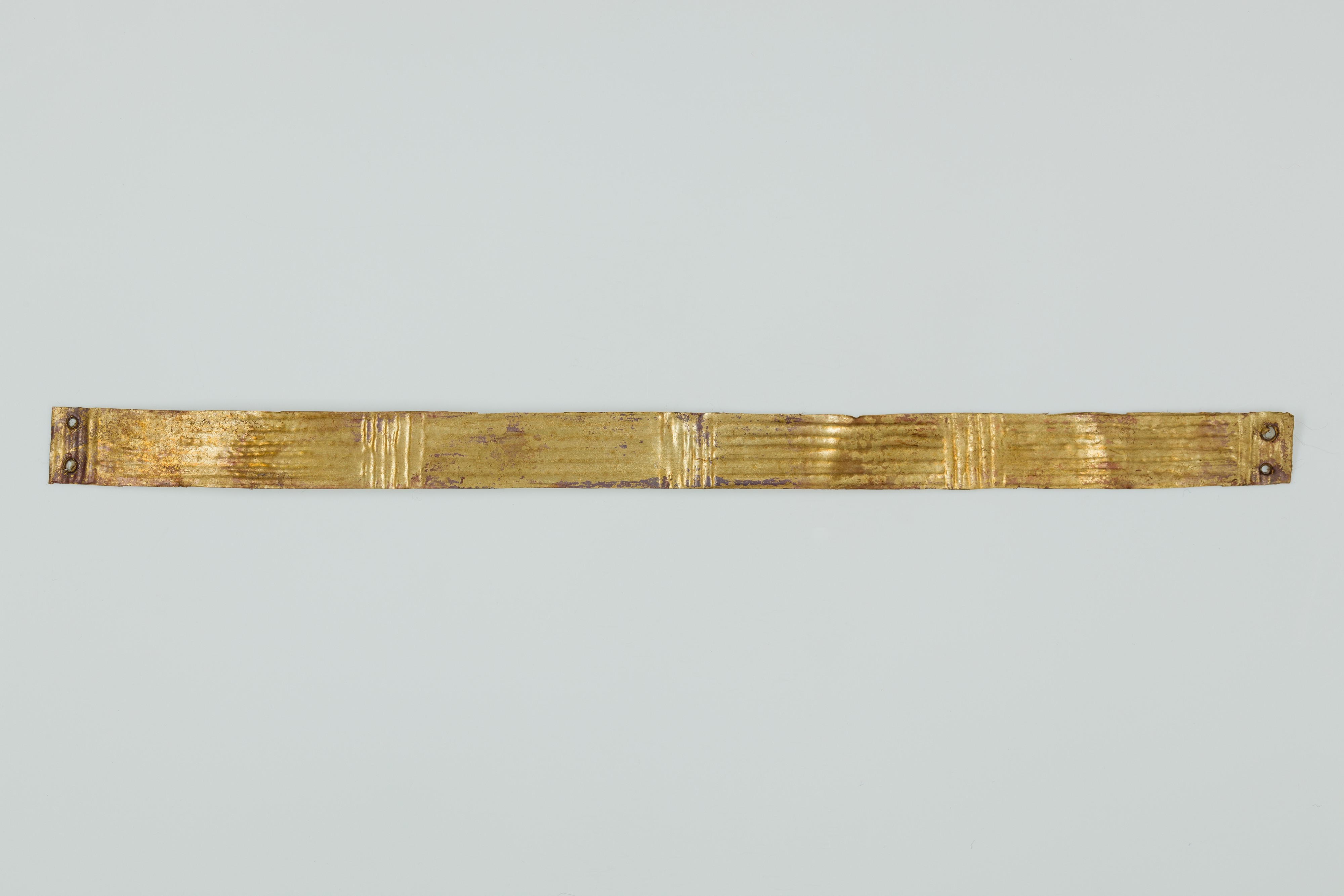
This strategic heritage analysis examines a singular artifact—an amulet bracelet fashioned from sheet gold, originating from an unspecified Ancient Civilization—to decode its intrinsic symbolic power and extract actionable principles for the Katherine Fashion Lab (KFL) 2026 high-end luxury strategy. Moving beyond mere aesthetic inspiration, we position this object as a paradigm of primal luxury, where material, form, and intent converge to create a potent vessel of meaning. The amulet bracelet is not merely an ornament; it is a wearable architecture of belief, a sovereign declaration of identity, and a timeless interface between the spiritual and the corporeal. For KFL, this analysis advocates for a strategic pivot from "fashion" to "modern talismanic systems," leveraging ancient codes of adornment to build profound, defensible, and culturally resonant value in the 2026 luxury landscape.
Deconstructing the Artifact: Material, Form, and Intent
The object in question is defined by three interdependent attributes: its function as an amulet, its construction from sheet gold, and its form as a bracelet. Each element is a deliberate choice laden with cultural and strategic implication.
The Sovereign Material: Sheet Gold
Gold, in its sheet form, represents a masterful balance of intrinsic value and applied artistry. Unlike solid cast gold, sheet gold is malleable, allowing it to be shaped, embossed, and engraved—a canvas for narrative. Its inherent properties—non-corrosiveness, permanence, and a solar brilliance—made it the material of deities and royalty across ancient cultures, from Egypt to Mesopotamia to the Andes. It was perceived not as currency, but as solidified light, a fragment of divine power made tangible. For KFL, this underscores a core luxury principle: the material must be inherently mythic. The choice of gold is never neutral; it is the first and most potent signifier of immutable value and celestial connection.
The Encircling Form: The Bracelet as Sovereign Territory
The bracelet form is one of enclosure and claim. Encircling the wrist—a pivotal joint, a point of pulse and action—it establishes a personal territory of power. In ancient contexts, such adornments often demarcated social rank, divine favor, or tribal affiliation. As an amulet, this encirclement creates a continuous, unbroken protective barrier, a symbolic fortress for the wearer. The form factor is inherently interactive, designed to be seen in motion by both the wearer and the observer, making its symbolism performative. This translates to a modern strategy focused on articulated adornment—pieces engineered for visibility in contemporary gestures, turning everyday actions into rituals of display.
The Core Function: The Amulet as Spiritual Technology
An amulet is purpose-built object, a tool in a spiritual ecosystem. Its value is derived not solely from its material worth, but from its perceived efficacy. It may be inscribed with spells, shaped like protective deities (the *wedjat* eye of Horus), or embody symbolic animals. It operates on the principles of sympathetic magic and apotropaic power—warding off evil, attracting fortune, or embodying a specific virtue. This transforms adornment from decorative to functional. The wearer engages in an active, believing relationship with the object. For KFL, this is the most critical insight: the highest form of luxury in 2026 is functional spirituality—objects that are believed to *do* something for the wearer’s psyche, aura, or destiny.
Synthesis: The Triadic Power of Ancient Adornment
The fusion of these elements creates a powerful triad: Material Permanence (Gold) + Formative Sovereignty (Bracelet) + Embedded Intent (Amulet). This triad addresses fundamental human desires: the quest for protection, the assertion of identity, and the longing to connect with forces beyond the mundane. Ancient adornment was rarely frivolous; it was a critical, often mandatory, component of social and spiritual navigation. The sheet gold amulet bracelet was, therefore, a compact, wearable manifesto. It communicated to the community and negotiated with the unseen world simultaneously. This depth of purpose is what separates true heritage from mere vintage; it is a system of meaning, not a style.
Strategic Application: The KFL 2026 Modern Talismanic System
The 2026 luxury consumer, particularly in the high-net-worth and ultra-high-net-worth segments, seeks authenticity, narrative depth, and personalized meaning. They are investing in beliefs and identities. KFL can leverage this ancient triad to build a Modern Talismanic System (MTS), moving from seasonal collections to enduring, codified artifacts.
Pillar 1: Material Mythology & Artisanal Alchemy
Go beyond sourcing. Develop a KFL Material Codex. Source gold with traceable provenance, perhaps from historical regions, and revive sheet metal techniques like repoussé and chasing. Introduce materials with analogous mythic properties: meteoric iron (sky metal), specific engraved gemstones, or ethically sourced materials with documented ceremonial histories. Each material must have a story that ties back to its ancient protective or empowering role, authenticated through collaboration with cultural historians.
Pillar 2: Form as Function – The Encrypted Silhouette
Design collections around core "talismanic forms." Instead of literal reproduction, abstract the principles. A bracelet’s clasp isn’t a closure; it is a "seal." Its curvature is engineered for ergonomic embrace. Surfaces become fields for micro-engravings—modern "spells" or personal sigils, perhaps enabled via laser technology at point of sale. The form should feel *necessary* on the body, a modern armor for the psyche. Develop a signature "encircling" motif that runs across categories (cuffs, rings, necklines).
Pillar 3: Bespoke Belief & Ritual Curation
This is the core of the 2026 strategy. Establish a KFL Conclave Service—an ultra-high-end consultancy where clients co-create their talisman. Through guided sessions, a "spiritual brief" is developed: what does the client seek to attract, protect, or embody? A master artisan and a brand storyteller (or a partnered cultural philosopher) then translate this into a unique object. The delivery includes a "Ritual of Activation," a personalized narrative for the piece’s purpose. This transforms the transaction into an initiation, and the object into a unique, non-replicable asset.
Pillar 4: Communicating the Unseen
The marketing narrative must shift from "look" to "belief." Campaigns should be cinematic explorations of modern archetypes—The Protector, The Visionary, The Sovereign—wearing KFL talismans. Content should delve into the symbolism, not just the craftsmanship. Partner with thinkers in psychology, anthropology, and comparative mythology to author the "Talismanic Manifesto," positioning KFL as the intellectual leader in the space of meaningful adornment.
Conclusion: From Accessory to Artifact
The ancient sheet gold amulet bracelet teaches us that the most powerful luxury objects are those that serve an indispensable, deeply personal function within a system of belief. For Katherine Fashion Lab, the strategic imperative for 2026 is to transcend the cyclical nature of fashion and build a permanent, myth-driven universe. By architecting a Modern Talismanic System rooted in the ancient triad of sacred material, sovereign form, and spiritual intent, KFL will not just sell products; it will curate legacies and craft believed-in artifacts for the 21st century. This positions the brand not at the mercy of trends, but as the author of a new, enduring language of value—where luxury is measured not in carats, but in conviction.