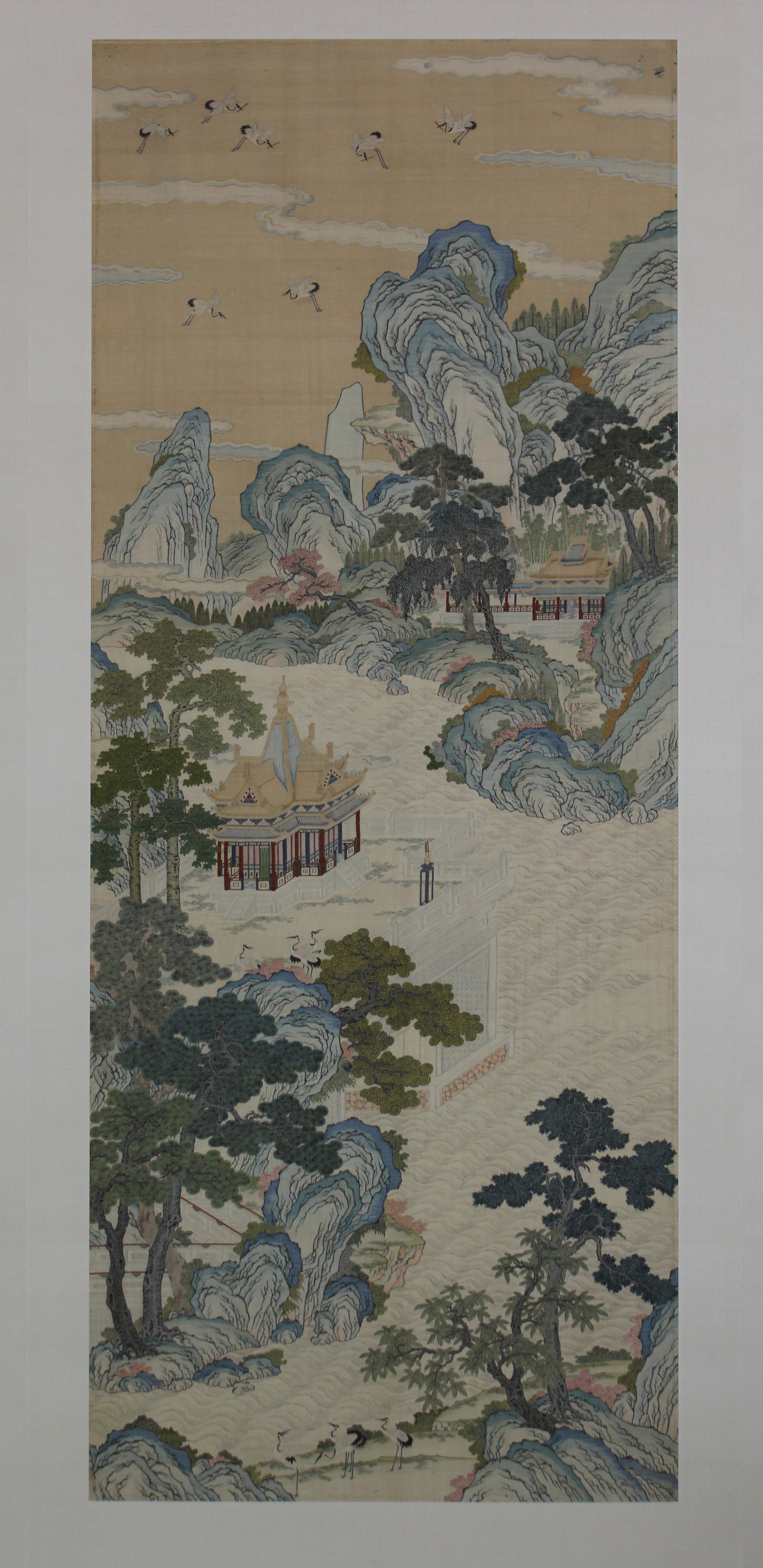
Executive Summary: Mythical Realm as Foundational Luxury Code
This strategic standalone research positions the Chinese mythical realm, as rendered through the supreme medium of kesi silk tapestry, as a cornerstone heritage asset for Katherine Fashion Lab’s 2026 high-end luxury strategy. Moving beyond superficial aesthetic appropriation, we analyze this subject as a complex system of symbolic power, historical adornment, and spiritual meaning. The integration of this deep cultural code offers a defensible, high-value positioning in an increasingly crowded luxury market, allowing the Lab to articulate a narrative of timeless authority, consummate craftsmanship, and transcendent value aligned with the evolving consciousness of the ultra-high-net-worth individual.
Deconstructing the Mythical Realm: A Framework of Symbolic Power
The Chinese mythical realm is not a singular landscape but a sophisticated cosmology visualized. It is a hierarchical ecosystem of power, harmony, and immortality, populated by celestial beings, auspicious beasts, and botanicals, all operating within a framework of Daoist and Buddhist philosophy. This realm functions as a symbolic language where every element is a cipher for a specific form of power or protection.
Iconography as a Lexicon of Authority
Key motifs present in kesi depictions—such as the azure dragon (cosmic power, east, spring), the white tiger (military prowess, west, autumn), the fenghuang (phoenix, representing empressly virtue and renewal), and the qilin (benevolent omen, righteousness)—are not mere decorations. They are emblems of cosmic and terrestrial authority. Historically, their use was strictly regulated by sumptuary laws; a dragon with five claws was reserved exclusively for the Son of Heaven, the Emperor. To wear or display these symbols was to visually claim alignment with celestial order and imperial mandate, a profound statement of legitimized power.
The Spiritual Meaning: Alchemy and Ascent
Beyond terrestrial power, the mythical realm maps a path to spiritual transcendence. Elements like the Mount Penglai (Isle of the Immortals), lingzhi mushrooms (longevity), and cranes (transcendence) speak to the Daoist pursuit of immortality and harmony with the Dao. The realm itself represents an idealized state of being—a world in perfect, eternal balance. This spiritual dimension transforms adornment from ostentation into a talismanic act. The garment or object becomes a portable sacred space, a mediator between the wearer and the sublime, intended to attract blessings, longevity, and spiritual grace.
The Medium is the Message: Kesi as Historical Adornment and Pinnacle Craft
The chosen medium, kesi (cut silk), is inseparable from the message. Originating from the Tang Dynasty and perfected in the Song, kesi is often described as "silk tapestry" but is more accurately "silken sculpture." Each color zone is woven from its own bobbin, creating sharp, painterly contours and a reversible, textured surface. The technique’s name—"cut silk"—refers to the distinct vertical gaps between color blocks, a testament to its meticulous, discontinuous weft technique.
Craft as a Conduit for Myth
Kesi was the preferred medium for depicting mythical realms for emperors and the elite because its material reality mirrored the subject’s perceived value. The labor intensity (a master weaver might produce mere centimeters per day), the cost of materials (fine silk and mineral pigments like malachite and cinnabar), and the technical mastery required made it a tangible analog for the rarity and perfection of the mythical world. It was adornment as a feat of human artistry approaching the divine. A kesi dragon robe was not just a garment; it was a wearable artifact of cosmological significance, a manifestation of "techné" in service of "mythos."
Historical Adornment and Regalia
In its historical application, kesi with mythical iconography was the ultimate expression of ceremonial and hierarchical dress. Imperial dragon robes (longpao), court vestments, and prestigious hangings used this combination to perform power. The adornment was active, not passive; it participated in rituals, reinforced social order, and protected the wearer. This history positions Katherine Fashion Lab not as a fashion house, but as a contemporary atelier of regalia for a global elite seeking sartorial legitimacy and narrative depth.
Strategic Integration: The 2026 High-End Luxury Blueprint
For the 2026 strategy, this analysis recommends a move from "collection" to "chapter," presenting the Mythical Realm as a foundational pillar. The goal is to engineer a modern heirloom, leveraging this heritage to build unparalleled brand equity.
Pillar 1: Symbolic Power as Bespoke Narrative
Move beyond generic dragon motifs. Develop a Symbolic Narrative Service for haute couture and bespoke clients. Curators and designers will work with clients to select motifs that map to personal aspirations—a qilin for an ethical leader, intertwined fenghuang for a power partnership, a landscape of Penglai for a seeker of wisdom. Each piece is accompanied by a "Codex," a leather-bound document deciphering its symbolic language and craft journey, transforming the garment into a legible autobiography of power.
Pillar 2: Craft Re-Interpretation & Material Innovation
Honor kesi not through replication, but through technical homage and innovation. Partner with the last master kesi ateliers in Suzhou for limited "Artisan Dialogues" pieces. Simultaneously, engineer proprietary fabrics that mimic the textural depth and color saturation of kesi using advanced technical textiles and nano-bonding, allowing for application in modern silhouettes and accessories. Fuse hand-embroidery with laser-cut techniques to create contemporary interpretations of mythical clouds (xiangyun) and waves.
Pillar 3: Spiritual Meaning as Experiential Luxury
Translate the spiritual dimension into a 360-degree experience. Launch the "Realm" series of trunk shows held in locations of serene power (e.g., a private temple pavilion, a modernist cliffside residence). Incorporate ritualistic elements into the unveiling. Develop an olfactory companion—a bespoke scent with notes of aged paper, ink stone, and sandalwood—to complete the sensory immersion. This positions the Lab as providing not a product, but a state of being.
Pillar 4: The Standalone Statement
For the flagship 2026 collection, present a series of no more than 10 definitive looks that are studies in contrast: a stark, architectural wool coat lined entirely in a kesi-inspired tapestry of a turbulent mythical sea; a minimalist silk column gown with a single, monumental qinglong (azure dragon) coiling from hem to shoulder. The messaging must be confident and academic, emphasizing research and authenticity. Marketing assets should resemble museum catalogs, with essays on iconography, not traditional lookbooks.
Conclusion: From Heritage to Hegemony
The Chinese mythical realm, interpreted through the lens of kesi, provides Katherine Fashion Lab with a nonpareil strategic resource. It is a deep, coherent, and prestigious system of meaning that addresses the core drivers of modern luxury: the demand for authenticity, narrative, craftsmanship, and transcendent experience. By mastering and modernizing this code, the Lab can architect a luxury positioning that is culturally resonant, intellectually rigorous, and commercially defensible. For the 2026 client, acquiring a piece from this chapter is not a purchase; it is an accession—a step into a continuum of power, craft, and meaning that redefines the self as part of a timeless legend. This is the strategic path from heritage to hegemony in the high-end luxury arena.