Executive Summary: The Ivory Fragment as Foundational Luxury Code
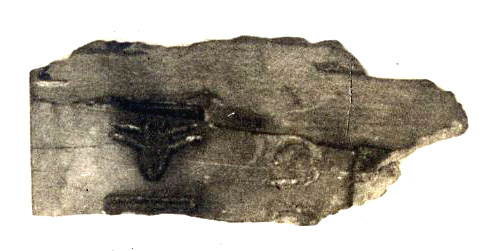
This strategic standalone research, conducted by the Heritage Curatorial Division of Katherine Fashion Lab, analyzes a singular artifact—a fragment of an ivory tag from an unspecified ancient civilization—to decode enduring principles of symbolic power and material valorization. Moving beyond mere aesthetic appreciation, this paper deconstructs the artifact’s inherent narratives to architect a forward-facing luxury strategy for 2026. We posit that this unassuming fragment is not a relic but a blueprint. It encapsulates the primordial intersection of material rarity, encoded symbolism, spiritual adornment, and social stratification—the very pillars upon which modern luxury is built. Our analysis will extract these core codes to inform a collection and brand narrative that transcends seasonal trends, offering instead a profound, culturally-grounded value proposition for the discerning 2026 client.
Artifact Deconstruction: The Semiotics of the Fragment
The provided artifact, a fragment of an ivory tag, is a vessel of concentrated meaning. Its physical state—a fragment—is itself strategically significant. It speaks not of incompleteness, but of exclusivity through scarcity and narrative through suggestion. The whole story is not given; it is curated and revealed in part, inviting the elite viewer into a privileged act of interpretation.
Materiality as the First Language of Power: Ivory
Ivory, as a medium, was never a neutral choice. In ancient contexts, its procurement demanded extraordinary effort, trade, or conquest, establishing it as a material of sovereign access. Its inherent qualities—a luminous warmth, a smooth yet substantial density, a capacity for fine detail—made it a canvas for the divine and the regal. For Katherine Fashion Lab, this translates to a non-negotiable principle: primary materials must carry an innate, justifiable narrative of rarity and effort. For 2026, this extends beyond traditional ivory (ethically and legally obsolete) to innovative biomaterials with analogous tactile and visual prestige, or to reclaimed and historically significant materials whose provenance adds layers of story.
Adornment as System, Not Ornament
A "tag" implies function within a system. This could be a garment fastener, a seal, a label for sacred goods, or an amulet. Its purpose was operational within a ritual or hierarchical framework. This reframes adornment from decoration to a key component in a performative system—whether that system is royal ceremony, spiritual rite, or social protocol. The 2026 luxury consumer seeks pieces that are operational within their own life systems: tokens of personal milestone, identifiers within a community of taste, or tools for self-actualization. The product must be an active participant in the wearer’s narrative.
Extraction of Core Heritage Codes
From this deconstruction, we distill three core heritage codes relevant to a contemporary luxury strategy.
Code 1: Symbolic Power Through Restrained Encoding
The fragment likely bore markings—geometric patterns, proto-writing, zoomorphic imagery. These were not mere decoration but a restricted visual language legible only to an initiated few. Power resided in this exclusivity of meaning. For our 2026 strategy, this translates to embedded symbolism over overt branding. Motifs should be derived from deep research—archaic geometry, forgotten sigils—and integrated into construction (e.g., seam lines that form a symbol, closures based on ancient mechanisms). The narrative is provided, but its full meaning is unlocked for the client, creating a sense of initiation.
Code 2: Spiritual Meaning in the Tactile Experience
Ivory, often associated with purity, divinity, and the ethereal (e.g., elephantine symbolism in Asia, associations with lunar deities), imbued the wearer with a spiritual aura. Adornment was a tactile conduit to the sacred. In a 2026 context characterized by digital saturation and a search for grounding, luxury must offer a haptic, meditative experience. This code informs material development focusing on astonishing, conscience-clear textures, and designs that emphasize ritualistic interaction—the fastening of a jacket becoming a mindful act, the weight of a bag offering a grounding presence.
Code 3: Historical Adornment as Identity Architecture
The tag functioned as a definitive marker of role, status, or affiliation. It architected the wearer’s identity within a social or spiritual hierarchy. Modern luxury is similarly an identity project. Our 2026 approach must position Katherine Fashion Lab pieces as keystones in a client’s self-curated identity. This is achieved through extreme personalization that references personal heritage, or through limited "codes" that signify membership in a collective defined by discernment and intellectual curiosity, not mere wealth.
Strategic Application: The 2026 High-End Luxury Blueprint
Integrating these codes, we propose a 2026 strategy titled "Fragments of Power: A Curated Archaeology of Self." This positions the brand as a curator of personal heritage, not a manufacturer of goods.
Collection Manifesto: The Artefactual Collection
Launch a pinnacle, non-seasonal line where each piece is presented as a "contemporary artifact." A sculptural handbag is accompanied by a "curatorial dossier" explaining its material origins (e.g., resin infused with ethically-sourced stone dust from a historic site) and symbolic motifs. A tailored coat features fastenings based on archaeological finds, with the narrative focused on the history of closure and protection. The fragment’s state informs the design philosophy: pieces are intentionally suggestive, not literal, leaving space for the client’s own story to complete them.
Client Experience: The Curatorial Journey
Move beyond personal shopping to heritage consultation. Clients engage with the Lab’s curators to explore personal or aspirational cultural touchstones. This dialogue informs a bespoke or limited-edition piece that encodes these elements. The purchase is framed as an "acquisition," supported by archival-style documentation. This transforms the transaction into a co-creative, knowledge-based journey, leveraging the ancient model of the patron-artisan relationship.
Brand Narrative & Communication: Excavating Meaning
Marketing communications will adopt the tone of a research institute. Campaigns will feature visual essays on ancient adornment practices, drawing clear, intelligent lines to the modern collection. Storytelling will focus on the archaeology of materials and symbols, not celebrity ambassadors. The fragment itself becomes a recurring brand icon, symbolizing the idea that true luxury is a piece of a deeper, discovered story.
Conclusion: From Fragment to Foundation
The ivory tag fragment, in its elegant simplicity, provides a masterclass in the perennial drivers of desire: the power of the rare, the depth of the symbolic, the sanctity of the tactile, and the use of adornment to construct identity. For Katherine Fashion Lab, this artifact is a strategic Rosetta Stone. By decoding its principles and re-contextualizing them for the 2026 luxury landscape—a landscape yearning for authenticity, intellectual resonance, and spiritual value—we can build a formidable, differentiated position. We will not replicate the past; we will emulate its methodology to create a new, deeply rooted legacy. The strategy is clear: to become not just a fashion house, but a laboratory for contemporary heritage, where every piece is a fragment of meaning, waiting to be completed by the life it adorns.