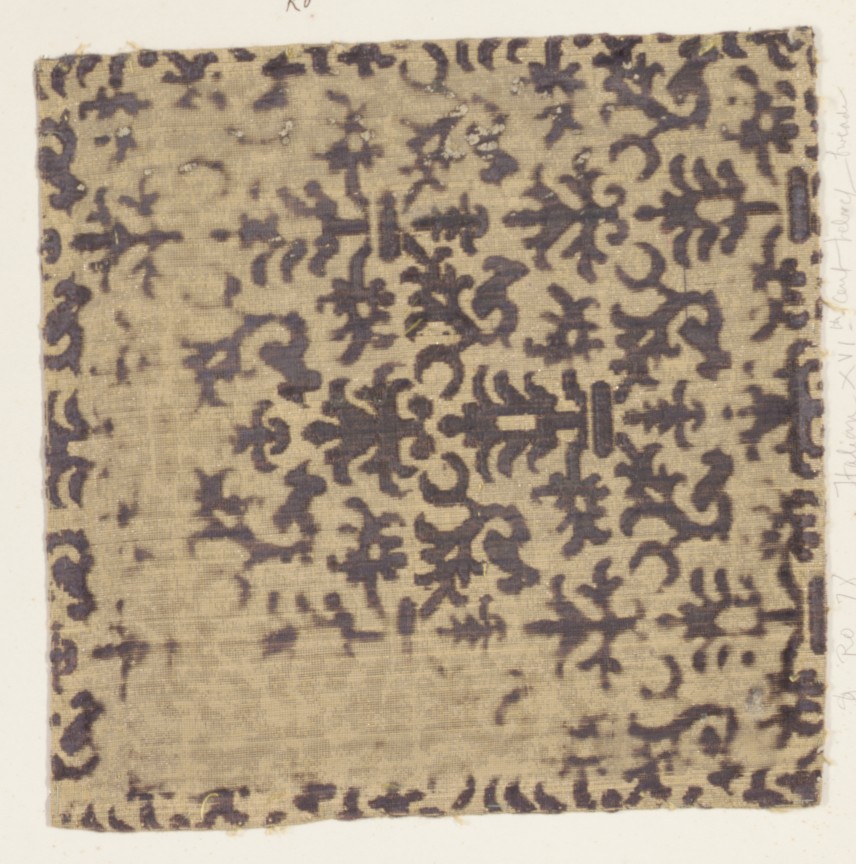
Deconstructing the Whole: A Couture Analysis of 'Fragment'
In the rarefied atmosphere of haute couture, where the narrative of a complete, flawless garment often reigns supreme, Katherine Fashion Lab presents a radical proposition: the 'Fragment' as a complete aesthetic and philosophical statement. This standalone study, rooted in a global heritage yet fiercely contemporary, is not a deconstruction in the traditional sense. It is, rather, a strategic re-centering, forcing a confrontation with the intrinsic value of a part over the implied whole. By utilizing the primal luxury of silk and the structural defiance of metal thread, the Lab dissects the very ontology of the couture object, asking not what a garment is, but what it can signify when its totality is deliberately withheld.
The Philosophical Framework: Heritage as a Non-Linear Narrative
The 'Global Heritage' origin point is crucial, serving as the intellectual bedrock of 'Fragment.' This is not heritage as pastiche or literal revival. Instead, Katherine Fashion Lab approaches heritage as a vast, fragmented archive of techniques, symbols, and material memories. A single shard of Chinese silk brocade, a ghost of Ottoman metal-wrapping, a whisper of Italian velvet-cutting—these are the discontinuous echoes that inform the piece. The Lab’s methodology mirrors the postmodern condition: we no longer experience culture as a linear, coherent story but as a simultaneous, often chaotic, influx of impressions. 'Fragment' makes this experience tactile. It posits that in our globalized consciousness, understanding often comes from assembling meaning from pieces, not from being presented with a pre-assembled totality. The standalone nature of the study emphasizes this; it is a deliberate pause, a deep focus on one potent artifact in the imagined archaeological dig of style.
Material Dialectics: Silk and Metal Thread in Contention
The material selection—silk and metal thread—is a masterclass in couture-level semiotics. These are not merely fabrics; they are embodied concepts in a dynamic dialogue.
Silk, with its millennia of association with luxury, fluidity, and the corporeal, represents the organic, the ephemeral, and the traditional canvas of couture. Its presence in 'Fragment' is likely manipulated to showcase both its strength and its vulnerability—perhaps a torn edge, a burned section, or a weighty, densely woven cartridge silk that defies its own expected drape. It carries the memory of the loom, the hand of the weaver, the whisper of historical trade routes.
Metal thread, by stark contrast, is the agent of intervention. It is the syntax that punctuates and structures the soft prose of silk. Whether used in couching to outline a phantom pattern, in surgical stitches that bind a rupture, or as a rebellious, sculptural wire emerging from the textile plane, it introduces tension, chronology, and permanence. It speaks of armor, of circuitry, of the industrial and the resilient. The contention between the yielding and the rigid, the historic and the modern, the crafted and the engineered, creates the piece's central tension. This dialectic materializes the core idea: the fragment is not a broken remnant but a site of active negotiation between forces.
Form and Absence: The Semiotics of the Incomplete
The power of 'Fragment' lies in its radical formal economy. What is absent is as potent as what is present. The couture object here rejects the conventional silhouette. It may be a magnified section of a sleeve head, exploring the complex architecture of a armscye with unparalleled detail. It could be a disembodied corset panel, where the drama of structure and embellishment is laid bare, freed from the context of the body's full form. This approach performs several critical functions.
First, it shifts the viewer's focus from macro-aesthetics to micro-craftsmanship. Every stitch, every twist of metal, every subtle gradation in the silk’s hue becomes a world unto itself. It is a argument for the intrinsic value of the artisan's minute decision-making, often lost in the appreciation of a full gown. Second, it invokes the principle of pars pro toto—the part that stands for the whole. The fragment becomes a portal, triggering the imagination to reconstruct the hypothetical complete garment, a garment that is potentially more powerful and personal in its imagined state than any physical realization could be. Finally, it embodies a sophisticated sustainability of narrative: it suggests that maximum expression can be achieved with minimal physical material, through the sheer density of idea and craft per square inch.
Context as Standalone Study: The Laboratory of Meaning
Designating 'Fragment' as a 'Standalone Study' is a deliberate curatorial and business strategy. It removes the piece from the cyclical pressures of seasonal collection narratives and commercial viability. It exists within the pure research and development wing of the fashion house, akin to a concept car in the automotive industry. This positioning grants Katherine Fashion Lab immense creative freedom, allowing it to explore extreme ideas that feed back into the brand's vocabulary in subtler, disseminated ways.
As a standalone study, 'Fragment' operates on multiple levels: it is a technical prototype pushing the boundaries of working with silk and metal; a philosophical manifesto on perception and heritage; and a brand artifact that elevates the house's intellectual capital. It communicates to the connoisseur that the Lab’s primary output is not merely clothing, but critical thought materialized in textile form. This transforms the couture object from a product of luxury into a legitimate object of study, bridging the gap between the atelier and the academy, and securing the brand's legacy as a thought leader rather than a mere trend follower.
In conclusion, Katherine Fashion Lab's 'Fragment' is a profound exercise in reduction to achieve expansion. By isolating a fragment, it expands the discourse around heritage, materiality, and form. It demonstrates that true luxury in the modern age may not reside in overwhelming abundance, but in the focused, intense, and intellectually charged examination of a single, perfect, and profoundly significant part. It is a testament to the idea that sometimes, to see the whole picture, one must have the courage to examine—and celebrate—the break.