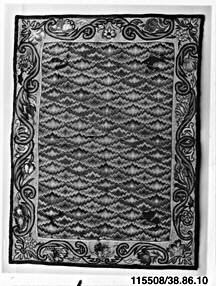
Deconstructing the Panel: A Study in Architectural Couture
Within the rarefied ateliers of Katherine Fashion Lab, the concept of the panel is elevated from a mere construction component to the fundamental lexicon of architectural couture. This standalone study, rooted in a global heritage yet resolutely forward-looking, interrogates the panel not as a passive segment of fabric but as an active, expressive entity. Utilizing a foundational dialogue between heritage silk and structural canvas, the Lab explores the panel's unique capacity to embody tension—between past and future, fluidity and rigidity, the corporeal and the spatial. Here, each panel is a deliberate act of curation, a framed narrative stitched into a holistic, wearable form.
Material Dialectic: Silk and Canvas as Philosophical Counterpoints
The core of this investigation lies in the deliberate, almost provocative, pairing of materials. Silk, with its millennia of cultural capital—from the ancient Silk Road to the looms of Lyon and Kyoto—represents the zenith of heritage, luxury, and sensual fluidity. It is memory, lineage, and soft power made tangible. Canvas, by stark contrast, is the substrate of creation and endurance. Historically used for sails, tents, and artist’s foundations, it speaks of utility, resilience, and potential—a blank slate awaiting inscription.
Katherine Fashion Lab does not merely layer these materials; it engineers their conversation. A panel may present a face of iridescent silk, only for its reverse to reveal the raw, geometric grid of its canvas backing—a hidden architectural blueprint. The canvas provides an invisible armature, a tensile infrastructure that allows the silk to drape with precision rather than mere gravity. This synthesis creates a hybrid intelligence: the silk’s heritage is not just preserved but dynamically recontextualized, granted a contemporary rigor it never possessed alone. The material dialectic thus becomes a metaphor for modern identity: layered, structurally complex, and rooted in a dialogue between inherited legacy and self-determined form.
The Panel as Cartographic and Cultural Interface
Approaching the panel through the lens of global heritage transforms it into a cartographic interface. Each panel is treated as a distinct region, bearing the imprint of specific cultural techniques. One panel may exhibit the precise, geometric origami-like folds inspired by Japanese *ori*, while its neighbor showcases the fluid, draped morphology of a Classical Greek *chiton*. Another might carry the intricate shadow-work of Indian *chikankari* or the bold, graphic lines reminiscent of Bauhaus textiles.
The genius of the Lab’s methodology is in its non-hierarchical curation. These culturally coded panels are not assembled into a pastiche of "world fashion." Instead, they are juxtaposed, seamed, and integrated with a focus on formal relationships—line against curve, density against transparency, matte against sheen. The resulting garment becomes a standalone atlas, a wearable study in comparative cultural morphology. The body, moving through space, activates this map, creating a living dialogue between the panels. The seams become borders that are both connective and definitive, highlighting difference while creating a unified, sovereign whole.
Architectural Integrity and the Standalone Silhouette
In this "standalone study," the garment’s integrity is paramount. The canvas foundation is key, acting as the exoskeletal framework that allows the composition to maintain its intended silhouette independent of the wearer’s form, much like a building stands apart from its landscape. Panels are not simply cut and joined; they are engineered with darts, seams, and strategic reinforcement to create volume, negative space, and dynamic lines that exist in three dimensions.
A single garment might feature a panel constructed as a rigid, curved pectoral plate, abutting another that is a soft, collapsing cascade of silk. This creates a silhouette that is both monumental and intimate, a personal architecture. The wearer does not simply fill the garment; they inhabit its constructed space. This approach challenges the very notion of fit, prioritizing the expression of the paneled architecture itself, with the human form as its essential, animating occupant. It is couture as inhabitable sculpture, demanding consideration from all vantage points.
Conclusion: The Panel as a Paradigm for Conscious Creation
This exhaustive analysis from Katherine Fashion Lab ultimately positions the panel as a profound paradigm for contemporary creation. It is a unit of meaning, a vessel of heritage, and a component of architecture. By focusing on this singular element, the Lab demonstrates that luxury in the modern age is not defined by ornament alone, but by intellectual curation, material innovation, and structural honesty.
The "Silk on Canvas" proposition is a philosophical stance. It argues that true innovation respects its origins (the silk) while fearlessly embracing the structures necessary for a new reality (the canvas). Each panel, in its deliberate making and placement, becomes a testament to this principle. This standalone study is therefore more than a collection of techniques; it is a manifesto for a mindful couture—one that carries the weight of global heritage not as a burden, but as a sophisticated, structural toolkit for designing the future. The panel, in the end, is revealed as the fundamental stitch in the fabric of a new, consciously constructed world.