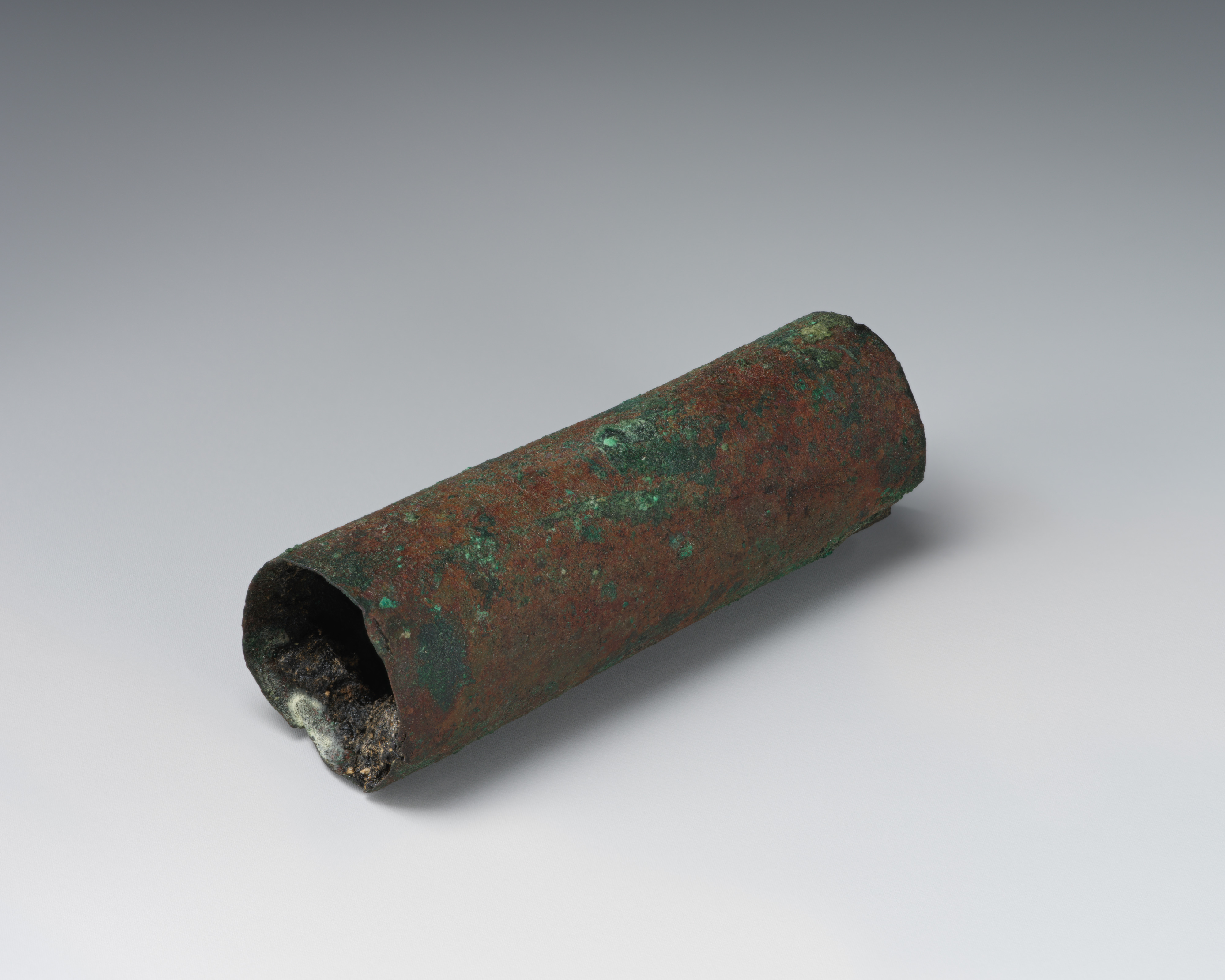
Executive Summary: The Sasanian Amulet Case as a Strategic Heritage Asset
This strategic standalone research paper analyzes a Sasanian-era (224–651 CE) amulet case, crafted from bronze, copper, and bitumen, as a foundational heritage object for Katherine Fashion Lab. Moving beyond mere aesthetic inspiration, this analysis deconstructs the artifact's intrinsic systems of value—symbolic, spiritual, and material—to propose a rigorous framework for a 2026 high-end luxury strategy. The amulet case is not a relic but a prototype: a historical precedent for wearable personal sanctuary, narrative-driven adornment, and multi-sensory materiality. This document posits that its deliberate reactivation can position Katherine Fashion Lab at the vanguard of the experiential luxury market, transforming historical depth into contemporary cultural capital and commanding exclusivity.
Historical and Cultural Context: Adornment as Armor in the Sasanian Empire
The Sasanian Empire, the last pre-Islamic Persian dynasty, was a crucible of spiritual complexity, artistic sophistication, and imperial power. It operated at the nexus of Zoroastrian orthodoxy, burgeoning Christian communities, and diverse syncretic beliefs. In this milieu, personal adornment transcended decoration to become a critical interface between the individual and the cosmic forces of order (asha) and chaos (druj). The amulet case was a pivotal technology in this spiritual ecosystem. Typically small, cylindrical, or tubular, it was designed to hold tightly folded parchment or papyrus inscribed with sacred verses, divine names, or magical formulae. The case itself, often of bronze or copper, served as a protective vessel, while the bitumen—a naturally occurring tar—likely sealed the contents, acting as both a physical barrier and a substance believed to hold apotropaic (evil-averting) properties. This object exemplifies the Sasanian synthesis: the application of advanced metallurgy and material science in service of profound spiritual and psychological need.
Deconstructing Symbolic Power and Spiritual Meaning
The power of the amulet case is layered, operating on three interconnected planes. First, its containment function is inherently symbolic. It represents the safeguarding of the intangible—prayer, divine favor, personal destiny—within a tangible, durable shell. This mirrors the luxury consumer's desire to encapsulate value, story, and identity within a physical object. Second, the materials are semantically charged. Bronze, an alloy, signifies human ingenuity and enduring strength. Copper, with its antimicrobial properties and celestial association with Venus/Aphrodite in contemporaneous cultures, subtly implies purity, beauty, and celestial favor. Bitumen, as a sealant, completes the sacred circuit, rendering the contents immutable and protected from corrupting influences. Third, the object operated on a principle of continuous spiritual efficacy. Unlike a jewel worn for occasional display, the amulet case was a perpetual, intimate companion, its power activated not by being seen, but by being *known* to be present. This transitions adornment from a visual spectacle to a deeply personal, kinetic experience of belief and belonging.
Strategic Translation: From Archaeological Artifact to 2026 Luxury Code
For Katherine Fashion Lab, this artifact provides a non-derivative blueprint for innovation in the high-end luxury sector. The 2026 strategy must focus on moving heritage beyond surface motif into embedded value systems. The amulet case offers four strategic pillars:
Pillar 1: Wearable Architecture & The Sanctuary Silhouette
The form factor of the case—a protective vessel for a precious core—must inform structural design. This translates to “sanctuary silhouettes” in outerwear and bags: designs with a deliberate, architectural integrity that suggest interiority and safety. Think structured jackets with concealed, secure compartments, or handbags with intricate, ritualistic opening mechanisms that reference sealed containment. The design philosophy shifts from "what does it carry?" to "what does it *keep safe*?"—be it a physical possession, a personal secret, or a sense of self.
Pillar 2: Encapsulated Narrative & Bespoke Provenance
The true value of the original case lay in its unseen, personalized contents. Katherine Fashion Lab can operationalize this through a Bespoke Narrative Program. High-value pieces would include a sealed interior chamber or locket element, within which clients can place a personalized micro-engraved plate, a curated text, or a symbolic material of their choosing, sealed by a master artisan. This transforms the object into a unique biographical vessel, with the act of sealing mirroring the bitumen's ancient role. Provenance is no longer just about the brand's history, but about the client's story, permanently encapsulated.
Pillar 3: Alchemical Materiality & Multi-Sensory Engagement
The material triad—bronze, copper, bitumen—provides a template for “alchemical materiality.” This involves developing proprietary alloys with distinctive patinas (modern "bronzes"), incorporating copper elements for their sensory and aesthetic warmth, and innovating with modern sealants or resins that recall bitumen's visual and tactile qualities. The strategy should emphasize the *haptic journey*: the weight of the metal, the coolness to the touch, the specific sound of a closure, and even subtle, brand-specific scent elements applied to interiors. Luxury in 2026 is a full-sensory experience, and this artifact provides a historical mandate for it.
Pillar 4: Quiet Power & The New Talismanic Luxury
In an era of overt branding, the amulet case champions “quiet power.” Its efficacy was internal and personal. Katherine Fashion Lab’s 2026 collection should feature pieces where symbolic details are discreet, discoverable only upon intimate inspection—a Zoroastrian fravahar symbol engraved inside a cuff, a pattern derived from Sasanian seal inscriptions on a lining. This cultivates a deeper, more intellectual client connection and positions the brand as serving a need for meaningful, non-verbal identity markers that offer a sense of protection, agency, and connection to a grand historical narrative.
Conclusion: Positioning for the Experiential Luxury Frontier
The Sasanian amulet case is a potent strategic asset. It allows Katherine Fashion Lab to bypass transient trends and anchor its 2026 launch in a timeless human quest: the desire for protection, meaning, and identity through crafted objects. By translating its core principles—sanctuary, encapsulated narrative, alchemical materiality, and quiet talismanic power—into a modern luxury idiom, the Lab can create a category of its own: *Archaeological Modernism*. This position commands a premium by offering not just a product, but a personal archaeology—a wearable legacy that connects the wearer to an ancient lineage of spiritual technology and empowers them to inscribe their own narrative within it. The result is a formidable brand ecosystem where heritage is not referenced, but *reactivated*, establishing Katherine Fashion Lab as the curator of contemporary meaning for the discerning luxury client of 2026 and beyond.