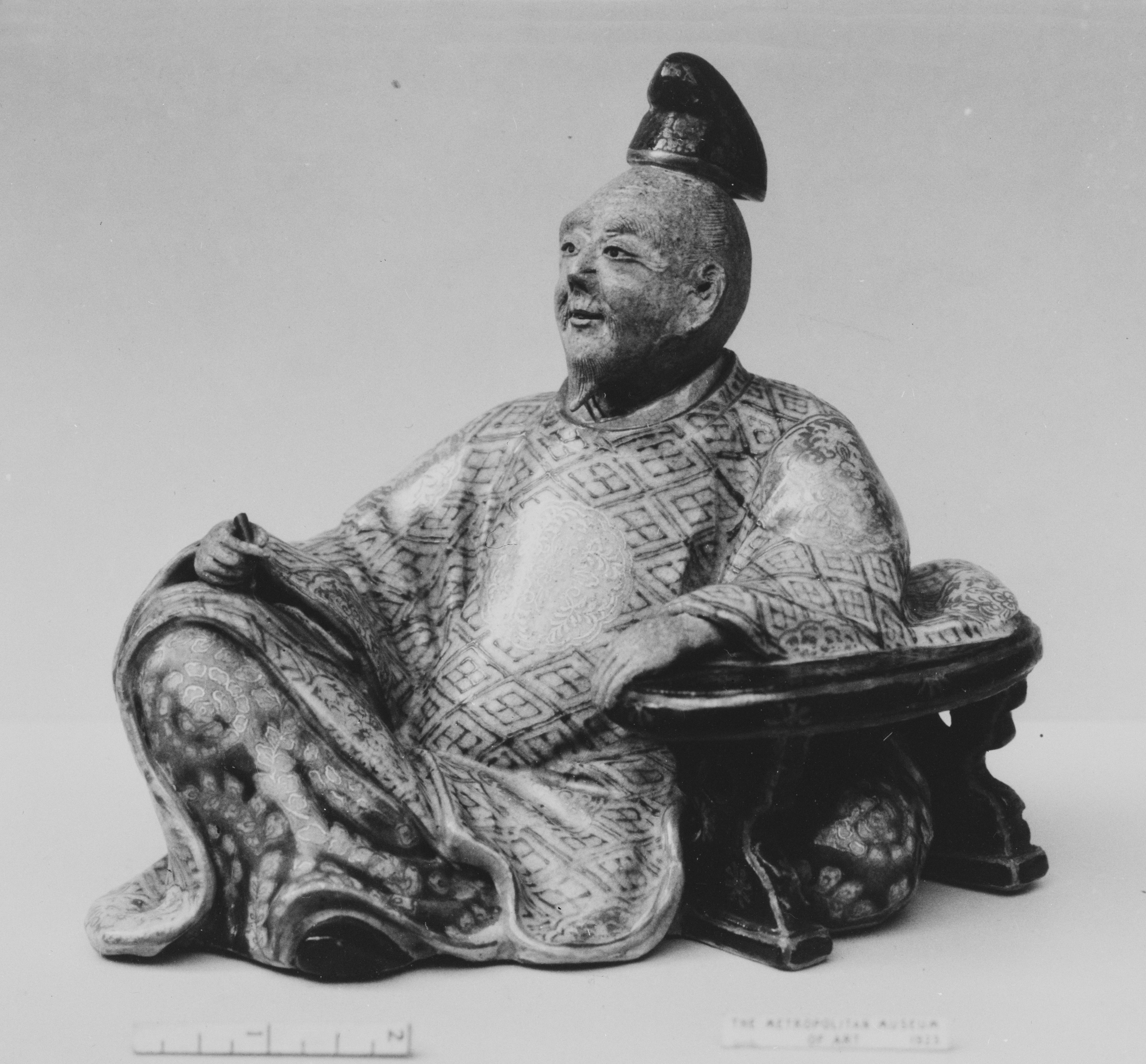
Strategic Heritage Analysis: The Ornament in the Form of the Poet Hitomaru
For Katherine Fashion Lab, heritage is not a static archive but a dynamic lexicon of symbolic power. This analysis examines a singular artifact—an ornament depicting the revered Japanese poet, Hitomaru, crafted in Kiyomizu faience—to decode its layered narratives of historical adornment, spiritual meaning, and cultural authority. The objective is a strategic standalone research initiative, translating this deep cultural intelligence into a foundational pillar for a 2026 high-end luxury strategy. This object serves as a potent case study in moving beyond superficial aesthetic appropriation towards a resonant, intellectual, and spiritually informed brand language.
Deconstructing the Artifact: Materiality and Symbolic Power
The ornament’s medium is its first declaration of prestige. Faience, a refined tin-glazed earthenware, represents a deliberate choice of accessible yet noble material, echoing luxury's balance between rarity and artistry. The specific technique—Kiyomizu ware, named for Kyoto’s iconic temple district—immediately anchors the object in a geography of unmatched cultural and spiritual significance. The polychrome and gold decoration signify opulence and celebration, yet the critical detail is the intentional contrast: the face and hands are left unglazed, revealing the raw, tactile earthiness of the clay beneath.
This is not a mere technical feature; it is a profound symbolic act. It creates a dialectic between the celestial (the gilded, colored robes) and the human, the immortal (the poet’s legacy) and the mortal (the physical body). The unglazed surfaces invite a sense of intimacy and vulnerability, connecting the holder to the essence of the poet’s humanity. For a luxury strategy, this translates into a powerful principle: true luxury resides in the revelation of essence, not just the application of splendor. It champions intellectual and emotional authenticity as the ultimate luxury finish.
Historical Adornment and the Cult of the Poet
The object’s form—an ornament—indicates its function as a portable object of personal or spatial adornment. Adorning one’s environment with the likeness of Kakinomoto no Hitomaru, a semi-legendary figure from the 8th-century Man'yōshū anthology, was an act of cultural and spiritual alignment. In Edo-period Japan (when such Kiyomizu pieces flourished), possessing such an object was a non-verbal communication of erudition, taste, and a connection to the foundational "yamato-damashii" (Japanese spirit) that Hitomaru’s poetry embodied.
This moves adornment beyond decoration into the realm of talismanic identity. The wearer or owner does not merely display beauty; they invoke and align themselves with the poet’s attributes: clarity of expression, emotional depth, loyalty, and a harmonious relationship with nature and the divine. For Katherine Fashion Lab, this historical precedent provides a blueprint for creating collections where pieces are not just accessories but conduits for narrative and identity. Each item becomes a modern "omamori" (charm), its value derived from the depth of the story it carries and the virtue it symbolically projects.
Spiritual Meaning: The Interstitial Sacred
Hitomaru was more than a poet; he was later deified as a "poet-god" (Song-sage) within the Shinto tradition, enshrined at the Wakamiya Jinja in Akashi. This apotheosis blurs the line between artistic genius and spiritual force. The ornament, therefore, is a vessel for "kami" (spirit) presence. The Kiyomizu ware origin, adjacent to the sacred waterfalls and temple complex, further imbues the object with a sense of the "interstitial sacred"—an item for secular space that carries a sacred charge.
The spiritual meaning here is one of inspiration as invocation. The ornament served as a focus for contemplation, a means to channel creativity and purity of heart. In a 2026 luxury context, characterized by a consumer quest for meaning, mindfulness, and holistic well-being, this spiritual dimension is a critical asset. It suggests a design philosophy where materials, forms, and craftsmanship processes are considered for their meditative and grounding properties, creating not just a product but an instrument for intentionality.
Strategic Application: 2026 High-End Luxury Pillars
Translating this analysis into a forward-looking strategy requires distilling these principles into actionable brand pillars for 2026.
Pillar 1: The Dialectic of Finish
Embrace the "unglazed vs. gilded" contrast as a core design metaphor. Develop surfaces and textiles that play raw, tactile, and honest materials (like raw silk, unpolished precious stones, untreated leather) against exquisite, intricate craftsmanship and metallic accents. This tells a story of depth, journey, and authentic character, appealing to a luxury client who values substance over sheen.
Pillar 2: Narrative Talismans
Each collection must be anchored by a deeply researched cultural archetype—like the Poet—from which symbols, forms, and codes are systematically derived. A "Hitomaru Collection" would not feature literal portraits but might interpret the poet’s themes: "Monologue of the Rock" translated into structured, mineral-textured silhouettes; "Lament for a Traveler" into layered, protective yet nomadic outerwear. Pieces are accompanied by curated content (poetry, essays) that unlock their symbolic value, transforming clients into custodians of stories.
Pillar 3: The Interstitial Sacred Experience
Move beyond retail to create curated, ritualistic experiences that mirror the object’s spiritual context. This could involve collaborations with modern poets for intimate salons, partnerships with mindfulness platforms, or the design of private client spaces that evoke the contemplative serenity of a Kiyomizu temple garden. The product launch itself becomes an act of cultural ceremony, not just commerce.
Pillar 4: Neo-Kiyomizu Craft Alliances
Forge direct, equity-level partnerships with contemporary Kiyomizu ware ateliers and other heritage crafts facing similar evolution challenges. Co-develop exclusive, hybrid materials—e.g., ceramic elements for closures or jewelry, glazing techniques applied to fabrics. This creates undeniable authenticity, protects cultural capital, and results in truly innovative, limited-edition artifacts.
Conclusion: From Ornament to Ontology
The Ornament in the Form of the Poet Hitomaru is a masterclass in encoded luxury. It demonstrates that the highest form of value is generated at the intersection of material intelligence, historical narrative, and spiritual resonance. For Katherine Fashion Lab, the strategic imperative for 2026 is to adopt this object’s ontology: to become a brand that creates modern heirlooms which are, at once, intellectually rigorous, spiritually resonant, and materially sublime. By building upon these four pillars—Dialectic Finish, Narrative Talismans, Interstitial Sacred Experiences, and Neo-Kiyomizu Alliances—the Lab can position itself not as a follower of trends, but as a curator of cultural continuity and a definer of the future luxury psyche. The goal is to ensure that when a client adorns themselves with a Katherine piece, they are, like the holder of the Hitomaru ornament, aligning with a legacy of profound meaning.