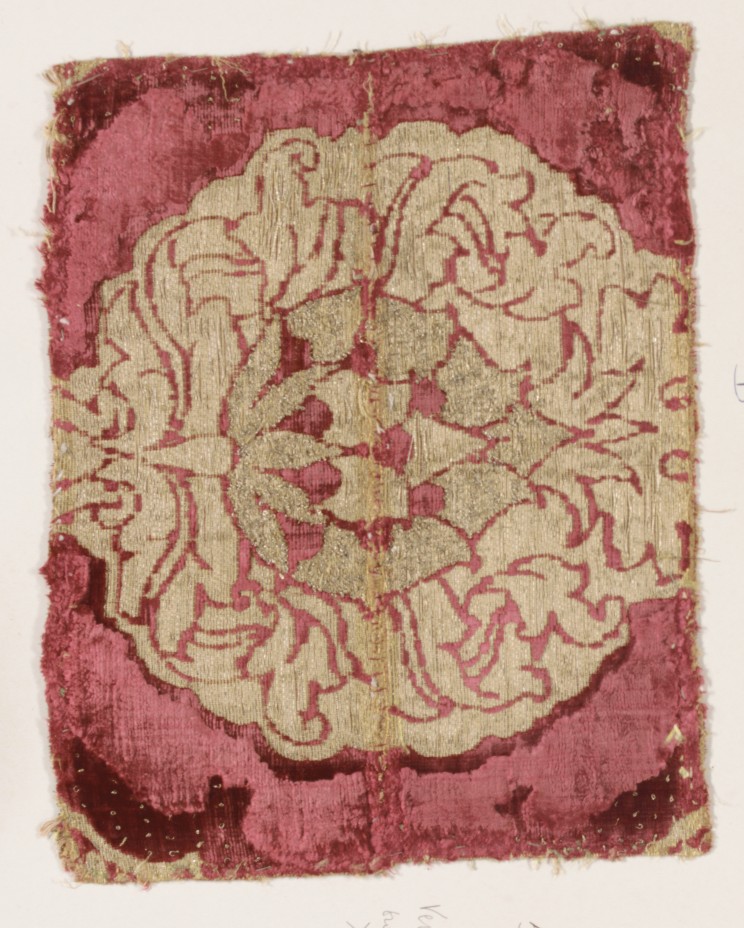
Deconstructing the Whole: A Couture Analysis of 'Fragment'
In the rarefied atmosphere of haute couture, where the narrative of a complete, flawless garment often reigns supreme, Katherine Fashion Lab presents a radical proposition: the 'Fragment' as a complete aesthetic and philosophical statement. This standalone study, rooted in a global heritage yet fiercely contemporary, is not a garment in decline but a concept in deliberate, exquisite arrest. Utilizing the foundational luxury of silk and the structural intrusion of metal thread, 'Fragment' challenges the very ontology of the couture object, asking not what is worn, but what is remembered, what is lost, and what endures.
The Philosophy of the Incomplete: Heritage as a Palimpsest
The origin point of "Global Heritage" is crucial; it is not a singular, monolithic history but a layered, often fragmented collective memory. Katherine Fashion Lab approaches heritage not as a static archive to be replicated, but as a palimpsest—a surface where traces of multiple narratives coexist, overlap, and erode. A 'Fragment' inherently suggests a former whole, yet its power lies in its autonomy. It invites the viewer to reconstruct the imagined original—a Mughal *zardozi* tunic, a Qing Dynasty robe, a Byzantine ecclesiastical vestment—while simultaneously forcing an appreciation of the fragment itself as a relic. This mirrors the modern experience of heritage: we rarely encounter cultures in their entirety but through dispersed artifacts, digitized pieces, and diasporic memories. The couture object thus becomes a metaphor for cultural transmission itself, which is always selective, interpretive, and incomplete.
Material Dialectics: Silk and Metal Thread in Contention
The material selection is a masterclass in conceptual antagonism. Silk, the quintessential symbol of organic luxury, fluidity, and ephemeral beauty, meets metal thread—rigid, luminous, and enduring. This is not a harmonious blend but a calculated discourse between the corporeal and the eternal, the soft and the hard, decay and permanence.
The silk in 'Fragment' likely operates in multiple weights and weaves: fragile georgette or chiffon representing the most vulnerable, fleeting aspects of tradition, juxtaposed with substantial dupioni or shantung, suggesting structural foundations that withstand time. Its treatment is paramount—perhaps torn with precise intention, burned edges sealed to halt further unraveling, or layered to create a stratigraphy of color and texture. The silk carries the memory of the body, of drape and movement, even in its static, fragmented form.
The metal thread, however, is the agent of both construction and deconstruction. It does not merely embroider; it sutures, braces, and maps. It might trace the brutal, beautiful path of a tear, acting as a metallic scar that reinforces weakness. It could create a rigid, exoskeletal framework over a collapsing silk form, holding the fragment in a specific, arrested gesture. Alternatively, it may exist as a disconnected, gleaming grid overlaying the textile, a ghost of the garment's missing architecture. The metal thread is the archive's filing system, the curator's hand, imposing order and legibility upon the fragile evidence of the past.
Form and Context: The Standalone Study as Ultimate Statement
The designation "Standalone study" liberates 'Fragment' from the utilitarian demands of wearability. It is couture in its purest, most experimental sense: an investigative prototype for ideas, not a product for a client. This context allows for extreme formal experimentation. The fragment could be a magnified sleeve cuff, dense with corroded metal embroidery, detached from its arm. It might be the bodice section of a gown, its boning replaced by a cage of fine silver wire, the silk within crumbling. It could be a sheer panel, a "window" into a garment's history, patched and stabilized with golden threads.
This standalone nature shifts the viewer's relationship to the object. We are not assessing fit or social function; we are conducting an archaeological analysis. The frayed edges become sites of narrative. The density of metalwork forms a cartography of stress points—where did the original garment bear weight, experience tension, or suffer damage? The fragment is a forensic exhibit, and its presentation—perhaps mounted on a clear acrylic form or pinned in a shadow box—further emphasizes its status as a specimen of cultural and artistic inquiry.
Cultural Implications: Redefining Value in the Couture Ecosystem
Katherine Fashion Lab's 'Fragment' operates as a potent critique within the luxury landscape. In an industry obsessed with novelty and completion, it proposes that profound value resides in contemplation, decay, and intellectual resonance. It questions the relentless pace of fashion by creating an object that demands slow, meticulous observation. It challenges the cult of perfection by finding sublime beauty in the interrupted, the damaged, and the partial.
Furthermore, by sourcing its inspiration from a global—not exclusively Western—heritage, the project engages in a sophisticated dialogue about cultural appropriation versus appreciation. The fragment, by its nature, refuses facile exoticism. It does not offer a wearable "costume" of another culture but a meditative, abstracted study on the very process of cultural fragmentation and reinterpretation. It acknowledges that the designer, like any contemporary individual, engages with global traditions through a lens of mediation, distance, and personal synthesis.
Ultimately, 'Fragment' is a landmark study in conceptual couture. It leverages the unparalleled craftsmanship of the atelier—in manipulating silk, in engineering with metal thread—to serve a profound idea. It demonstrates that the future of haute couture may not lie in more elaborate wholes, but in the courage to present the exquisite, resonant piece, inviting us to complete the story with our own imagination, heritage, and understanding of what endures when the whole has faded away. It is a testament to the power of the part, and a redefinition of luxury as the luxury of meaning.