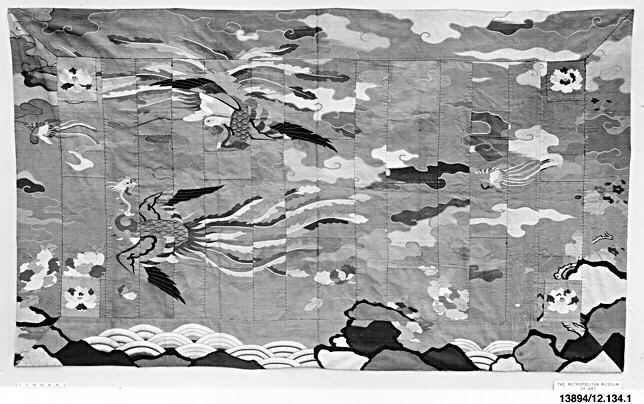
Deconstructing the Divine: A Sartorial Analysis of the Japanese Priest's Robe
Within the curated archives of Katherine Fashion Lab, certain garments transcend their primary function to become profound case studies in materiality, symbolism, and cultural semiotics. The Japanese priest's robe, or kesa, is one such artifact. Originating from the monastic traditions of Buddhism and meticulously crafted from sumptuous silk and metallic thread, the kesa presents a formidable subject for a standalone couture analysis. It is a garment that exists at the nexus of sacred duty and exquisite artistry, where every stitch, fold, and hue is encoded with doctrinal meaning, transforming the wearer into a living canvas of cosmological principles. This analysis will deconstruct the kesa not merely as religious vestment but as a masterclass in intentional design, where austerity and opulence engage in a deliberate, meaningful dialogue.
The Architectural Foundation: Pattern, Piecing, and the Philosophy of Rag
The most immediately striking aspect of the kesa’s design is its architectural construction. Unlike Western tailored garments shaped to the body's contours, the kesa is a rectangular mantle, a structured field draped over the shoulders. This form directly references the historical Buddha’s own humble patched robe, assembled from discarded cloth. The kesa’s surface is therefore meticulously pieced together from a patchwork of smaller rectangular fields, a technique known as taken. This is not an aesthetic choice born of scarcity, but a doctrinal one performed in luxury. The piecing symbolizes the renunciation of worldly attachment and the Buddhist concept of impermanence (mujō). However, in a supreme couture paradox, these "rags" are often the finest silks, and the "patches" are assembled with geometric precision that would rival the most avant-garde structural designer. The seams themselves become sacred lines, a grid mapping spiritual discipline onto physical form. The Lab examines this as a foundational principle: couture can articulate profound conceptual narratives through the very architecture of its construction, where seams are sentences and the pattern layout is a sacred text.
A Symphony of Silk and Light: Materiality as Metaphor
The prescribed use of silk and metallic thread elevates the kesa from simple uniform to a tactile and visual manifesto. Silk, in the Japanese context, has long been associated with purity, prestige, and a certain spiritual luminosity. Its selection for the kesa signifies the high honor of the priestly office and the radiant clarity of the dharma. The material’s inherent sheen interacts dynamically with light, creating a subtle aura around the wearer during ritual movement—a calculated sartorial halo effect.
The incorporation of metallic thread, often gold or silver, introduces another layer of symbolic and visual complexity. This thread is typically employed in intricate embroidery depicting Buddhist icons (hōō phoenixes, lotus blossoms, celestial beings) or in weaving the delicate, grid-like "rice-field" pattern that often forms the kesa’s ground. These elements serve a dual purpose. Visually, they catch and refract light with every minute shift, making the garment appear alive and transcendent. Symbolically, they represent the inseparable unity of the mundane world (the silk field) and the enlightened truth (the radiant golden pattern). From a technical couture perspective, the application demands extraordinary skill: aligning heavy metallic embroidery on fine silk without puckering, ensuring durability for a garment meant to last generations. The kesa thus demonstrates that luxury materials are not merely decorative but are essential, active carriers of narrative and spiritual function.
The Chromatic Code: Color Theory in the Spiritual Spectrum
Color in the kesa is never arbitrary; it operates as a strict hierarchical and symbolic code. Specific hues denote different schools of Buddhism, ranks within the clergy, and particular ceremonial occasions. The deep, resonant purples (murasaki) and scarlets might denote high rank or esoteric practices, while subdued saffrons, moss greens, and iron blues are worn for daily observance. This chromatic vocabulary transforms the priestly community into a living, moving spectrum of doctrinal alignment and liturgical time. The Lab analyzes this as a pinnacle of intentional dressing: color is deployed not for trend but as a direct, legible signifier of identity, function, and moment. The dyeing processes themselves, using traditional natural dyes, result in complex, layered hues that possess a depth and subtlety mass-produced color cannot replicate, further emphasizing the garment's authenticity and connection to ancient craft.
Draping the Dharma: The Kinetic Relationship of Body and Garment
The final, critical component of this analysis is the kesa in motion—its performative aspect. The robe is not static; it is activated by the prescribed postures of ritual: bowing, kneeling, chanting, and walking meditation. Its rectangular, weighted form responds to these movements with a specific gravity and flow. The drape creates formal, sculptural folds that emphasize verticality and solemnity. The slight rustle of silk and the intermittent gleam of metal thread become part of the sensory liturgy. This kinetic relationship underscores that the kesa is an instrument for practice, designed to influence and accommodate the body's sacred actions. It teaches a couture principle often overlooked: the ultimate test of a garment's design is its behavior in motion, in the context of its intended performance.
Conclusion: A Legacy of Intentionality
For Katherine Fashion Lab, the Japanese priest's robe stands as a monumental case study in pure, uncompromised intentionality. Every facet—from the geometric patchwork construction and the luxurious material dialectic of silk and metal, to the coded chromatic language and the kinetic drape—is in service of a higher narrative. It demonstrates that the most powerful couture is that which successfully integrates profound conceptual depth with masterful technical execution. The kesa does not follow fashion; it articulates timeless values of renunciation, honor, and cosmic order through the medium of cloth. In an industry often preoccupied with the new, this ancient garment reminds us that true luxury lies in meaning, craftsmanship, and wearing a purpose far greater than oneself. It is, in essence, the ultimate wearable philosophy.