Executive Summary: The Cylindrical Form as a Vessel of Symbolic Capital
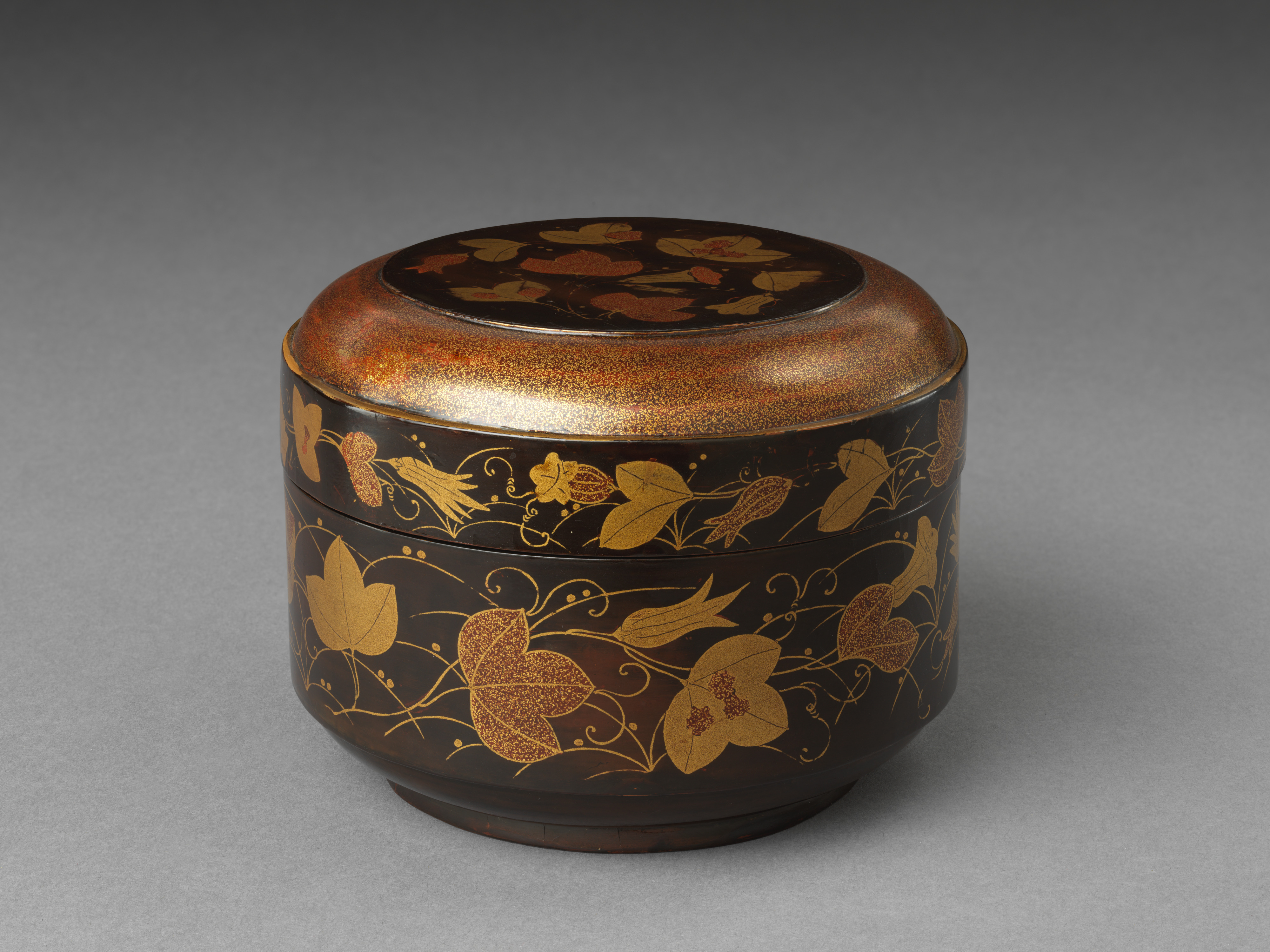
This strategic standalone research paper, prepared for Katherine Fashion Lab, analyzes a Japanese cylindrical food box (jūbako) decorated with morning glories in gold hiramaki-e with nashiji on black lacquer. Moving beyond superficial aesthetic appreciation, this analysis deconstructs the object as a dense nexus of symbolic power, historical adornment, and spiritual meaning. Our investigation reveals a core heritage narrative of ephemeral beauty elevated to permanent luxury, a concept with profound resonance for the Lab's 2026 high-end luxury strategy. The artifact serves not merely as an inspiration but as a strategic blueprint for embedding profound cultural intelligence into contemporary luxury design, enabling brand differentiation at the apex of the market.
Deconstructing the Artifact: A Convergence of Craft and Cosmos
The object in question is a masterpiece of Japanese urushi (lacquer) artistry, a medium historically reserved for the elite and the sacred. The cylindrical form of the jūbako is inherently symbolic. Unlike angular shapes, the cylinder represents continuity, eternity, and containment—a vessel meant to preserve and protect something of value. The black lacquer ground is not a void but a representation of deep space, the primordial void from which creation emerges. Upon this ground, the decoration is executed in hiramaki-e (flat sprinkled picture), a technique requiring meticulous skill to create a low-relief design in precious metal powder. The addition of nashiji (pear-skin ground), with its sparkling gold flakes, evokes the texture of luxury and the celestial. This combination of form and medium immediately establishes the object's status: it is a protective capsule for both physical sustenance and spiritual symbolism.
The Morning Glory: Symbolic Power and Ephemeral Elegance
The choice of the morning glory (asagao) is the cornerstone of the object's narrative power. In Japanese cultural symbolism, the morning glory is a potent kigo (seasonal word) for summer, embodying a refined aesthetic of transience. Its life cycle—a spectacular, delicate bloom at dawn that withers by midday—is a classic metaphor for mono no aware, the poignant awareness of the impermanence of all things. This appreciation of fleeting beauty is a cornerstone of Japanese artistic sensibility. However, the artisan's intervention here is critical: by rendering the ephemeral flower in immutable gold on a timeless lacquer ground, they perform an act of alchemy. They capture a momentary wonder and confer upon it permanence, transforming a symbol of transience into a testament to enduring value. This paradoxical fusion is the essence of high luxury: capturing a rare, fleeting moment or feeling and crystallizing it into a tangible, lasting object of desire.
Historical Adornment and the Ritual of Presentation
This jūbako belongs to the tradition of historical adornment that extends beyond the human body to encompass the rituals of daily life. In the context of the Japanese aristocracy and wealthy merchant class, such containers were used for kaiseki meals or during special occasions like cherry blossom viewings. The adornment of the box itself elevated the act of dining into a multi-sensory, aesthetic ceremony. The food within became an extension of the artistry without. This reflects a holistic philosophy of luxury where beauty is not compartmentalized but is an integrated experience. For Katherine Fashion Lab, this underscores a strategic opportunity: to design luxury that adorns not just the individual but the rituals and spaces of their life. The artifact teaches us that true luxury is contextual and experiential, transforming mundane acts into curated moments of cultural and aesthetic significance.
Strategic Translation: A 2026 Luxury Brand Framework
The hermeneutic analysis of this artifact provides a robust, non-derivative framework for Katherine Fashion Lab's 2026 high-end strategy. The core proposition is the "Permanent Ephemeral"—a brand ethos that identifies and immortalizes moments of rare, natural beauty or profound personal significance through exceptional craftsmanship.
Pillar 1: Material Alchemy & Technical Poetry
Directly inspired by the hiramaki-e and nashiji techniques, the strategy must prioritize material innovation that tells a story. This moves beyond using precious materials to manipulating them in ways that embody a narrative. Imagine textiles woven with threads that capture the fleeting iridescence of a morning glory's dew, or leather treated with lacquer techniques to achieve a unique, depth-filled patina. Each material process should be a "technical poetry" that can be communicated as part of the product's heritage, mirroring the layered craftsmanship of the lacquer master.
Pillar 2: Symbolic Intelligence & Cultural Depth
Moving past logo-centric branding, the 2026 strategy must embed narrative symbolism into each collection. The morning glory's story is a template. Future collections could be built around other culturally rich, nuanced symbols of transience and resilience—perhaps the moon (waxing and waning), flowing water, or specific botanicals with layered meanings from various cultures. This requires deep, respectful research partnerships to avoid appropriation, ensuring the symbolism is leveraged with integrity and intelligence, appealing to the connoisseur's desire for meaning.
Pillar 3: The Adorned Experience & Ritual Objects
Expanding the definition of "adornment" from apparel to curated experience. The cylindrical box was part of a ritual. Katherine Fashion Lab should consider limited, ultra-high-end offerings that encompass ritual objects: a travel case for a specific purpose, a bespoke set for a personal ceremony, or home objects that complete the aesthetic ecosystem of the client. This positions the brand as a curator of a holistic luxury lifestyle, building deeper client engagement and moving into adjacent high-margin categories.
Conclusion: From Heritage Artifact to Future Legacy
The Japanese cylindrical food box is far more than a beautiful historical object. For Katherine Fashion Lab, it is a strategic compass. It demonstrates how the most powerful luxury is forged at the intersection of profound cultural symbolism (the morning glory's ephemerality), masterful historical adornment (lacquer as experiential art), and spiritual meaning (the elevation of the mundane). The 2026 strategy, built on the pillars of Material Alchemy, Symbolic Intelligence, and the Adorned Experience, directly translates these principles into a contemporary context. By championing the "Permanent Ephemeral," the Lab can create a distinctive brand legacy that, like the hiramaki-e morning glory, captures fleeting beauty and renders it timeless—commanding not just a market price, but a profound and lasting cultural value.