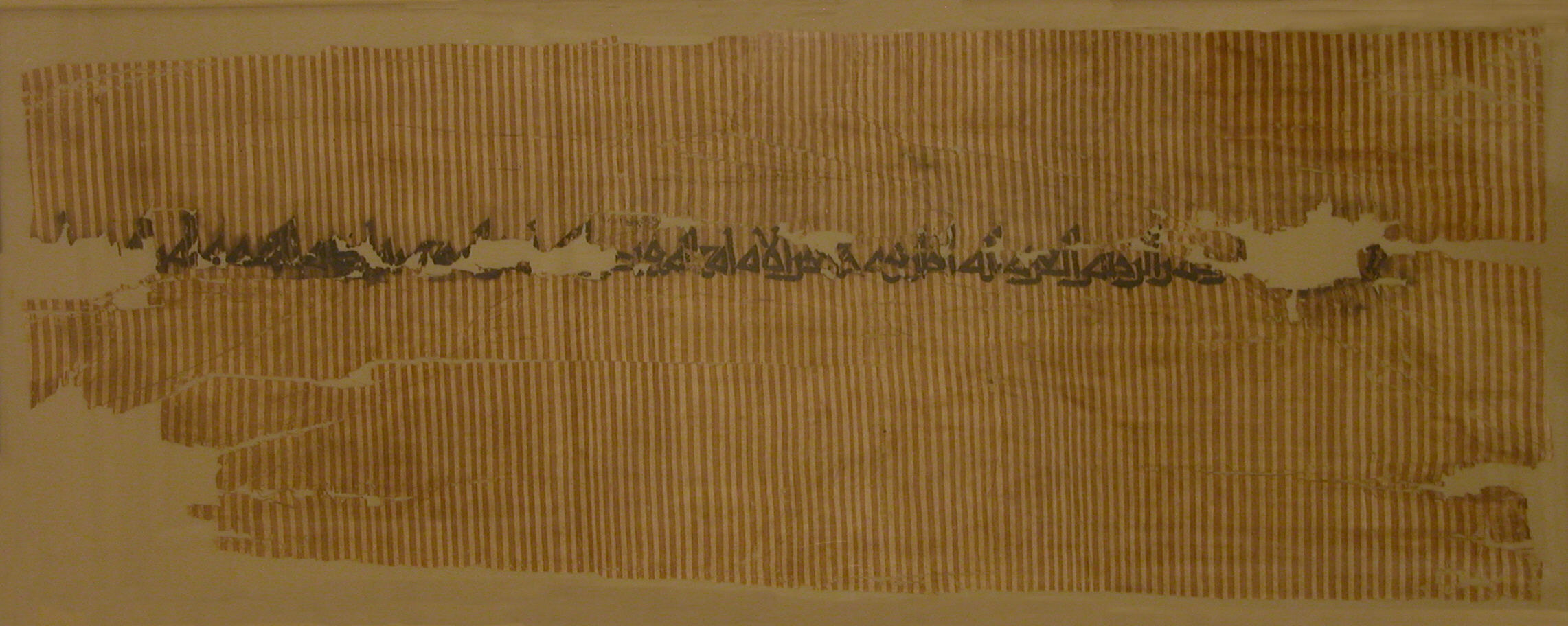
Deconstructing the Tiraz: A Fragment as a Portal to Global Power Dynamics
Within the curated silence of the Katherine Fashion Lab, a singular textile fragment commands profound attention. This is not merely a remnant of silk but a Tiraz fragment, a distilled embodiment of medieval political theology, economic might, and cross-continental aesthetic dialogue. Originating from the Islamic caliphates, with this specific fragment likely hailing from the Fatimid period (10th-12th centuries CE), Tiraz represents a sophisticated fusion of bureaucracy and beauty. Our analysis approaches this artifact not as a relic, but as a standalone case study in the semiotics of power dressing long before the term was coined. In its delicate weave and embroidered proclamation, we find the complete narrative apparatus of an empire—a story of allegiance, identity, and the conscious construction of legacy through cloth.
Materiality as Manifesto: Silk and the Economics of Prestige
The very foundation of this fragment—silk in a plain weave—is a primary signifier of its elite status. In the medieval period, silk production was a closely guarded secret, a luxury commodity that traveled the arduous Silk Road, accruing value with each mile. Its use in Tiraz workshops (also called *tiraz*, highlighting the institution itself) was a deliberate act of material proclamation. The plain weave ground is deceptively simple; its purpose is to serve as a pristine, luminous canvas. This was not cloth designed for volume or ease, but for maximum legibility and symbolic weight. The choice of silk speaks to a political economy that understood raw material as a direct extension of sovereign power: control over the means of luxurious production equated to the ability to confer honor and manifest divine favor on earth. The fabric’s durability, allowing it to survive centuries, ironically underscores its intended ephemerality as a ceremonial gift, making its present state a powerful contradiction.
The Inscribed Body: Calligraphy as the Ultimate Branding
The fragment’s soul lies in its embroidered inscription, typically executed in silk thread, often in a contrasting color like gold or deep blue. This is where the textile transcends ornamentation and becomes a wearable document. Tiraz bands commonly contained the ruler’s name, titles, blessings, and the location and date of manufacture (the *dar al-tiraz*). This fragment, though partial, invites forensic scrutiny. Each stylized letter, often in angular Kufic script, is a deliberate stitch of propaganda. The inscription did not whisper; it declared. Worn on the upper arm, turban, or as a border on a robe, it aligned the wearer’s physical body with the body politic. It was a non-negotiable contract of loyalty, visually integrating the elite into the administrative and spiritual hierarchy. In a largely illiterate society, the aesthetic of the script—its rhythm, spacing, and geometric potency—communicated authority just as effectively as the words themselves. This is pre-modern corporate branding at its most potent, where the "logo" is a sacred benediction from the caliph himself.
Contextual Autonomy: The Fragment as a Complete Universe
Analyzing this artifact as a standalone study is a deliberate curatorial strategy. Liberated from the speculative reconstruction of a full garment, the fragment forces a focus on its intrinsic compositional logic. We examine the density of stitches per centimeter—a metric of artisanal investment and workshop standard. We deconstruct the color palette, where each dye source (like kermes for crimson or indigo for blue) maps a trade route. The fragment’s frayed edges are not a deficit but a data point, revealing weave structure and wear patterns. This micro-view reveals the macro. The very fact that it is a fragment, likely cut from a larger ceremonial garment, hints at practices of reuse, inheritance, or even diplomatic regifting. It underscores that the value was not solely in the garment's function but in the authority embedded in the inscribed band itself. As a standalone piece, it becomes a lens through which we can interrogate systems of patronage, the mobility of artisans across caliphates, and the universal human impulse to marshal beauty in the service of power.
Heritage and Hyper-Localism: The Tiraz in Contemporary Dialogue
The legacy of the Tiraz fragment resonates with striking urgency in today’s fashion landscape. Its principles—inscription, limited production, and material narrative—are the cornerstones of modern luxury and couture. The monogram, the designer label painstakingly woven into a waistband, the commemorative capsule collection: all are direct descendants of the Tiraz ethos. More profoundly, it challenges contemporary discussions on heritage and appropriation. This was a truly globalized object centuries before globalization: its silk possibly from China, its technique from Persian or Egyptian workshops, its script an Arab art form, worn across a empire spanning continents. It models a syncretic, yet distinctly localized, language of prestige. For today’s designers, the Tiraz does not offer a pattern to copy, but a paradigm to consider: how can clothing carry complex, coded messages of identity and belonging? How can craftsmanship itself become a form of inscription?
In conclusion, the Tiraz textile fragment in the Katherine Fashion Lab is a masterclass in strategic communication through material culture. It demonstrates that the most powerful fashion is never just about aesthetics; it is about the deliberate encoding of value, authority, and community. From its strategic use of luxury silk to its politically charged embroidery, every element was optimized to sustain a worldview. As a fragment, it is ironically whole—a complete testament to the enduring truth that what we wear is never just cloth, but a carefully negotiated statement placed at the intersection of the body, the state, and history itself. It reminds us that in the haute ateliers of the past, as in those of the present, the needle could be as mighty as the sword.