Executive Summary: The Miniature Dress as a Strategic Heritage Asset
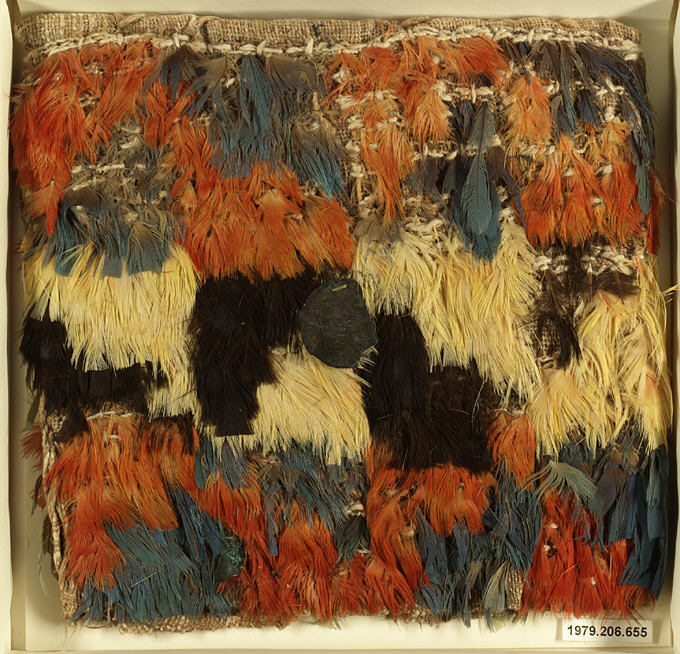
This strategic standalone research paper, prepared for the leadership of Katherine Fashion Lab, presents a heritage analysis of a singular artifact: a miniature dress originating from the Ica culture of pre-Columbian Peru. Crafted from cotton and feathers, this object transcends its modest scale to embody a dense nexus of symbolic power, historical adornment, and spiritual meaning. Our analysis deconstructs these layers not as mere historical footnotes, but as actionable, proprietary intellectual capital. The objective is to leverage this profound cultural coding to architect a disruptive 2026 high-end luxury strategy, positioning Katherine Fashion Lab not as a follower of trends, but as an arbiter of meaning in an increasingly values-driven luxury market.
Deconstructing the Artifact: Ica Miniature Dress in Cultural Context
The Ica culture, flourishing on the southern coast of Peru from approximately 900 to 1500 CE, operated within a sophisticated cosmological framework where the material and spiritual worlds were inextricably linked. Adornment was never solely decorative; it was a language of status, identity, and connection to the divine. Within this context, the miniature dress—an object too small for practical wear—emerges as a potent ritual item, likely deposited as a grave offering or used in ceremonial practices.
Material Semiotics: Cotton and Feathers as Sacred Textiles
The materiality of the dress is its first layer of communication. Cotton, cultivated in the fertile coastal valleys, represented life, sustenance, and the earthly realm. Its transformation into finely woven cloth signified human ingenuity and cultural order. Feathers, by contrast, were commodities of immense luxury and spiritual potency, often traded over vast distances from the Amazonian rainforest. In Andean cosmology, birds were mediators between the earthly world (Kay Pacha) and the upper world (Hanan Pacha). The iridescent feathers of species like the macaw or quetzal were seen as captured light, embodying the essence of celestial beings, ancestors, and divine authority. Their integration into the cotton matrix created a sacred hybrid, a literal and symbolic fusion of the terrestrial and the celestial.
Symbolic Power and the Miniature Paradigm
The power of the miniature lies in its conceptual density. A full-scale garment protects the body; a miniature garment protects, represents, or accompanies the essence of a being—be it a deity, an ancestor, or the soul of the deceased. It functions as a vessel, a concentrate of identity and intention. For the Ica, such an object would ensure safe passage to the afterlife, denote elite status in death as in life, or serve as a conduit for communication with the supernatural. Its small scale demands intimate engagement and reverence, amplifying its symbolic charge rather than diminishing it. This inversion of the logic of scale—where smaller equates to greater spiritual concentration—is a critical insight for luxury strategy, where exclusivity and narrative depth often outweigh mere physical presence.
Strategic Translation: From Archaeological Artifact to 2026 Luxury Code
For Katherine Fashion Lab, this artifact is not a relic but a renewable resource. The 2026 luxury consumer, particularly the high-net-worth individual and the culturally intelligent collector, seeks authenticity, legacy, and profound narrative. They invest in pieces that serve as talismans of identity and belief. Our strategy must translate the Ica miniature’s inherent codes into a contemporary luxury language.
Pillar 1: Adornment as Spiritual Interface
Move beyond "ornamentation" to curate “Wearable Sanctity.” This pillar develops collections where each piece is conceived as a modern-day miniature—a concentrate of meaning. A cocktail dress is not merely silk; it is a canvas where intricate embroidery, inspired by Ica textile patterns, is interwoven with ethically sourced, laser-cut feather motifs (or innovative biomimetic alternatives) that catch light like sacred iridescence. The narrative is not "inspiration," but continuation. Each piece is accompanied by a "Codex," a digital and physical dossier detailing the symbolic provenance of its patterns and materials, transforming the client into a custodian of a living heritage.
Pillar 2: The Scale of Intimacy and Exclusive Ritual
Leverage the power of the miniature through ultra-exclusive, made-to-order offerings. Introduce the “Essence Collection”: unique, miniature-scale art objects—perhaps intricate, feather-adorned garment sculptures housed in ritualistic packaging—that are not for wear but for possession. These act as keys to a higher tier of membership, granting access to private commissioning rituals. Here, the client participates in a modern adaptation of the ceremonial process, selecting symbolic materials and patterns for a full-scale garment, thereby embedding their own narrative within the house’s ancient code. This creates unparalleled emotional equity and transforms the transaction into a rite of passage.
Pillar 3: Material Alchemy and Sustainable Transcendence
The cotton-feather duality must be re-engineered through the lens of cutting-edge sustainability and innovation, a non-negotiable for 2026 luxury. Partner with material science labs to develop “Celestial Textiles”—fabrics that mimic the optical properties of feathers through sustainable prismatic films or lab-grown iridescent materials. Source organic, heritage-grade cottons from Peruvian cooperatives, establishing a direct, regenerative economic link to the artifact’s origin. This pillar positions Katherine Fashion Lab as both a guardian of the past and an architect of the future, where luxury is defined by ethical provenance and technological poetry.
Conclusion: Positioning as a House of Meaning
The Ica miniature dress provides Katherine Fashion Lab with a foundational mythos of rare depth and legitimacy. By strategically decoding its elements—the spiritual symbolism of feathers, the earthly purity of cotton, the potent paradigm of the miniature—we can construct a luxury positioning that is unassailably unique. Our 2026 strategy must eschew fleeting trends to build a House of Meaning. We will not sell clothing; we will offer curated conduits to history, identity, and transcendence. In a market saturated with logos, we will provide legible, profound symbology. This research asserts that the most forward-looking strategy is one deeply rooted in a singular, powerful past. The miniature dress, in its silent eloquence, provides the blueprint.