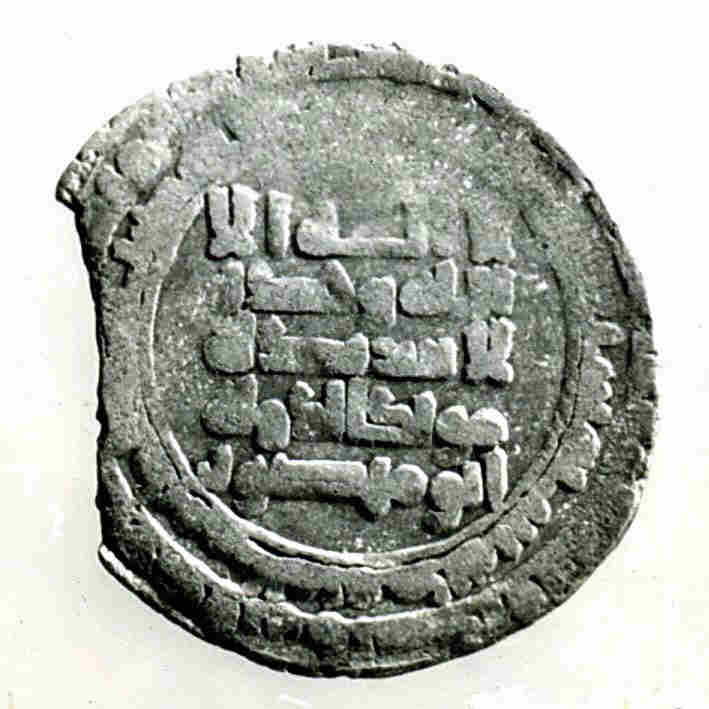
The Coin as Couture: A Study in Silver and Global Heritage at Katherine Fashion Lab
In the rarefied world of haute couture, where fabric is often the primary medium of expression, Katherine Fashion Lab has introduced a paradigm-shifting proposition: the coin. Not as an embellishment or an afterthought, but as a central, structural, and narrative element. This standalone study examines the lab’s recent collection, where the humble coin—forged from silver and steeped in global heritage—is elevated to a primary couture material. The result is a provocative dialogue between monetary value, cultural memory, and wearable art, challenging our very definition of luxury.
Deconstructing the Material: Silver’s Dual Legacy
Silver, as a metal, carries a profound duality. Historically, it has been both a medium of exchange and a symbol of status, purity, and protection. In many cultures, from the Ottoman Empire to the Qing Dynasty, silver coins were not merely currency but talismans—objects imbued with spiritual significance, often sewn onto garments to ward off evil or signify wealth. Katherine Fashion Lab harnesses this dual legacy, selecting silver not for its monetary value alone, but for its narrative resonance. The material’s inherent luster, malleability, and resistance to tarnish make it an ideal candidate for couture construction, yet its weight and rigidity present formidable technical challenges.
The lab’s design team has approached these challenges with an engineer’s precision and an artist’s sensitivity. Each coin is sourced from diverse global traditions—Chinese yuan, Indian rupees, Moroccan dirhams, and ancient Roman denarii—creating a palimpsest of human commerce and craftsmanship. The silver’s cool, reflective surface catches light in ways that mimic liquid metal, while its patina tells stories of age and circulation. This is not a sterile, polished luxury; it is a living archive of touch, trade, and time.
Technical Mastery: Engineering the Coin as Fabric
The transition from coin to couture requires a radical rethinking of garment construction. Unlike traditional textiles, silver coins cannot be draped, cut, or sewn with standard techniques. Katherine Fashion Lab has pioneered a method of interlocking and weaving coins using fine silver wire and custom-fabricated clasps, creating a flexible, scale-like armor that moves with the body. This technique, which the lab terms “numismatic weaving,” involves drilling micro-holes into each coin’s edge, then linking them in patterns that echo chainmail, fish scales, or geometric mosaics.
The structural integrity of these garments is paramount. A single dress may incorporate over 2,000 coins, each meticulously placed to balance weight, flexibility, and visual rhythm. The lab’s atelier has developed a proprietary system of tension-distributing underlays made from silk organza and micro-mesh, which support the coin matrix without compromising its aesthetic. The result is a garment that feels surprisingly light—a testament to the engineers’ understanding of load distribution—yet retains a commanding presence. The sound of coins shifting against one another creates a subtle, percussive whisper, adding an auditory dimension to the visual experience.
Global Heritage: A Cartography of Value
Each coin in the collection is a node in a vast network of human history. The lab’s curatorial team has meticulously documented the provenance of every piece, from 19th-century silver thalers used in the Silk Road trade to modern commemorative coins from indigenous communities. This is not a random assemblage; it is a deliberate cartography of value, mapping how different cultures have inscribed meaning onto metal.
Consider the use of the Moroccan dirham, minted with intricate geometric patterns that reflect Islamic artistry. In the lab’s interpretation, these coins are arranged in concentric circles around the neckline, evoking the celestial maps used by ancient navigators. Conversely, silver rupees from British colonial India are woven into a structured bodice, their faded engravings of Queen Victoria serving as a quiet commentary on empire and exchange. The lab does not shy away from the political dimensions of these objects. Instead, it invites the wearer to engage with the complex legacies of trade, conquest, and cultural exchange that coins represent.
This global heritage is further emphasized through the collection’s color palette—or rather, its lack thereof. Silver’s monochromatic nature forces the eye to focus on texture, relief, and form. The lab has introduced subtle patinas through controlled oxidation, creating gradients from bright argent to deep charcoal. These variations mimic the wear and tear of circulation, reminding us that every coin has passed through countless hands, each leaving an invisible mark.
Contextualizing the Standalone Study: Couture as Critical Discourse
This standalone study is significant not merely for its technical innovation but for its conceptual audacity. In an era where luxury fashion often defaults to digital prints and synthetic materials, Katherine Fashion Lab’s use of silver coins represents a return to tangible, historical materiality. It challenges the industry’s obsession with novelty by demonstrating that ancient objects can be recontextualized into avant-garde forms.
Moreover, the collection serves as a critique of modern monetary systems. By transforming currency—a symbol of abstract value—into wearable art, the lab questions the very nature of worth. Is a coin more valuable as a medium of exchange or as a component of a garment that may never be sold? The answer lies in the tension between utility and aesthetics, a tension that the lab exploits to create pieces that are both functional and philosophical.
The standalone format of this study is deliberate. By presenting the coin collection without accompanying textiles or seasonal themes, Katherine Fashion Lab forces the viewer to confront the material on its own terms. There is no distraction of color, pattern, or silhouette; the coin is the sole protagonist. This minimalist approach amplifies the narrative weight of each piece, allowing the global heritage of silver to speak directly to the audience.
The Future of Numismatic Couture
As this study concludes, one cannot help but consider the implications for the future of couture. Katherine Fashion Lab has demonstrated that the coin is not a relic of the past but a viable, dynamic material for the future. The techniques developed here—numismatic weaving, patina control, structural underlay design—could be adapted to other metallic currencies, from copper to gold, or even to non-currency objects like tokens or medallions.
Yet the true legacy of this work may lie in its redefinition of luxury. In a world saturated with fast fashion and disposable trends, the coin collection offers a counter-narrative: one of permanence, history, and intentionality. Each garment is a repository of global memory, a wearable museum that invites the wearer to participate in a centuries-old story of human exchange. For the discerning collector, this is the ultimate luxury—not just an object of beauty, but a vessel of meaning.
In the end, Katherine Fashion Lab’s coin study is a masterclass in couture as critical practice. It proves that even the most mundane object, when viewed through the lens of heritage and craftsmanship, can become a vehicle for profound artistic expression. The silver coin, once a token of commerce, is reborn as a testament to the enduring power of human creativity.