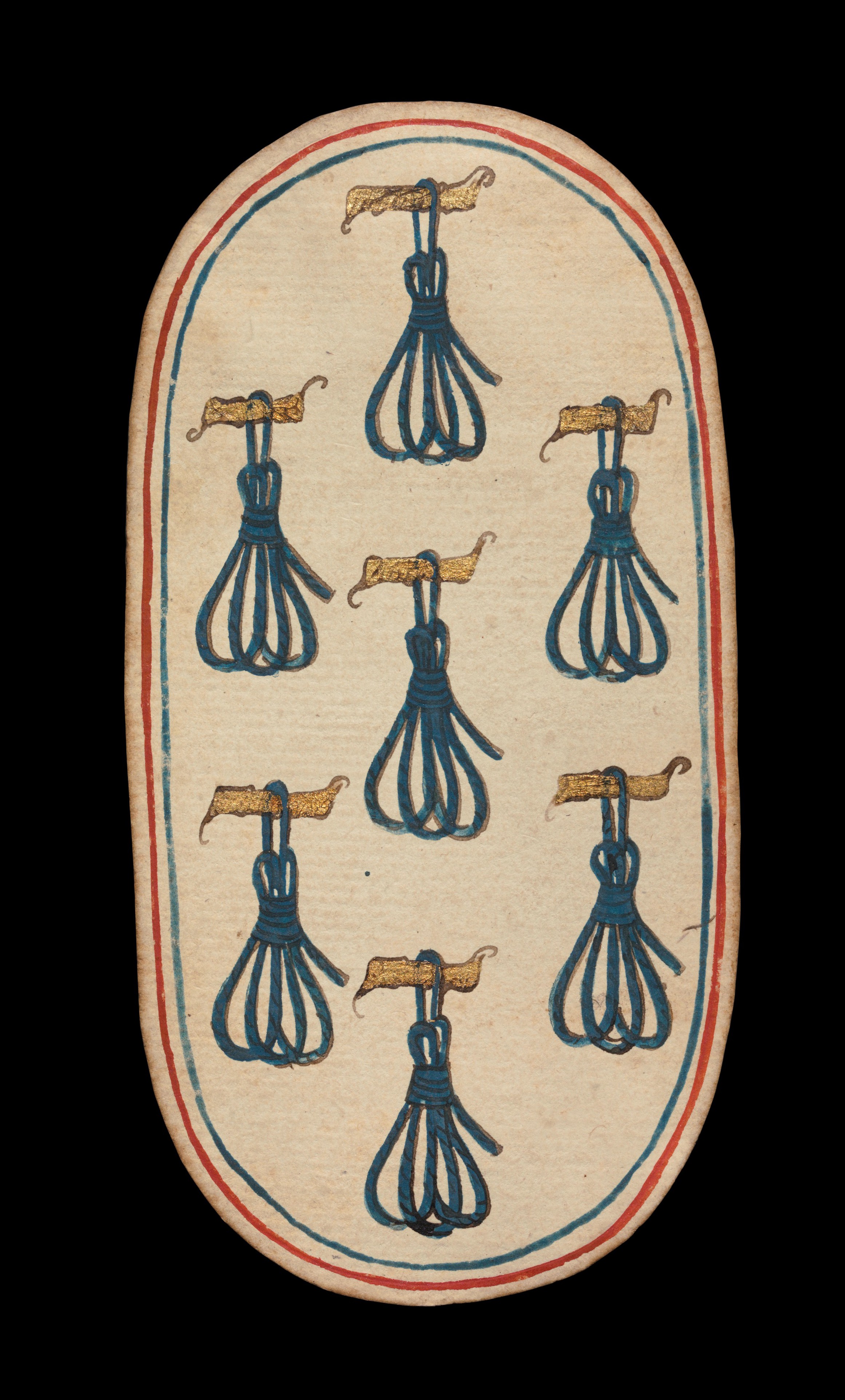
Heritage Analysis: The 7 of Tethers from The Cloisters Playing Cards
This report presents a strategic heritage analysis of the 7 of Tethers, a singular card from the renowned Cloisters Playing Cards, created in the South Netherlandish region circa 1475–1480. The artifact, composed of four layers of pasteboard, pen and ink, opaque paint, glazes, and applied silver and gold, offers a profound lens through which Katherine Fashion Lab can examine symbolic power, historical adornment, and spiritual meaning. This analysis is conducted as a standalone research initiative, with direct implications for a 2026 high-end luxury strategy that prioritizes narrative depth, material authenticity, and cultural resonance.
Symbolic Power: The Numeral and the Tether
The Number Seven in Medieval Numerology
In the late medieval Christian cosmology that shaped the South Netherlandish cultural milieu, the number seven carried immense symbolic weight. It represented the seven virtues (faith, hope, charity, fortitude, justice, temperance, prudence), the seven deadly sins, the seven sacraments, and the seven days of creation. The 7 of Tethers, therefore, occupies a liminal space between divine order and human fallibility. For a luxury brand, this duality offers a powerful narrative: the number seven signifies both completion and moral tension, making it an ideal motif for collections that explore the interplay between perfection and imperfection, restraint and excess.
The Tether as a Symbol of Constraint and Connection
The tether itself—a rope or cord depicted binding an object or figure—is a potent emblem of control, obligation, and spiritual bondage. In the context of the Cloisters deck, tethers often appear in cards associated with labor, penance, or earthly toil. Unlike the more fluid imagery of swords or cups, the tether suggests a fixed, inescapable force. Strategically, this symbolism can be leveraged to communicate themes of commitment, loyalty, and heritage—values that resonate deeply with high-net-worth consumers seeking brands that stand for durability and ethical grounding. The 7 of Tethers, as a visual anchor, invites Katherine Fashion Lab to position itself as a house that honors tradition while navigating the constraints of modernity.
Historical Adornment: Materiality and Craftsmanship
Pasteboard and Precious Metals
The physical construction of the card—four layers of pasteboard, hand-painted with opaque pigments, glazes, and applied silver and gold—speaks to a sophisticated understanding of material hierarchy. In the 15th century, playing cards were not mere gaming tools; they were objects of status, often commissioned by aristocratic households. The use of precious metals on a card of the tether suit, typically associated with the merchant or laboring class, subverts expectations. This juxtaposition of base subject matter with luxurious execution is a strategic lesson for Katherine Fashion Lab. It suggests that adornment can elevate the mundane, transforming everyday objects or symbols into markers of exclusivity. For 2026, consider collections that apply artisanal gold leaf or silver thread to motifs derived from labor or constraint—such as ropes, knots, or chains—recasting them as emblems of refined power.
Pen and Ink: The Art of Precision
The fine pen-and-ink outlines that define the card’s imagery reflect a tradition of meticulous draftsmanship essential to Netherlandish art. This precision is not merely aesthetic; it conveys authority and control. In luxury strategy, the hand-drawn line evokes authenticity and human touch, countering the anonymity of digital production. Katherine Fashion Lab can draw on this by incorporating hand-embroidered or hand-painted details in limited-edition pieces, emphasizing the time and skill required to create each item. The 7 of Tethers thus becomes a case study in how historical precision translates into contemporary desirability.
Spiritual Meaning: Penance and Redemption
The Tether as a Tool of Spiritual Discipline
Within the medieval Christian framework, tethers and cords were often associated with penitential practices, such as the wearing of hair shirts or the use of discipline cords during prayer. The 7 of Tethers may thus represent a stage of spiritual purification—a reminder that earthly bonds are temporary and that suffering precedes redemption. For a luxury brand, this spiritual dimension offers a compelling narrative of transformation. Consumers in 2026 are increasingly drawn to brands that articulate a philosophy of growth, resilience, and inner work. By referencing the 7 of Tethers, Katherine Fashion Lab can craft campaigns that speak to the journey from constraint to liberation, aligning with contemporary wellness and mindfulness trends.
Applied Silver and Gold: Light as Divine Presence
The application of silver and gold to the card’s surface is not merely decorative; it is a theological statement. In medieval art, gold leaf symbolized the divine light of God, while silver often represented the moon, purity, or the Virgin Mary. The presence of these metals on a tether card suggests that even in bondage, the divine is present. For luxury strategy, this offers a powerful metaphor for illumination through adversity. Katherine Fashion Lab can incorporate reflective or luminous materials—such as mother-of-pearl, polished metal, or iridescent fabrics—into designs inspired by the 7 of Tethers, creating pieces that appear to glow from within, suggesting hidden spiritual depth.
Strategic Implications for 2026 High-End Luxury
Narrative-Driven Collections
The 7 of Tethers provides a rich narrative foundation for a collection centered on themes of bond, balance, and breakthrough. Katherine Fashion Lab should consider developing a capsule line titled “The Tether Suite,” featuring garments and accessories that incorporate rope-like textures, knot motifs, and seven-pointed star patterns (a nod to the numeral). Each piece could be accompanied by a card-like booklet explaining the historical and spiritual symbolism, deepening the consumer’s connection to the brand’s heritage narrative.
Material Authenticity as a Luxury Marker
The card’s use of multiple material layers—pasteboard, paint, glaze, metal—underscores the importance of tactile complexity in luxury. For 2026, Katherine Fashion Lab should prioritize multi-sensory experiences: fabrics that combine matte and sheen surfaces, accessories with layered metalwork, and packaging that mimics the card’s layered construction. This approach not only honors the artifact but also differentiates the brand in a market saturated with minimalist digital aesthetics.
Spiritual Positioning for the Conscious Consumer
As high-end consumers increasingly seek meaning beyond status, the spiritual dimension of the 7 of Tethers offers a unique positioning. By framing the collection as an exploration of tethering to what matters—heritage, craft, community, or inner truth—Katherine Fashion Lab can appeal to the values-driven luxury buyer. Campaigns might feature imagery of hands tying or untying cords, set against gilded backdrops, evoking the card’s tension between earthly weight and divine light.
Conclusion
The 7 of Tethers from The Cloisters Playing Cards is far more than a historical curiosity; it is a strategic artifact that encodes symbolic power, artisanal mastery, and spiritual depth. For Katherine Fashion Lab, this card offers a roadmap for creating luxury that is both intellectually rigorous and emotionally resonant. By weaving the tether’s themes of constraint, transformation, and illumination into a 2026 strategy, the brand can establish itself as a curator of meaning, not merely a producer of goods. The result will be a collection that speaks to the soul of the discerning consumer, grounded in the timeless wisdom of the South Netherlandish tradition.