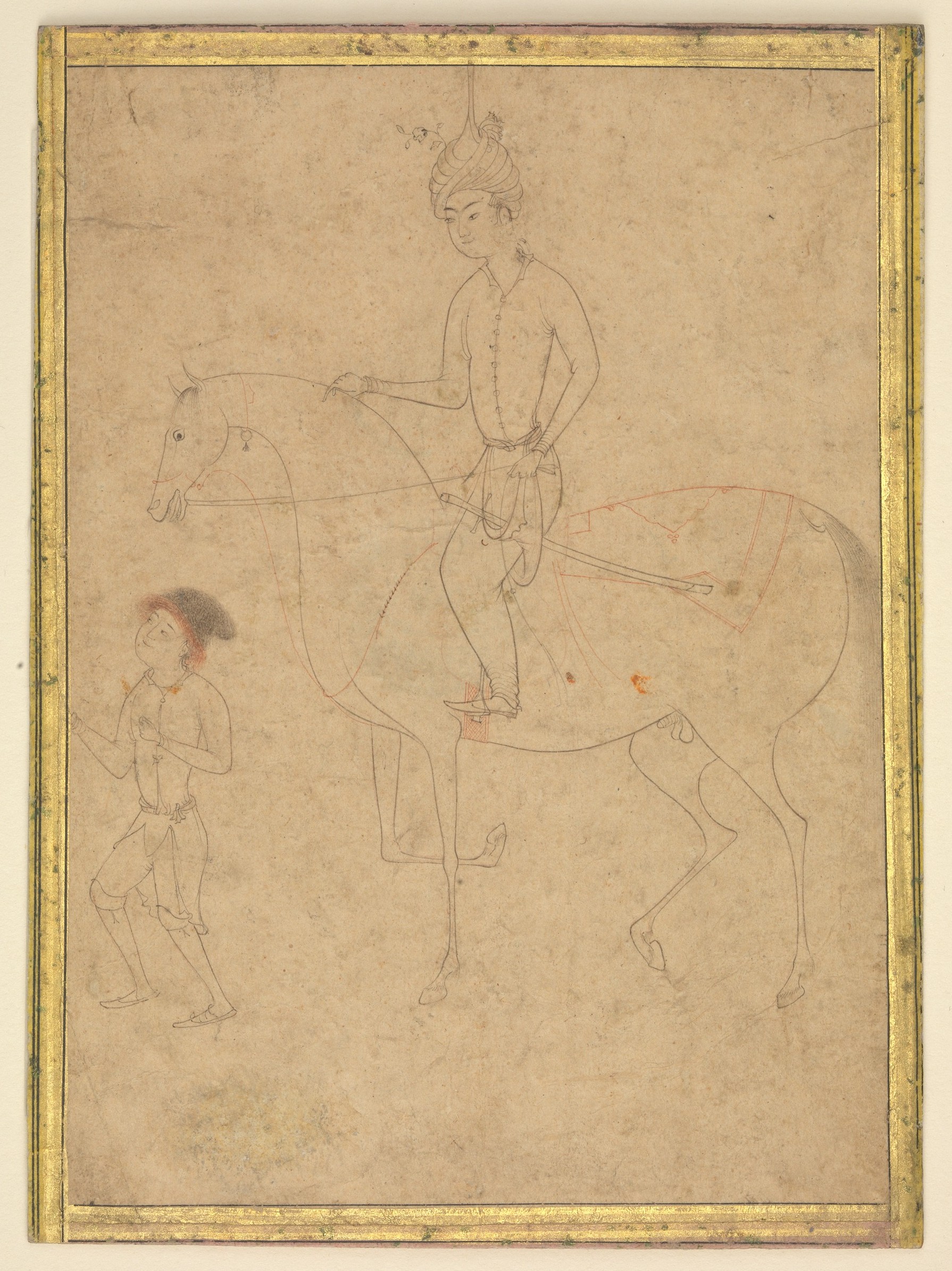
Groom and Rider: A Couture Analysis of Equine Elegance and Global Heritage
In the rarefied world of haute couture, where fabric meets fantasy and tradition collides with innovation, Katherine Fashion Lab presents a singular study in equestrian refinement: Groom and Rider. Executed in ink and watercolor on paper, this standalone work transcends the boundaries of fashion illustration to become a profound narrative of heritage, hierarchy, and harmonious design. The piece, rooted in the global equestrian tradition—from the polo fields of Argentina to the royal stables of Rajasthan and the hunt country of the English countryside—captures a moment of poised tension between two figures: the groom, a silent artisan of care, and the rider, a symbol of command. Through the medium’s fluidity and precision, Katherine Fashion Lab deconstructs the sartorial codes that define this relationship, offering a couture analysis that is as much about the garments as the unspoken dialogue they represent.
The Art of Ink and Watercolor: A Medium of Movement and Restraint
The choice of ink and watercolor on paper is not merely technical but conceptual. In couture, where fabric dictates form, the brush and pigment allow for an ethereal exploration of texture and drape. The ink defines the sharp lines of the rider’s tailored coat—a double-breasted jacket with nipped waist and broad shoulders, evoking the disciplined silhouette of a military uniform. The watercolor, applied in washes of deep navy and burnt sienna, softens the edges, suggesting the breathable luxury of cashmere or the supple grain of fine leather. The groom, rendered in lighter, more diffuse strokes of ochre and slate, wears a utilitarian waistcoat and rolled sleeves, his posture bent in service. The contrast in pigment density mirrors the social distance between the two: the rider’s bold, opaque presence versus the groom’s translucent, almost spectral role. This interplay of precision and fluidity echoes the couturier’s challenge—to balance structure with ease, authority with grace.
Deconstructing the Equestrian Silhouette: Global Heritage in Detail
The rider’s attire is a masterclass in global equestrian heritage. The coat’s notched lapels and brass buttons recall the British hunting jacket, while the jodhpur-style trousers—tapered at the knee and flaring at the hip—borrow from the Indian subcontinent’s equestrian traditions, where the jodhpur originated as a practical garment for polo. The rider’s boots, hinted at by dark ink strokes, are tall and polished, a nod to the Spanish vaquero influence in the Americas. Yet Katherine Fashion Lab subverts these references with a contemporary twist: the coat’s hem is asymmetrical, dipping lower at the back to suggest movement, and the collar is turned up, framing the rider’s jawline in a gesture of modern insouciance. The groom’s attire, by contrast, is a study in functional anonymity. His vest, buttoned high, and his trousers, cuffed at the ankle, speak to the global labor of stable hands—from the Irish grooms of the Curragh to the syces of Mumbai. The watercolor washes here are deliberately muted, as if the groom’s identity is absorbed into the background, a silent support system for the rider’s splendor.
The Unspoken Dialogue: Power, Service, and Sartorial Codes
At its core, Groom and Rider examines the hierarchical relationship encoded in dress. The rider’s posture—erect, head high, hands loosely holding the reins—is a study in controlled power. The groom, bent at the waist, one hand on the horse’s bridle, the other adjusting a stirrup, embodies subservience. Yet Katherine Fashion Lab’s brushwork complicates this binary. The groom’s fingers, rendered in delicate ink lines, are not merely functional but almost tender, suggesting a intimacy with the animal that the rider, perched above, cannot possess. The watercolor of the groom’s vest bleeds slightly into the rider’s coat, a subtle visual metaphor for the interdependence of their roles. In couture terms, this is a dialogue of textures: the rider’s polished wool and leather against the groom’s worn cotton and canvas. The horse, only partially visible in the foreground, is a third figure—a living canvas of muscle and mane, its coat a wash of chestnut and shadow that ties the composition together. The piece thus becomes a meditation on how clothing mediates not only status but also empathy, labor, and the quiet dignity of service.
Color Palette and Composition: The Aesthetics of Restraint
The palette is deliberately restrained, a hallmark of Katherine Fashion Lab’s approach to global heritage. The rider’s navy and black are interrupted by a single splash of crimson—a silk scarf tied at the throat, a reference to the royal courts of Morocco and the crimson turbans of Rajput warriors. The groom’s ochre and slate are punctuated by a hint of ivory at his collar, a small dignity that speaks to his own sense of pride. The watercolor background, a wash of pale gray and sepia, evokes the dust of a training ring or the mist of an early morning ride. The composition is asymmetrical: the rider occupies the upper right quadrant, the groom the lower left, creating a diagonal tension that pulls the eye across the paper. The negative space around them is as deliberate as the ink lines, suggesting the vastness of the equestrian world—the open field, the stable yard, the unspoken traditions that bind them. This restraint is a couture statement in itself: in an era of maximalism, Katherine Fashion Lab champions the power of reduction, letting each brushstroke carry the weight of centuries.
Conclusion: A Standalone Study in Couture as Cultural Commentary
Groom and Rider is more than a fashion illustration; it is a standalone study in how couture can interrogate heritage, hierarchy, and humanity. Through the fluid medium of ink and watercolor, Katherine Fashion Lab captures the ephemeral yet enduring relationship between two figures bound by the horse—a creature that has shaped civilizations from the steppes of Mongolia to the pastures of Kentucky. The piece challenges the viewer to see beyond the garments to the stories they tell: of power and service, of tradition and transformation. For the connoisseur of haute couture, this work is a reminder that the most profound designs are not those that shout, but those that whisper—through a brushstroke, a wash of color, a line that defines a shoulder or a hand. In the global heritage of equestrian fashion, Katherine Fashion Lab has found a timeless subject, and in Groom and Rider, a timeless expression of it.