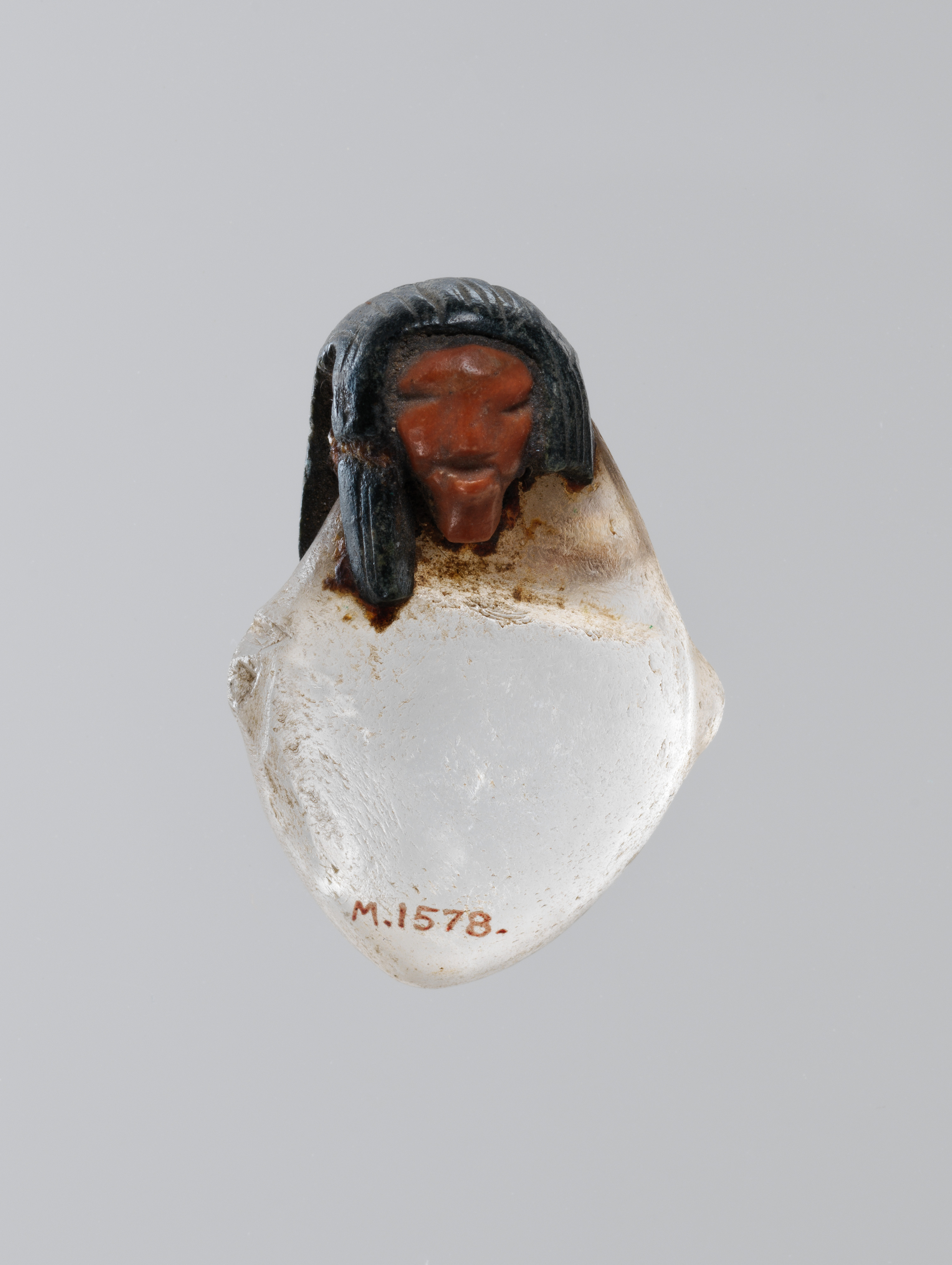
Heritage Analysis: The Amulet of the Heart with Human Head
This report presents a strategic heritage analysis of a rare amulet—a heart form surmounted by a human head—crafted from rock crystal, steatite, and carnelian. Originating from an ancient civilization, likely predating dynastic Egypt or Mesopotamian city-states, this artifact embodies profound symbolic power, historical adornment practices, and spiritual meaning. For Katherine Fashion Lab, this analysis serves as a foundational framework for a 2026 high-end luxury strategy, leveraging the amulet’s metaphysical gravitas to position the brand as a curator of transcendent heritage.
Symbolic Power: The Heart as Nexus of Life and Identity
The heart, in ancient cosmology, was not merely a biological organ but the seat of intelligence, emotion, and moral essence. The addition of a human head amplifies this symbolism, creating a hybrid icon that merges the eternal soul (heart) with mortal identity (head). In civilizations such as ancient Egypt, the heart was weighed against Ma’at’s feather to determine one’s fate in the afterlife. The inclusion of a human head suggests a personalized talisman—an amulet intended to protect a specific individual’s spiritual journey. The rock crystal, a transparent quartz, was revered for its clarity and ability to channel divine light, while steatite, a soft soapstone, allowed for intricate carving and was often used for protective seals. Carnelian, a fiery red chalcedony, symbolized vitality, courage, and the lifeblood of the sun. Together, these materials form a trinity of protection: crystal for spiritual vision, steatite for earthly grounding, and carnelian for dynamic life force. For a luxury brand, this symbolic power offers a narrative of intrinsic worth—the amulet is not decorative but a repository of personal legacy. In 2026, when consumers seek authenticity amid digital saturation, such symbolism can be translated into limited-edition pieces that serve as “soul anchors,” merging heritage with self-actualization.
Historical Adornment: The Amulet as Wearable Authority
Historical adornment practices reveal that amulets of this nature were not casual jewelry but objects of ritual authority. They were worn by priests, rulers, or initiates during ceremonies to invoke divine protection and affirm social status. The heart-with-head motif likely belonged to a funerary or initiatory context, where the wearer sought to align their mortal identity with eternal principles. The carving technique—using steatite as a base for detailed iconography, then inlaying carnelian and rock crystal—demonstrates advanced lapidary skill, reserved for elite workshops. Such amulets were often strung on linen or leather cords, worn close to the chest, emphasizing their role as intimate power objects. For Katherine Fashion Lab, this historical context offers a strategic positioning as a purveyor of “adorned authority.” The brand can evoke this through design elements like hidden compartments, asymmetrical settings, or tactile finishes that invite touch and contemplation. The 2026 luxury consumer, increasingly drawn to slow luxury and heritage storytelling, will value pieces that carry a sense of historical gravity. By referencing the amulet’s original use—as a personal, protective emblem—the brand can create a collection that redefines luxury as a form of spiritual investment, not mere consumption.
Spiritual Meaning: The Amulet as Threshold Guardian
The spiritual meaning of this amulet transcends its physical form. The heart with a human head represents a threshold guardian—a conduit between the earthly and the divine. In ancient belief systems, such amulets were activated through ritual, often inscribed with prayers or names to bind the wearer’s spirit to the object. The rock crystal’s transparency was thought to allow the soul to see beyond the material world, while carnelian’s red hue symbolized the blood of life and resurrection. Steatite, being soft and easily carved, was often used for magical inscriptions, making this amulet a personalized spell in physical form. This spiritual dimension is critical for a 2026 luxury strategy, where consumers seek meaning beyond aesthetics. The global wellness market, valued at over $1.8 trillion, increasingly intersects with luxury, as high-net-worth individuals invest in objects that promote mental clarity, protection, and spiritual resilience. Katherine Fashion Lab can position this amulet’s narrative as a talisman for the modern soul—a wearable artifact that counters digital fragmentation with ancient focus. By collaborating with contemporary spiritual practitioners or offering guided rituals with purchase, the brand can create an experiential layer that elevates the product from accessory to personal totem.
2026 High-End Luxury Strategy: From Artifact to Icon
To translate this heritage analysis into a 2026 strategy, Katherine Fashion Lab must adopt a multidimensional approach that respects the amulet’s origins while innovating for contemporary luxury. The following strategic pillars are recommended:
Pillar One: Material Provenance and Ethical Sourcing
The original amulet’s materials—rock crystal, steatite, and carnelian—must be sourced with absolute transparency. In 2026, luxury consumers demand ethical provenance and sustainability. Katherine Fashion Lab should partner with certified mines or archaeological restorers to ensure that each stone carries a documented lineage. This could include blockchain-verified certificates detailing the stone’s origin, cutting history, and cultural significance. The steatite, for instance, could be sourced from ancient quarries in the Indus Valley or Egypt, with restoration techniques that honor traditional hand-carving methods. This material integrity becomes a competitive advantage in a market saturated with mass-produced “heritage” pieces.
Pillar Two: Design Language—The New Amulet
The heart-with-head motif must be reinterpreted through a minimalist, architectural lens that resonates with 2026 aesthetics. Consider a pendant where the heart is rendered in polished rock crystal, with a small carnelian cabochon at its core (symbolizing the life force), and a steatite base engraved with a personalized geometric pattern. The human head can be abstracted into a subtle, faceted form on the pendant’s reverse, visible only to the wearer—a secret signature. This design approach balances heritage reverence with modern wearability, appealing to clients who value discretion over ostentation. The piece could be offered in a limited series of 108 (a sacred number in many traditions), with each amulet individually numbered and accompanied by a leather-bound journal explaining its symbolic layers.
Pillar Three: Experiential Marketing and Ritual Engagement
Luxury in 2026 is defined by experience, not product. Katherine Fashion Lab should launch the amulet collection through invitation-only salons in heritage locations—such as a restored temple in Luxor or a private museum in Rome. Attendees would participate in a “ritual of activation,” guided by a cultural historian, where they learn to charge the amulet with personal intention. This experience creates emotional bonds and generates user-generated content that amplifies brand prestige. Additionally, a digital companion app could offer daily meditations based on ancient heart symbolism, reinforcing the amulet’s spiritual utility beyond purchase.
Pillar Four: Pricing and Exclusivity
Given the amulet’s symbolic weight and material rarity, pricing should reflect investment-grade luxury. A single piece might range from $15,000 to $50,000, depending on stone quality and customization. Exclusivity is maintained through a by-appointment-only sales model, with a waiting list that builds anticipation. The brand can also offer a “Legacy Edition” where the amulet is paired with a private consultation with a spiritual advisor, creating a lifetime relationship with the client.
Conclusion: The Amulet as Strategic Asset
The amulet of the heart with a human head is more than an archaeological curiosity; it is a strategic asset for Katherine Fashion Lab’s 2026 luxury positioning. Its symbolic power, historical adornment roots, and spiritual meaning offer a narrative that transcends fleeting trends. By honoring the artifact’s original purpose—as a protector of identity and soul—the brand can create a collection that resonates with a discerning clientele seeking depth, authenticity, and transcendence. In an era where luxury is increasingly defined by meaning over materialism, this amulet provides a blueprint for a heritage-driven, spiritually intelligent brand strategy that stands apart in the global market.